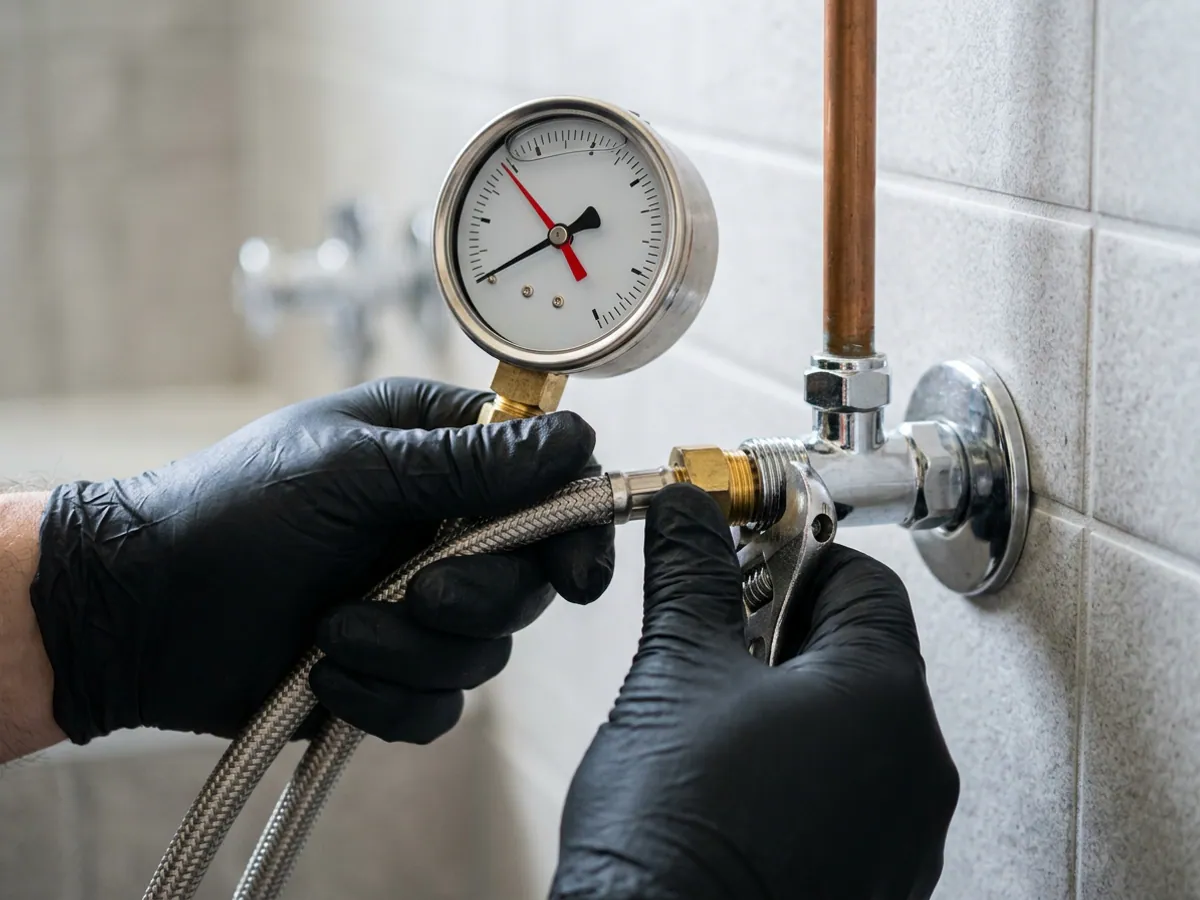
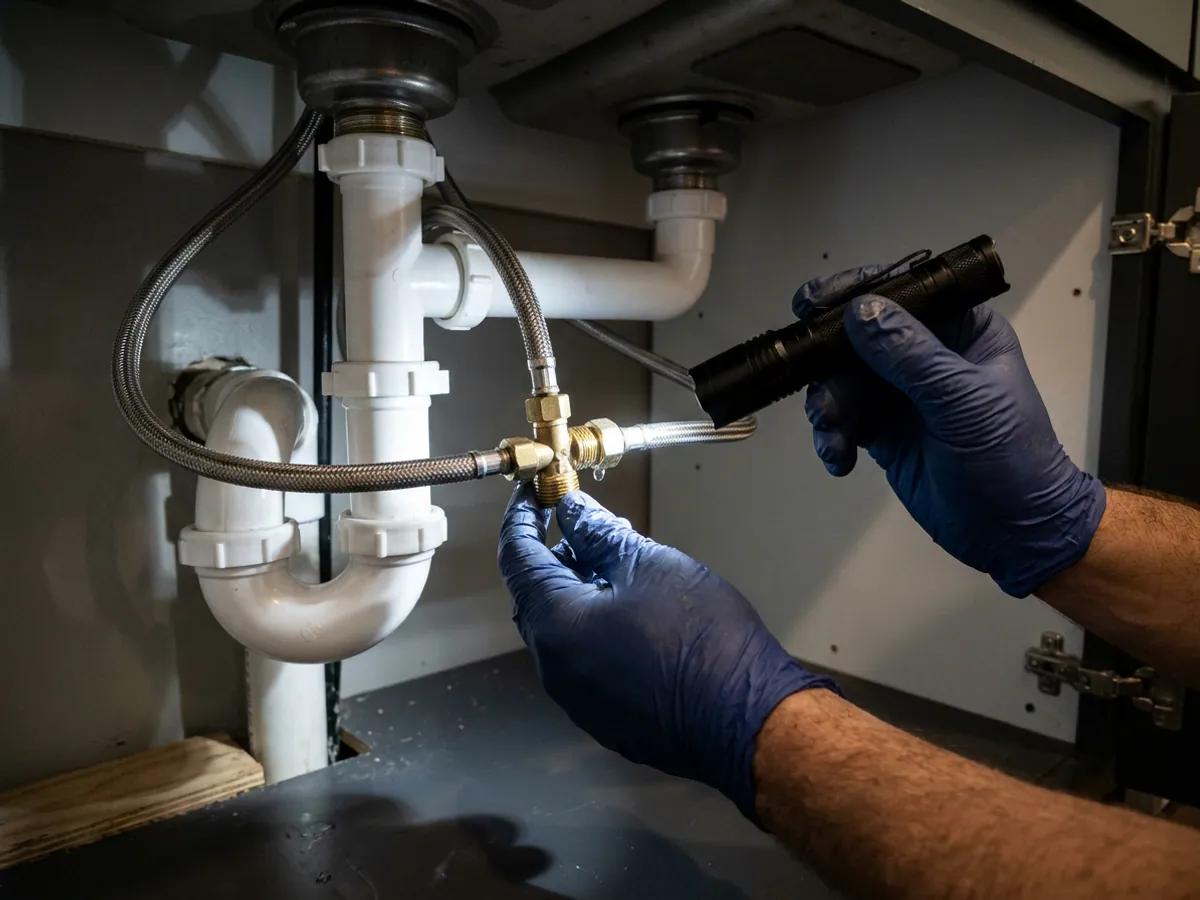
Residential and commercial piping in Saudi buildings runs concealed beneath courtyard tiles, sub-floor sand beds, wall plaster, and suspended ceilings. Manar Al Sharqiya provides structured pipe leak diagnostics across the Eastern Province to isolate the exact faulty circuit and locate failure points before any breaking begins.
Clear hydraulic separation between 24/7 pressurized supply lines and intermittent gravity drains
Zone-by-zone manifold and shutoff isolation to narrow down complex networks
Tailored to local PPR thermal-fusion, polyethylene courtyard, copper, and uPVC systems
Piping Covered
Cold/hot PPR, hot return loops, yard lines & uPVC drains
Key Indicators
Booster pump short-cycling, pressure drops, meter spin
Direct Contact
0590941982
Residential Hydraulic Fundamentals
Pressurized Supply Pipe Leaks vs. Gravity Drainage Seepage
Every building contains two fundamentally different piping regimes: pressurized supply lines (cold domestic water, hot water delivery, and hot recirculation loops) and non-pressurized gravity drainage stacks (waste, soil, and rainwater pipes). Confusing the two leads directly to misdiagnosed repairs.
Pressurized supply pipes remain under continuous head or booster-pump pressure 24 hours a day. Even a hairline pinhole in a buried fusion elbow will force water continuously into surrounding sand screed or masonry whether occupants are home or asleep. Gravity drain lines, by contrast, carry water only when a sink, shower, or toilet is discharged; leaks from uPVC waste lines are intermittent and typically cluster around unsealed sockets, floor gullies, or partial downstream blockages.
At Manar Al Sharqiya, our diagnostic sequence isolates each regime methodically—applying sound plumbing inspection principles aligned with Saudi Building Code (SBC 701) testing concepts—so property owners know exactly which pipe circuit has failed and where before authorizing localized access.
Pressurized supply leaks run continuously, trigger booster pump cycling, and spin water meters.
Gravity drainage seepage tracks fixture usage and concentrates below traps, elbows, and risers.
Confirming the faulty circuit first prevents opening floors or walls along intact pipe runs.
Tracing buried exterior supply piping along a villa setback between the water meter and underground storage tank.
Piping Failure Cues
Symptoms of a Compromised Interior or Courtyard Pipe
Automatic Booster Pump Short-Cycling Every Few Minutes
High Diagnostic Priority
Hearing the rooftop or ground pressure pump kick on briefly at regular intervals overnight when no taps or appliances are open.
What it may indicate: System pressure is bleeding off downstream—either past a faulty check valve or out through a concealed supply leak; see Water Network Inspection.
Noticeable Pressure Loss on a Specific Floor or Hot-Water Branch
Moderate Indicator
Weak flow at fixtures served by one riser or water heater while the overhead tank remains full.
What it may indicate: May point to pressure escaping along a buried branch, scale restriction, or a partially occluded PPR weld.
Settling Courtyard Pavers or Persistent Dampness Along Perimeter Walls
High Diagnostic Priority
Sunken outdoor tiles, damp sand joints, or algae patches along the setback path between the street meter and ground tank.
What it may indicate: Strong indicator of a cracked buried courtyard feed line washing away sub-base sand.
Faint Hissing or Flowing Sound Inside a Quiet Wall
High Diagnostic Priority
Audible steady whisper behind bathroom or shaft masonry when all fixture angle valves are shut.
What it may indicate: Turbulence from pressurized water escaping a narrow fitting crack, suited for Non-Destructive Leak Detection.
Localized Warm Floor Tiles or Lukewarm Cold-Water Taps
Moderate Indicator
Feeling persistent warmth underfoot along a corridor or bathroom floor independent of weather.
What it may indicate: Classic thermal signature of a leaking buried hot-water supply or recirculation pipe; see Under-Tile Leak Detection.
Polypropylene Random Copolymer (PPR) pipes are durable, but weld integrity depends on exact fusion iron temperature, insertion depth, and zero twisting during cooling.
Physical Mechanism: Cold welds or angled insertions create micro-channels inside elbows and tees that eventually weep under pump cycling.
02
Thermal Expansion Stress on Rigidly Encased Hot-Water Lines
Plastic piping expands measurably when carrying 60–70°C water. When encased tightly in mortar without sleeve allowance, expansion stress concentrates at 90-degree elbows and brass threaded inserts.
Physical Mechanism: Repeated heating and cooling cycles fatigue the metal-to-plastic transition joint over time.
03
Excess Booster Pressure & Water Hammer Transients
Oversized pressure pumps or depleted pressure-tank bladders subject residential plumbing to repeated hydraulic shock waves whenever quarter-turn valves snap shut.
Physical Mechanism: Pressure spikes exploit the weakest threaded union, flexible hose, or solvent-welded joint in the system.
04
Soil Settlement & Dry Solvent Joints on Exterior Lines and uPVC Drains
Backfill compaction around villa foundations and courtyards exerts shear force on rigid pipes passing through concrete grade beams.
Physical Mechanism: Unchamfered or poorly primed uPVC drain sockets separate slightly, saturating sub-slab soil and triggering High Water Bill Diagnostics when feed lines crack.
Circuit Isolation & Pinpointing
Zone Valve Isolation & Pipe Tracing Methodology
Rather than scanning an entire building blindly, our technicians divide the piping system into testable hydraulic segments:
1
System-Level Meter, Tank & Pump Assessment
Determine immediately whether loss occurs on the post-meter yard feed, the ground-to-roof transfer riser, or the pressurized distribution manifold.
Step Purpose: Eliminate intact piping sectors within the first stage of inspection.
2
Branch & Manifold Shutoff Isolation
Sequentially close floor manifold valves, water heater inlets, and zone shutoffs to identify the exact compromised cold, hot, or return branch.
Step Purpose: Isolate the fault to a single defined pipe run.
3
Controlled Pressure-Hold Verification
Observe static pressure stability across the isolated branch (protecting sensitive fixtures) to verify an active pipe breach and gauge its severity.
Step Purpose: Confirm definitively whether the buried pipe itself is losing water.
4
Acoustic & Thermal Tracing Along the Concealed Route
Track acoustic vibration peaks along the pipe alignment and apply infrared thermal profiling on hot-water and sub-floor circuits.
Step Purpose: Narrow the suspected failure point to the smallest practical repair footprint.
5
Directed Flow Testing on Gravity Drainage Stacks
Where supply lines hold steady pressure, test individual waste outlets sequentially while monitoring adjacent wall and ceiling moisture.
Frequently Asked Questions About Pipe Leak Detection
My rooftop pressure pump turns on for a few seconds every 10 minutes with no taps open—why?
+
That short-cycling means water pressure is escaping somewhere: either backward into the tank through a worn check valve, silently into a toilet bowl through a faulty cistern valve, or out of a concealed supply pipe. Closing the main outlet valve right after the pump separates check-valve backflow from downstream pipe leaks immediately.
Can green heat-fused PPR pipes still develop leaks?
+
Yes. While straight PPR pipe walls rarely corrode, socket-fusion joints can seep if overheated, underheated, or twisted during installation, and brass-threaded transition fittings on hot-water lines can loosen under repeated thermal expansion.
How do I tell if a leak is in the outdoor courtyard pipe rather than inside the house?
+
Close the main shutoff valve entering the house and secure the ground-tank float valve (or inlet valve right before the tank). If the municipal water meter dial continues to turn, the leak lies in the buried line between the meter and that shutoff point.
Do hot-water recirculation loops cause hidden floor leaks in villas?
+
Yes. Recirculation lines stay hot and pressurized for long periods, subjecting buried elbows to continuous thermal stress. A leak on a return loop often reveals itself as a warm floor patch and elevated water heater energy use.
Can you locate a pipe punctured accidentally during wall drilling or cabinet mounting?
+
Yes. Drill-bit punctures into concealed supply risers or AC drain pipes are straightforward to verify by correlating fastener locations, pipe routing, pressure drop, and localized wall moisture.
Does every pipe inspection require high-pressure air or nitrogen testing?
+
Not always. Many active supply leaks are clearly detectable under normal operating pressure using valve isolation, acoustic listening, and thermal profiling. When isolated pressure testing is appropriate, test pressure must always stay within safe limits for the existing pipe age and material.
Have another specific question about your property? Reach us directly by phone or WhatsApp.
Technical water leak detection and moisture diagnostics for villas and buildings in the Eastern Province, Saudi Arabia. Pinpoint leak sources before repair. Call 0590941982.
Zone-by-zone water distribution network inspection across tanks, booster pumps, rooftop manifolds, and risers for villas and buildings. Call 0590941982.
Facing an unexpected water bill spike in the Eastern Province? Inspect post-meter pipes, ground tank float valves, and silent cistern leaks. Call 0590941982.