Sudden High Water Bill
Unexplained spikes in monthly consumption without lifestyle changes—often linked to ground-tank or concealed line loss.
Facing signs of a water leak, wall dampness, or a roof or water-tank insulation concern? Explore Manar Al Sharqiya services and contact us to share the issue and property location so we can clarify the right next step.
Select the symptom closest to your situation to organize your inquiry or reach us directly on WhatsApp.
Unexplained spikes in monthly consumption without lifestyle changes—often linked to ground-tank or concealed line loss.
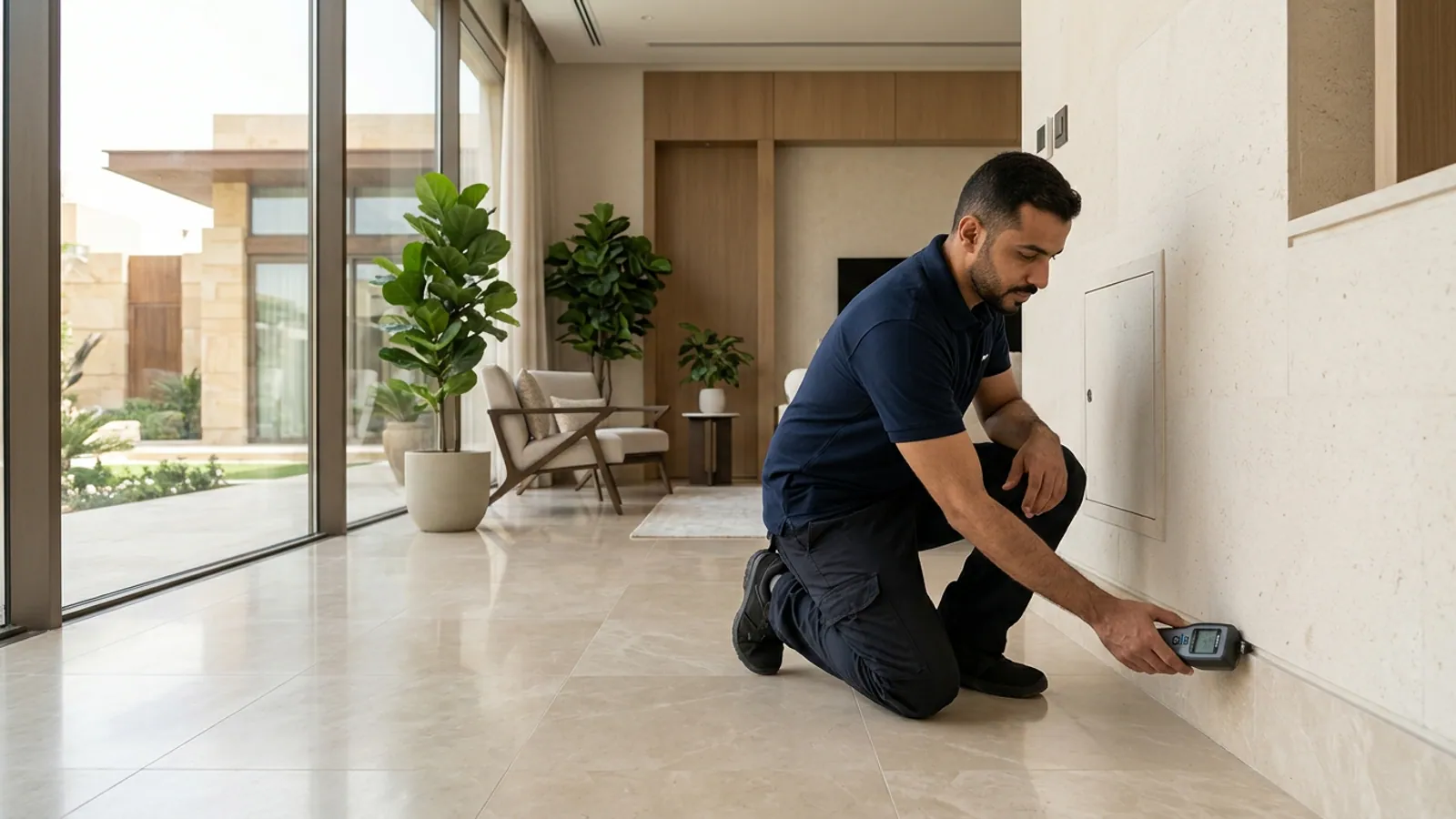
Damp patches, discoloration, or blistering plaster near floor skirting that require separating pipe seepage from moisture ingress.
Persistent damp grout lines or warm/moist floor spots that warrant targeted inspection prior to any tile removal.
Ceiling stains on the floor below or dampness around floor drains, concealed cisterns, and supply fittings.
Rainwater ponding, upper-ceiling seepage, or excessive top-floor summer heat due to missing or aged roof layers.
Noticeable drops in underground or overhead tank levels or deteriorated internal tank waterproofing.
Select the category, location, and city so our team receives a clear summary when you message or call.
Based on your selections, you can share this summary with Manar Al Sharqiya via WhatsApp or phone to confirm availability and discuss the appropriate next step. (This organizer is not an automated technical diagnosis).
Manar Al Sharqiya focuses on building moisture diagnostics, waterproofing, and thermal protection tailored to your property substrate and condition.
Systematic inspection to trace visible and concealed water loss across supply lines prior to plumbing repair decisions.
Relevant for unexplained water loss or suspected hidden pipe leaks.
Assessing dampness behind plastered walls and beneath tiled floors to pinpoint moisture sources and limit unnecessary breaking.
Relevant for lower-wall paint peeling, efflorescence, or damp floor joints.
Targeted assessment of bathroom supply fittings, drains, and tile joints alongside underground and overhead tank seepage checks.
Relevant for ceiling stains below bathrooms or dropping ground-tank water levels.
Protective roof insulation systems selected according to concrete, tiled, or metal deck conditions and drainage slopes.
Relevant for rainwater roof seepage or preventive protection on new and existing roofs.
Shielding concrete slabs, water tanks, and wet rooms against water ingress and coastal humidity exposure.
Relevant for waterproofing roofs, concrete water tanks, and wet areas.
Reducing solar heat transfer across flat rooftops during peak Eastern Province summers using compatible thermal layers.
Relevant for high upper-floor heat gain and heavy air-conditioning load.
A straightforward four-step communication flow designed to clarify your issue and confirm coverage without friction.
Share where the problem appears and the signs you noticed, such as dampness, sudden bill increases, or roof wear.
Provide your city or district in the Eastern Province so we can check service availability for your location.
Review suitable leak inspection or waterproofing/thermal insulation options and next steps with our contact team.
Once location coverage and scope fit are confirmed, we clarify practical scheduling options according to operational availability.
Recognizing early moisture indicators helps limit finish damage—though proper inspection is always required to confirm the root cause.
Noticeable spikes in monthly meter readings or bills without changes in household occupancy.
Cool or moist plaster bands forming along lower interior walls adjacent to wet rooms.
Yellowish or darkened moisture marks, especially on ceilings directly beneath bathrooms.
Darkened tile joints or powdery white salt deposits (efflorescence) on masonry surfaces.
Paint flaking and plaster softening caused by trapped moisture behind wall finishes.
Recurring damp puddles near manifold valves, ground-tank necks, or rooftop drains.
Faint hissing behind walls or meter movement while all taps and appliances are shut off.
Choosing between leak inspection, waterproofing, thermal insulation, and tank lining depends on your substrate condition, exposure, and the actual cause of moisture.
Focuses on tracing concealed or visible water loss in supply pipes, fittings, or joints so you address the real fault before re-coating.
Needed when moisture or high consumption has an unconfirmed source.
Explore ServiceForms a protective barrier preventing rainwater and standing moisture from penetrating concrete roofs, wet rooms, and structural slabs.
Applied preventively on new builds or after substrate preparation.
Explore ServiceReduces solar heat transfer through exposed flat roofs during intense summer months, improving upper-floor thermal comfort.
Suited for sun-exposed rooftops experiencing high heat gain.
Explore ServiceProtects interior concrete tank walls and bases to prevent outward water loss as well as external groundwater seepage.
Essential during tank commissioning or when internal lining degrades.
Explore Service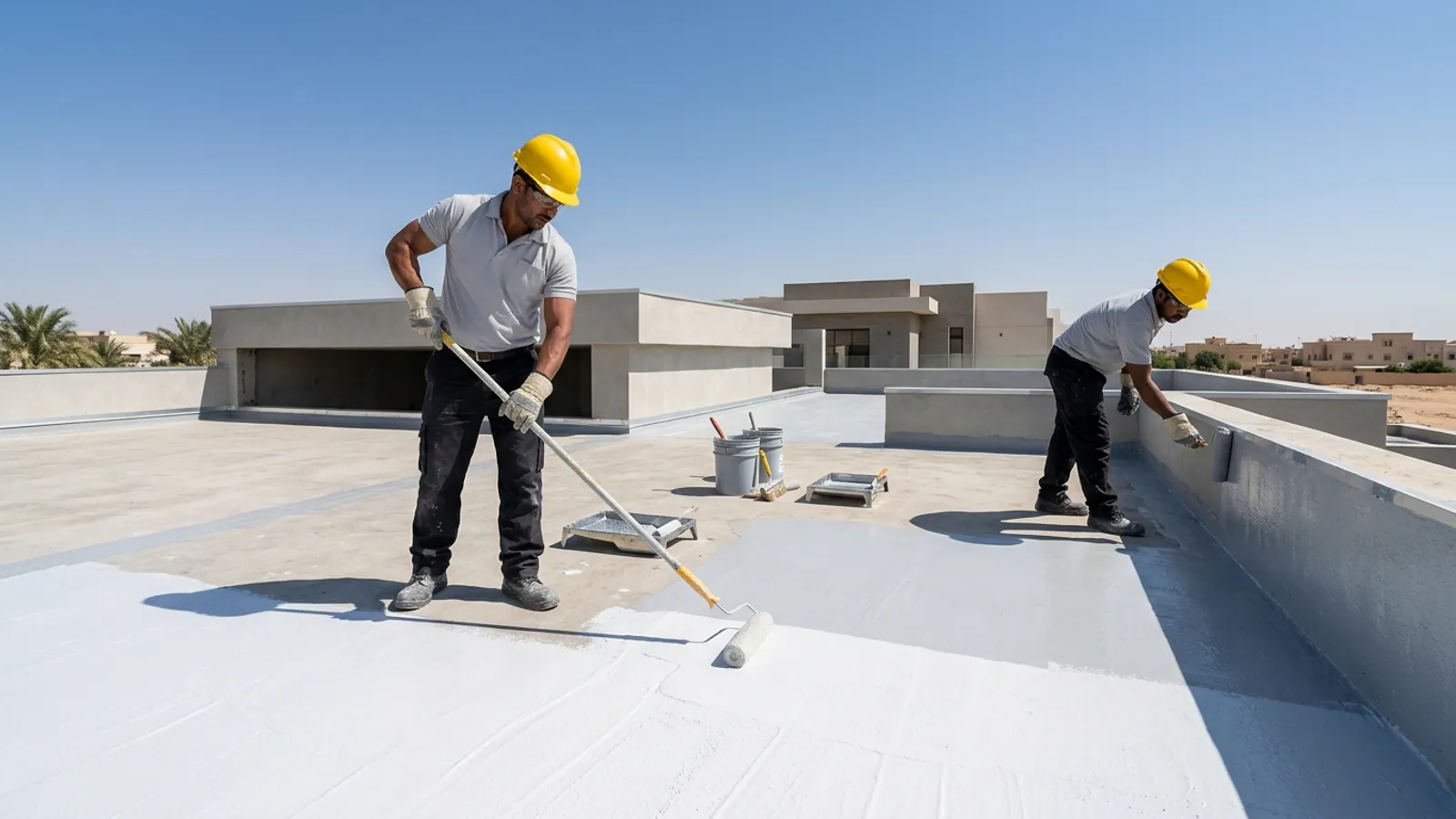
A newly cast concrete slab behaves differently from an existing tiled roof or an underground water tank. Rather than claiming foam, bitumen, or cementitious coatings solve every scenario, we clarify suitable options based on your actual surface and usage.
We focus on practical clarity—helping you understand your moisture or insulation concern and available next steps without exaggerated claims.

We review the symptoms you observe to distinguish probable pipe leaks from surface waterproofing or dampness issues.
We consider whether your property is a residential villa, apartment, or facility—and its roof or tank construction.
We clearly separate diagnostic leak inspection, plumbing repair scope, and waterproofing or thermal systems.
We help determine whether your case calls for leak assessment first or targeted insulation protection.
Accessible telephone and WhatsApp channels so you can share your issue and city without complex registration.
Manar Al Sharqiya focuses on Saudi Arabia’s Eastern Province, reviewing coverage availability based on your specific city, district, and requested service.
Our Al Ahsa hub consolidates Al Hofuf and Al Mubarraz coverage; field inspections are arranged by prior appointment without claiming separate physical branch offices.

Concise technical articles explaining common leak indicators and insulation fundamentals.
Step-by-step 30-minute DIY home water audit for Saudi villas and apartments to check toilet flappers, RO filters, floats, and meters before calling a specialist.
Read GuideEngineering comparison between waterproofing barriers and thermal insulation boards/foams, explaining when buildings in Saudi Arabia need one or both.
Read GuideObjective engineering comparison of APP/SBS bitumen membranes, closed-cell polyurethane foam, cementitious slurries, and elastomeric roof coatings in KSA.
Read GuideLearn how to spot early concealed water leak clues—warm floor tiles, dark grout lines, swollen skirting boards, and ceiling rings—before structural damage spreads.
Read GuideTechnical comparison of potable-grade epoxy coatings and cementitious slurries for concrete ground tanks in Saudi Arabia, including groundwater pressure rules.
Read GuideEngineering guide to sabkha rising damp, salt efflorescence, and AC dew-point condensation vs. active plumbing leaks across coastal Eastern Province cities.
Read GuideDirect, practical answers covering probable leak indicators, non-invasive inspection limits, and insulation choices.
Common warning signs include damp patches or peeling paint near skirting boards and ceilings, meter movement while all fixtures are closed, dropping ground-tank levels, or an unexplained bill increase. Because single symptoms can have multiple causes, proper inspection is needed to confirm the source.
Not necessarily. Non-invasive moisture and pressure inspection techniques often help narrow down the fault zone and reduce unnecessary demolition, though whether localized access opening is needed depends on the pipe layout, leak type, and repair scope.
Leak detection is the diagnostic stage focused on tracing where and why water is escaping. Leak repair refers to the subsequent corrective work—such as replacing damaged fittings, re-grouting, or re-waterproofing—once the root cause is identified.
Unexpected bill spikes frequently stem from silent internal losses in underground tanks, float valves, or toilet cisterns, though seasonal consumption changes can also play a role. Checking tank fittings and supply lines clarifies whether a hidden leak is responsible.
Roof waterproofing is recommended preventively during construction and whenever an existing roof shows rainwater ponding, ceiling dampness on the top floor, cracked expansion joints, or deteriorated protective layers.
Waterproofing blocks water and moisture from penetrating concrete roofs, tanks, and wet rooms, whereas thermal insulation reduces solar heat transfer into upper floors during hot summer months. Depending on roof design, compatible layers can address one or both needs.
Selection depends on whether the tank is an underground reinforced-concrete structure or an overhead tank, the condition of internal concrete surfaces, any active cracks or groundwater pressure, and suitability for stored water.
Scope depends on property type, surface area, the number of plumbing zones or structures involved (bathrooms, tanks, rooftops), and substrate condition—so fixed flat prices are not quoted before understanding your specific requirement.
Call 0590941982 directly or message us on WhatsApp with a brief description of the issue, where it appears in the building, and your city so our team can advise on the right next step.
Manar Al Sharqiya serves the Eastern Province. Simply share your city or neighborhood and service type via WhatsApp or telephone to verify current coverage before scheduling.
Contact Manar Al Sharqiya and share the type of problem and property location to clarify the right service and check availability.
Enter your basic details to structure your service request.