Potable Water Containment & Lining · Eastern Province Eastern Province — Concrete Ground & Overhead Tank Lining

Water Tank Waterproofing & Protective Lining

Reinforced concrete water tanks perform two critical tasks simultaneously: retaining clean domestic water without silent подземal loss and blocking saline coastal groundwater from infiltrating inward. Manar Al Sharqiya evaluates and applies documented potable-water-safe lining systems for concrete water tanks across the Eastern Province under strict confined-space safety controls.

Diagnostic check: Experiencing a sudden water bill spike without knowing whether the float valve or tank shell is at fault? Start with water tank leak detection before commissioning full relining.

Exclusively specifies solvent-free materials documented for potable drinking-water contact
Addresses both positive internal water pressure and negative coastal groundwater pressure
Enforces mechanical ventilation, confined-space safety, and full cure times before refilling
Health Priority
Documented potable-water compliance (SASO 2882 / NSF 61 / BS 6920)
Regional Challenge
High saline groundwater table pressing inward on ground tanks
Core Lining Systems
Negative-side cementitious barrier + potable solvent-free epoxy
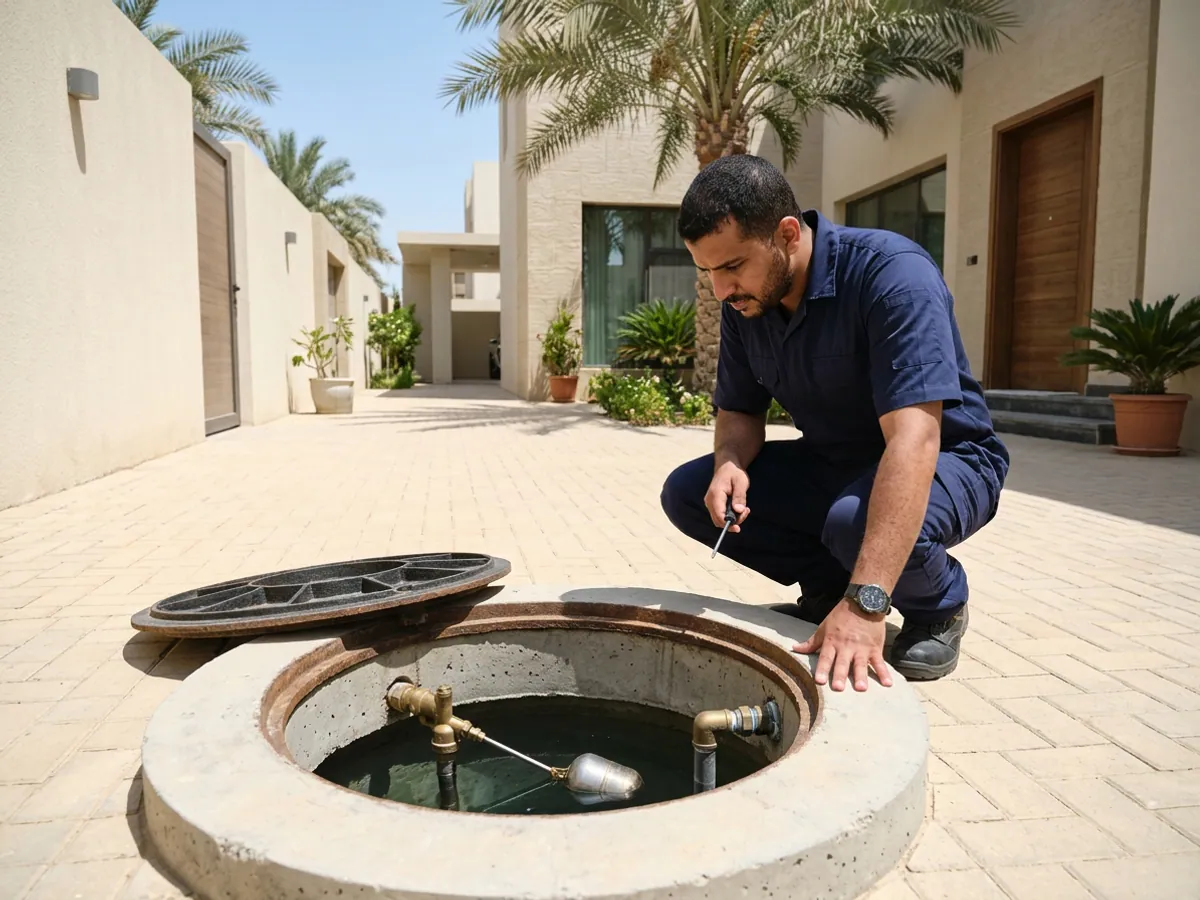
Safe exterior preparation and waterproofing work around a residential ground water tank collar
Structural & Hygiene Integrity

Why Water Tanks Require Purpose-Specified Waterproofing

Unlike a roof that dries out between rainstorms, an underground concrete water tank remains continuously submerged from the inside while surrounded externally by damp backfill and coastal groundwater. Unlined or cracked concrete allows treated municipal water to escape 24 hours a day—inflating water bills and saturating soil beneath courtyard tiles and villa footings.

Equally critical in Eastern Province coastal districts is reverse hydrostatic infiltration: whenever internal tank water drops low, external saline groundwater pushes inward through construction joints, tie-rod holes, or unsealed access necks, contaminating household water and corroding tank ceiling rebar.

  • Stops silent 24/7 water loss through hairline wall cracks and floor-to-wall construction joints.
  • Blocks saline groundwater, sewage seepage, and surface washdown water from entering domestic storage.
  • Protects tank roof slab and wall reinforcement against chloride-induced corrosion.
  • Creates a dense, hygienic internal surface that resists sediment and microbial harboring.
Educational Technical Illustration
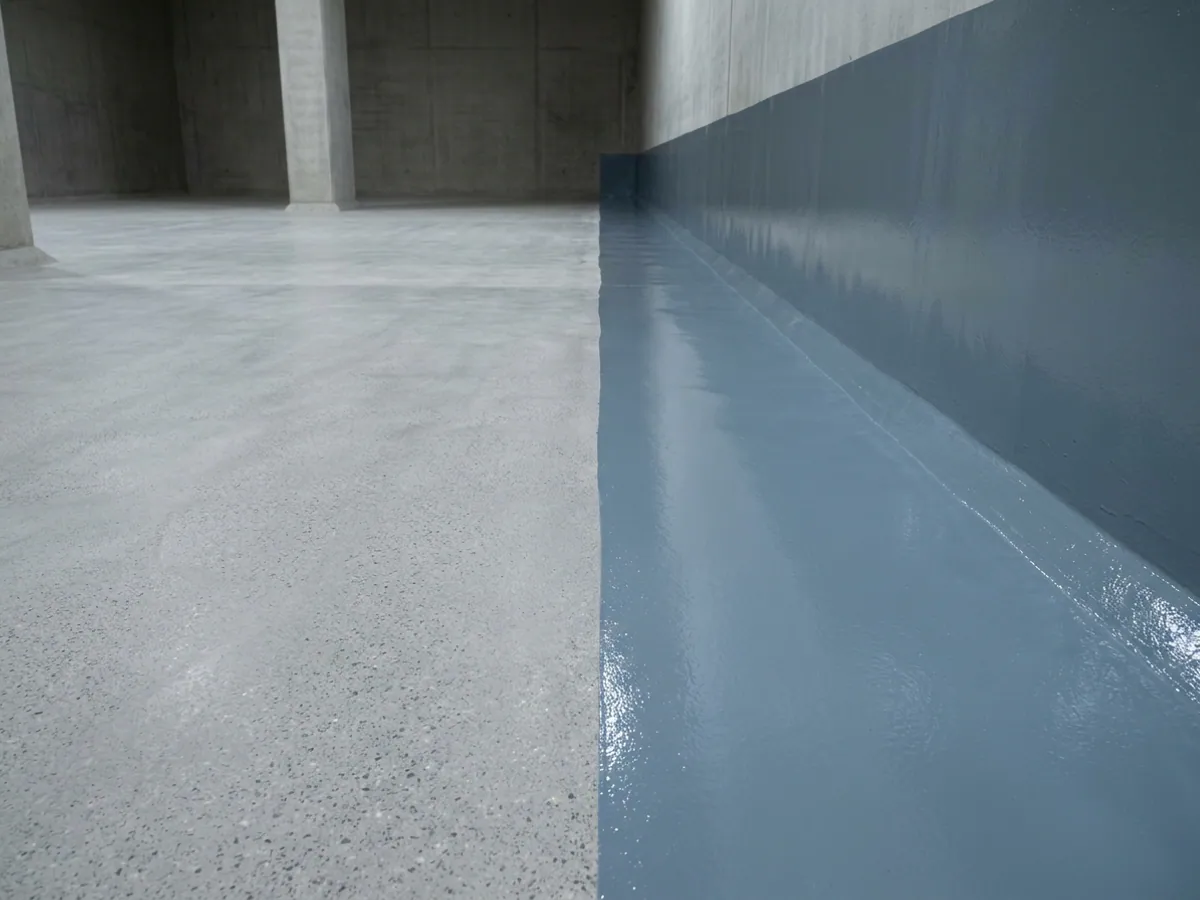
Applying polymer-modified cementitious waterproofing slurry over reinforcing mesh tape at a concrete corner
Substrate-bonded polymer-modified cementitious coats and reinforced coves resist hydrostatic pressure at concrete tank corners.
Tank Construction & Leak Pathways

Underground vs. Above-Ground Tanks & Differentiating Leak Causes

Proper specification depends on tank construction material and pinpointing where water loss or contamination originates:

1. Cast-in-Place Underground Concrete Tanks

The primary candidate for structural waterproofing and relining. Vulnerable zones include the base-to-wall kicker joint, form-tie pockets, shrinkage cracks, and the masonry/concrete riser neck beneath courtyard tiles.

2. Overhead Concrete Tanks vs. Polyethylene / Fiberglass Tanks

Large elevated concrete tanks require internal potable waterproofing plus exterior thermal/UV protection. Prefabricated polyethylene and fiberglass rooftop tanks do not accept cementitious or structural epoxy coatings—their leaks typically involve float valves, bulkhead unions, or shell splits evaluated under water tank leak detection.

3. Four Distinct Causes of Tank Water Loss or Contamination

(a) Stuck mechanical float valves causing silent overflow, (b) unsealed access-neck joints admitting courtyard wash water, (c) blistered internal coatings pushed off by external groundwater pressure, and (d) underground suction-line leaks between the tank and booster pump.

Approved Concrete Tank Lining Families

Waterproofing System Categories Suited to Concrete Water Tanks

Concrete domestic water tanks rely on two complementary lining chemistries—detailed further in our [epoxy vs. cementitious water tank guide](/en/guides/water-tank-insulation-epoxy-vs-cementitious/):

Potable Water: Certified Potable Grade Only

Flexible Polymer-Modified Cementitious Waterproofing (2K)

Substrate-bonded waterproofing under tile in wet areas and inside rigid concrete water structures

Typical Applications

  • Bathroom floors, walk-in showers, laundry rooms, and wet kitchens directly beneath ceramic/porcelain tile systems
  • Internal lining of concrete ground water tanks (strictly when a potable-water certified product is selected)
  • Concrete sumps, thresholds, and wet-zone upturns requiring direct cementitious adhesive bonding

Technical Properties

  • Bonds monolithically to saturated surface-dry (SSD) concrete and accepts compatible polymer-modified tile mortars
  • Two-component (2K) flexible grades bridge hairline shrinkage cracks far better than rigid 1K cement slurries
  • Integrates with alkali-resistant mesh/elastomeric corner bands and pipe collars (aligned with ANSI A118.10 / EN 14891 principles)

Engineering Limitations

  • Not designed for wide thermal expansion on large exposed sun-baked roofs without protective topping
  • Cannot bridge active structural movement cracks without dedicated expansion-joint treatment
  • Adding unauthorized site water ruins polymer-to-cement ratio and causes chalking or delamination
Substrate Preparation: Sound concrete completely free of gypsum plaster, oil, and laitance, pre-dampened to a saturated surface-dry (SSD) condition without standing puddles.
Layer Compatibility: Never apply directly over raw gypsum or bitumen; observe manufacturer cure windows before flood testing or tiling.
Safety Controls: Cementitious powders are alkaline; installers must wear gloves, eye protection, and dust masks during low-speed mechanical mixing.
Potable-Water Note: Suitable for potable water tanks ONLY when the exact product grade holds verified drinking-water contact certification (e.g., NSF/ANSI 61, BS 6920, or applicable SASO standards) and full curing/flushing is completed.

Relevant Technical References: ANSI A118.10 · EN 14891 · BS 6920 · NSF/ANSI 61

Potable Water: Certified Potable Grade Only

Solvent-Free Potable-Water Tank Epoxy Lining

Smooth, non-porous internal hygienic barrier lining for structurally sound concrete water tanks

Typical Applications

  • Internal lining of concrete water tanks once walls are dry and free of negative-side groundwater pressure
  • Creating a dense, cleanable interior surface that resists sediment retention and microbial biofilm buildup

Technical Properties

  • Forms a dense, smooth, non-porous barrier film when formulated as a solvent-free system compliant with SASO 2882 / GSO 2311
  • Resists routine tank washing once full chemical cross-linking between resin and hardener is achieved

Engineering Limitations

  • Highly vulnerable to trapped slab moisture and negative-side groundwater pressure, which cause osmotic blistering and peeling
  • Rigid cured film has minimal crack-bridging capacity across active structural fissures
  • Industrial floor epoxies and solvent-borne epoxies are toxic/non-potable and must NEVER be substituted in drinking-water tanks
Substrate Preparation: Dry, mechanically profiled concrete (ICRI CSP 3) free of negative seepage, efflorescence, and dust; requires negative-side cementitious stabilization first if external dampness exists.
Layer Compatibility: Requires exact stoichiometric full-kit mixing, strict pot-life adherence, and full multi-day cure plus freshwater flushing before filling.
Safety Controls: Underground tanks are hazardous confined spaces: forced mechanical ventilation, PPE, external attendant monitoring, and zero volatile solvents are mandatory.
Potable-Water Note: Must strictly use a solvent-free grade holding documented potable-water certification (SASO 2882, NSF/ANSI 61, or BS 6920); generic epoxy suitability is never assumed.

Relevant Technical References: SASO 2882 · GSO 2311 · NSF/ANSI 61 · BS 6920 · ICRI 310.2R

Where external groundwater presses inward on buried walls, a negative-pressure-rated cementitious base barrier must precede any solvent-free potable epoxy topcoat to prevent osmotic/vapor blistering.

Non-Negotiable Potable Safety Rule

Potable-Water Contact Materials & Mandatory Documentation Standards

Domestic tank water supplies drinking taps, cooking, and bathing across the home. Consequently, internal tank linings must never use exterior roofing or foundation products. Every internal layer must be explicitly formulated and tested not to leach volatile organic solvents (VOCs), heavy metals, phenols, or hydrocarbons into stored water.

Sound engineering practice in Saudi Arabia verifies manufacturer technical datasheets and independent potable-water contact testing aligned with SASO 2882, NSF/ANSI 61, or BS 6920, alongside exact mixing ratios, full chemical cure times prior to water immersion, and thorough freshwater flushing before commissioning.

Preparation & Confined-Space Protocol

Tank Assessment, Substrate Preparation & Confined-Space Safety

An underground water tank is an enclosed confined space with restricted natural airflow. Safe, durable relining follows four strict steps:

1

Confined-Space Ventilation, Electrical Lockout & Standby Supervision

Drain the tank, isolate transfer pumps electrically, run continuous forced-air extraction/supply blowers, station an external attendant at the hatch, use low-voltage lighting, and strictly prohibit DIY entry or solvent-fume coatings.

Consequence if Skipped: Severe asphyxiation or chemical vapor hazard inside an oxygen-restricted enclosure.
2

High-Pressure Washing & Removal of Delaminated Coatings

Pressure-wash walls, floor, and soffit; mechanically strip loose old epoxy, scale, and weak laitance down to sound open-pored concrete.

Consequence if Skipped: New linings peel away wherever weak chalky residue or blistered old film remains.
3

Active Seepage Plugging, Crack Repair & Cove Fillet Detailing

Plug active groundwater weeping points with rapid-setting hydraulic mortar, rout and fill static cracks with non-shrink repair mortar, and form 45-degree fillets along floor-wall junctions and riser necks.

Consequence if Skipped: Hydrostatic pressure re-opens unreinforced 90-degree corners and tie-rod pockets.
4

Cross-Coat Application, Full Chemical Curing & Pre-Fill Flushing

Apply specified cementitious and/or certified solvent-free potable epoxy coats at controlled thickness, maintain ventilation throughout the full manufacturer cure window, then flush thoroughly before domestic refilling.

Consequence if Skipped: Premature water immersion halts polymer cross-linking, causing odor, taste taint, and film softening.
Choosing the Right First Step (Comparison D)

Tank Leak Detection vs. Tank Waterproofing: Which Comes First?

Not every tank issue requires full internal relining. Compare diagnostic testing against waterproofing execution (see [water tank leak detection](/en/services/water-tank-leak-detection/)):

Decision comparison between diagnostic tank leak detection and full tank waterproofing
Decision FactorWater Tank Leak Detection (Diagnostic)Water Tank Waterproofing (Protective Lining)
Core Purpose Pinpoint whether water loss comes from the float valve, overflow pipe, suction line, neck, or concrete shell Install or renew a continuous potable-safe waterproof barrier across concrete walls, base, and neck
When to Schedule First Sudden high water bills or unexplained tank level drops of unknown origin New concrete tanks before commissioning, or existing tanks with confirmed shell cracks/lining failure
Requires Full Tank Drainage? Not initially—float, neck, and static water-drop checks begin with water inside Yes—requires complete drainage, substrate preparation, forced ventilation, and multi-day curing
Cost-Protection Benefit Prevents paying for full tank relining if a faulty float valve or external union is the sole culprit Resolves chronic structural seepage and groundwater contamination permanently when the lining has failed
Transparent Scope Variables

Factors Influencing Water Tank Waterproofing Cost

Concrete water tank lining scope depends on four verifiable conditions:

Internal Surface Area (Floor + Four Walls + Soffit + Neck)

Calculated across total internal wet geometry and riser height rather than footprint alone.

Groundwater Infiltration & Old Coating Stripping

Plugging active negative-pressure groundwater leaks or grinding off failed epoxy adds preparatory stages.

Selected Lining Architecture

Standalone polymer-modified cementitious waterproofing vs dual cementitious base + certified potable epoxy topcoat.

Tank Depth, Compartments & Ventilation Logistics

Deep or baffled multi-chamber tanks require extended forced-air ventilation and confined-space setup.

We never quote flat tank prices sight-unseen before reviewing tank dimensions, age, and groundwater exposure.

Critical Tank Failure Modes

Common Water Tank Lining Mistakes to Avoid

Material Engineering Limit

Applying Epoxy Directly Over Damp Negative-Pressure Walls

Solvent-free epoxy forms a dense vapor-tight film; external groundwater pressure pushes moisture through bare concrete and blisters the epoxy off the wall.

Sound Engineering Practice: Establish a negative-pressure-capable cementitious barrier on the concrete substrate first.

Mandatory Safety Boundary

Refilling the Tank Before Full Chemical Curing Completes

Introducing water within hours of coating application interrupts curing and risks chemical migration into household water.

Sound Engineering Practice: Follow the datasheet full immersion cure period (typically several days) and flush with clean water before use.

Common Execution Mistake

Leaving the Access Neck & Overhead Soffit Unprotected

Courtyard washdown water enters through unsealed riser necks while condensation corrodes bare ceiling rebar.

Sound Engineering Practice: Include riser neck joints and overhead concrete soffit protection in the tank scope.

Mandatory Safety Boundary

Entering Enclosed Tanks With Solvent Coatings or Zero Ventilation

Creates life-threatening fume and oxygen-depletion hazards while trapping solvent odors inside concrete pores.

Sound Engineering Practice: Use solvent-free potable systems exclusively with continuous mechanical air extraction and standby supervision.

Scope Clarity & Transparency

Why Potable Tank Waterproofing Demands Strict Engineering Discipline

Potable-Water Documentation First

We strictly reject bituminous or industrial floor coatings inside domestic water storage.

Engineered for Coastal Groundwater Realities

Accounts for saline negative hydrostatic pressure common across Eastern Province neighborhoods.

Honest Diagnostic Triage

If a simple float valve or riser seal explains your water loss, we tell you upfront before proposing full relining.

Eastern Province Service Coverage

Water Tank Waterproofing Inquiries in the Eastern Province

Contact Manar Al Sharqiya via phone or WhatsApp to share whether your concrete tank is newly built or in service, its approximate size, and your location in the Eastern Province.

Technical FAQ

Frequently Asked Questions About Water Tank Waterproofing

Is epoxy or cementitious waterproofing better for an underground concrete water tank?

Each serves a distinct role: polymer-modified/crystalline cementitious slurries bond into damp concrete and resist negative external groundwater pressure, whereas certified potable epoxy creates a smooth, easy-to-clean internal film. Many coastal ground tanks benefit from a dual cementitious base + potable epoxy topcoat—see our epoxy vs. cementitious tank guide.

How is a tank coating verified safe for drinking water?

By confirming the product technical datasheet carries documented potable-water contact compliance (such as SASO 2882, NSF/ANSI 61, or BS 6920), uses a solvent-free formulation, and completes its full immersion cure schedule before flushing and refilling.

How long after waterproofing can a concrete tank be refilled with water?

Refilling must wait until the full immersion cure window specified on the manufacturer datasheet elapses (often several days up to 7 days depending on ambient temperature and ventilation), followed by freshwater rinsing.

Can an underground tank crack cause a sudden spike in my water bill?

Yes. Underground tank shell cracks, neck leaks, and faulty float valves are among the leading causes of silent residential water loss. Review our high water bill diagnostics service.

Why did a previous epoxy coating blister and peel inside my ground tank?

Most commonly because epoxy was applied directly onto damp concrete experiencing negative groundwater pressure from surrounding soil without a negative-side cementitious barrier, or over poorly cleaned laitance.

Do you coat polyethylene or fiberglass rooftop tanks with cementitious or epoxy linings?

No. Structural cementitious and epoxy linings are engineered for rigid mineral concrete substrates and will not bond reliably to flexible polyethylene shells.

Is it safe to paint the inside of a ground tank myself?

We strongly advise against DIY tank entry. Underground tanks are confined spaces where oxygen depletion and chemical vapors pose severe life-safety risks without forced ventilation, gas awareness, and an external attendant.

What details should I provide when inquiring about water tank waterproofing?

Share whether the tank is new concrete or currently filled, approximate dimensions if available, your city in the Eastern Province, and whether you have noticed water loss or salinity changes.

Have another specific question about your property? Reach us directly by phone or WhatsApp.

Potable-Safe Tank Consultation · Manar Al Sharqiya

Inquire About Concrete Water Tank Waterproofing

Message us on WhatsApp or call 0590941982 to learn what details are needed to evaluate your concrete water tank in the Eastern Province.

Helpful Details to Mention When Contacting Us:

  • Your city/district in the Eastern Province and property type (villa, apartment, commercial).
  • Visible symptoms (wall dampness, ceiling drip, tank drop, or sudden water bill spike).
  • Whether the symptom is continuous or appears only after fixture use or rainfall.

Or Prepare Your Inspection Details Below

Direct server submission is pending activation; you can send these exact details immediately via WhatsApp or call us directly.

Call Now 0590941982

We respect your privacy and never share personal details with third-party marketers. Read our Privacy Policy.