01
1. Structural Substrate Type & Surface Profile
Newly cast concrete, existing terrazzo tile, cement plaster, and corrugated steel decks require completely different primers and mechanical profiling.
Physical Mechanism: Governs tensile bond strength and thermal expansion compatibility.
02
2. Direct Solar UV & Peak Rooftop Temperature
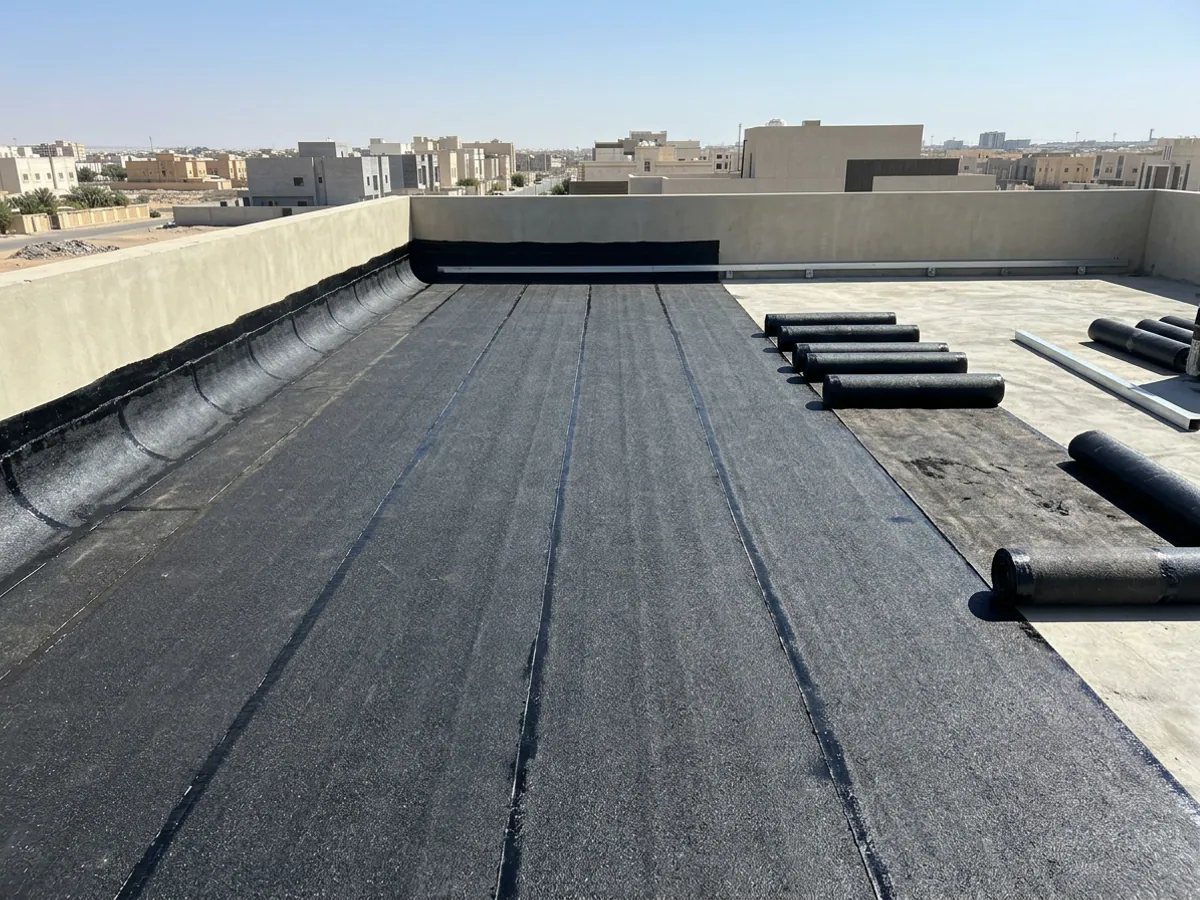
Unprotected rooftops in the Eastern Province experience intense UV radiation and high surface heat that degrade unshielded polymers.
Physical Mechanism: Determines whether mineral-granule sheets, UV topcoats, or protective screed/tiles are mandatory.
03
3. Positive vs. Negative Hydrostatic Pressure
Positive pressure pushes a membrane onto the slab; negative groundwater pressure pushes a coating off the interior wall of an underground tank.
Physical Mechanism: Film-forming epoxies blister under negative pressure unless backed by a negative-side cementitious barrier.
04
4. Potable Drinking-Water Contact
Internal domestic water tank linings must carry documented potable-water contact compliance without leaching solvents or hydrocarbons.
Physical Mechanism: Strictly rules out bituminous and industrial roof coatings inside potable tanks.
05
5. Drainage Slope & Standing Ponding Water
Standard acrylic roof coatings resist sloped rain runoff but soften and blister if water ponds longer than 48 hours.
Physical Mechanism: Low spots must be re-sloped or waterproofed with immersion-rated membranes.
06
6. Structural Movement & Crack-Bridging Demand
Wide roof slabs undergo daily thermal expansion and contraction requiring elastomeric elongation across hairline cracks.
Physical Mechanism: Rigid 1K cementitious slurries crack if used on thermally active exposed decks.
07
7. Maintenance Foot Traffic & Mechanical Loads
Roofs housing HVAC condensers and water heaters need puncture resistance or protective walkways/screed above the membrane.
Physical Mechanism: Prevents dropped tools or service traffic from piercing the waterproof barrier.
08
8. Chemical Compatibility With Existing Layers
Solvent-borne primers can dissolve polystyrene boards or soften aged coatings, causing immediate bond failure.
Physical Mechanism: Verified during site inspection before specifying tie-coats or tear-off.
09
9. Concurrent Thermal Insulation Requirement
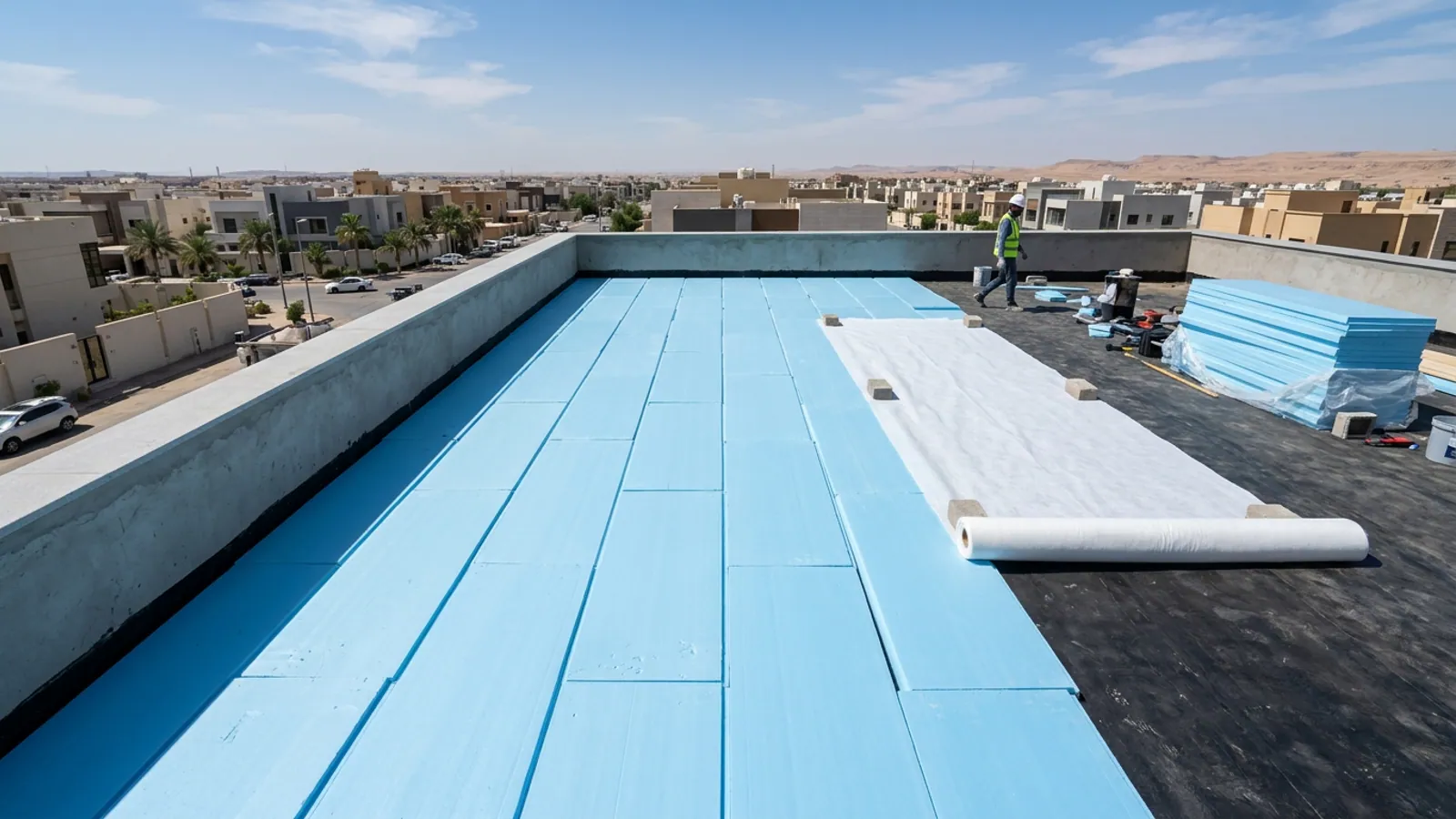
Roofs above air-conditioned living spaces often benefit from combining waterproofing with dedicated thermal resistance.
Physical Mechanism: See waterproofing vs. thermal insulation for assembly order.
10
10. Ventilation & Confined-Space Safety Constraints
Enclosed tanks and interior wet rooms require solvent-free formulations and controlled mechanical air exchange.
Physical Mechanism: Non-negotiable occupational and occupant safety control.