Sub-Floor & Bedding DiagnosticsEastern Province, Saudi Arabia
Under-Tile Water Leak Detection: Tracing Sub-Floor Moisture Migration Accurately
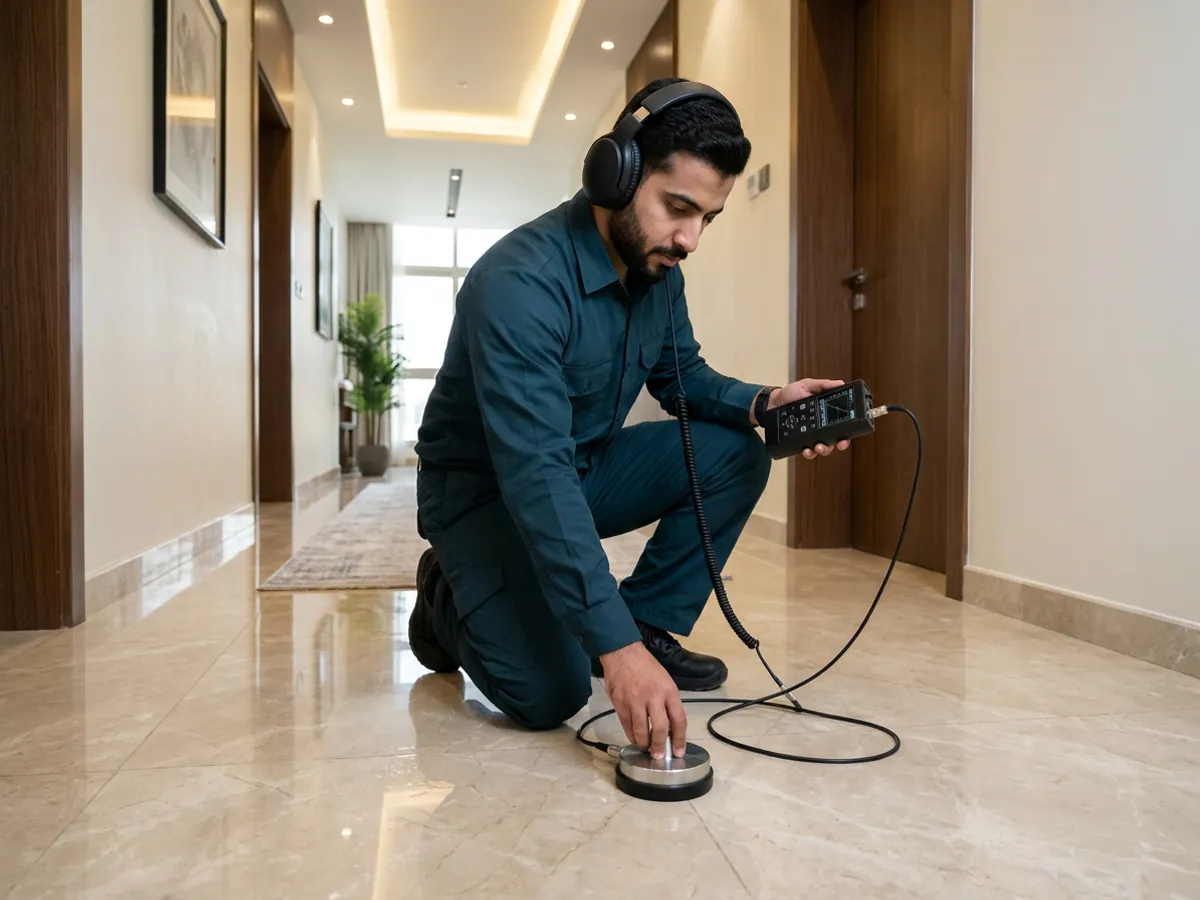
Beneath porcelain, ceramic, and marble floors in Saudi villas lies a thick mortar-and-sand leveling bed capable of absorbing and transporting leaked water meters away from the actual pipe breach. Manar Al Sharqiya traces concealed sub-floor moisture across the Eastern Province to isolate the true source before tiles are lifted.
Why Sub-Tile Water Migrates Away From the Actual Pipe Break
Unlike thin-set tile installations laid directly onto bare concrete, most residential floors in Saudi Arabia are installed over a 5–12 cm sand fill (dafan) and cement mortar bed used to level the slab and conceal horizontal conduits and piping.
When a buried PPR joint weeps or water bypasses an adjacent shower threshold, that porous sand layer absorbs water silently like a hidden reservoir. Once saturated, water follows subtle slab gradients across hallways and living rooms until it wicks upward by capillary action through distant grout joints or along perimeter skirting boards.
Breaking the floor tile where moisture finally surfaces frequently uncovers wet sand with no pipe anywhere nearby. Proper under-tile leak detection traces the pressurized plumbing circuits, thermal footprints, and moisture gradients back to the point of origin.
Prevents breaking hallway or living-room porcelain where migrated water merely exits.
Distinguishes pressurized hot/cold pipe leaks from excessive wet mopping or bathroom threshold migration.
Protects high-value natural marble and large-format porcelain slabs from speculative excavation.
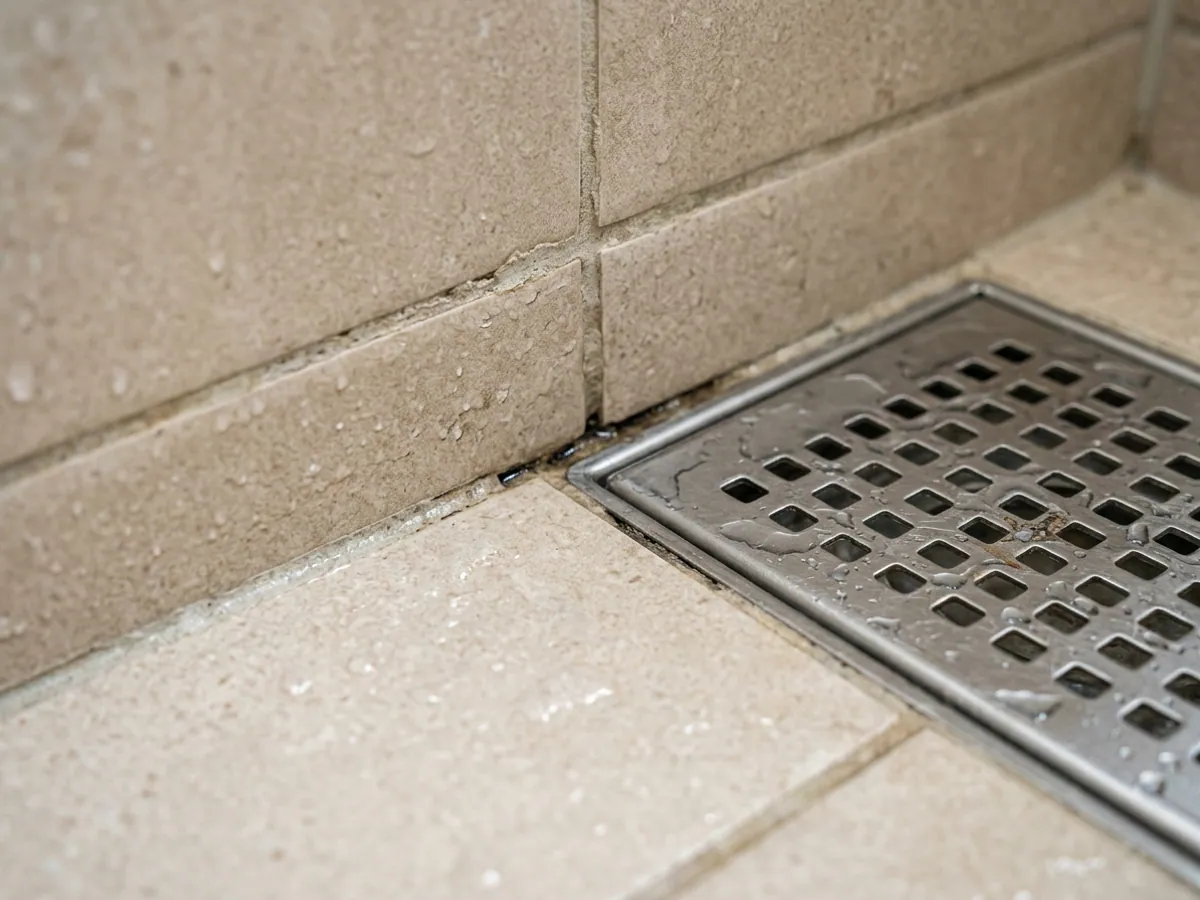
Salt efflorescence and persistent grout darkening caused by trapped moisture evaporating from the sand screed.
Tactile & Visual Clues
Visible & Tactile Signs of Moisture Trapped Under Flooring
Noticeably Warm Patch on Ceramic or Porcelain Tiles
High Diagnostic Priority
Feeling distinct warmth barefoot over a localized floor spot even when hot taps have been closed.
What it may indicate: Strong physical indicator of an active hot-water PPR pipe leak heating the surrounding sand screed.
Powdery White Salt Crystals or Seeping Water Along Grout Lines
Moderate Indicator
Crystalline white efflorescence crusting along tile joints or grout lines turning dark again minutes after wiping dry.
What it may indicate: Shows trapped sub-floor water dissolving cement salts as it evaporates upward—see moisture & dampness diagnostics.
Hollow-Sounding ("Drummy") or Tenting Floor Tiles
Moderate Indicator
Tiles producing a hollow echo when tapped or lifting slightly along joint edges.
What it may indicate: Prolonged moisture saturation can weaken mortar bond or wash fine sand from beneath courtyard pavers.
Darkening Veins & Shadowing in Natural Marble Flooring
Early Sign
Cloudy grey or brown moisture halos spreading from the edges of light marble slabs without surface spills.
What it may indicate: Porous natural stone absorbs dampness from its underside, revealing sub-bedding saturation early.
Uniform Paint Peeling Just Above Skirting Boards Around a Room
High Diagnostic Priority
Blistering plaster 10–25 cm above floor skirting along multiple walls simultaneously.
What it may indicate: Signals a waterlogged floor sand bed wicking moisture upward into surrounding block partitions.
Common Sub-Floor Faults
Common Causes of Sub-Floor Water Accumulation
01
Buried Hot or Cold Supply Fitting Failures
Stressed PPR fusion elbows, tees, or mechanical couplings buried horizontally inside the floor leveling bed.
Minimizing Tile Removal When Repair Access Is Needed
Pinpointing the concealed fitting first allows a plumber to cut along the grout lines of only the targeted tile(s), repair and pressure-verify the joint, and reinstate the patch cleanly.
Important drying physics note: Once an under-tile leak is repaired, moisture already stored inside the covered sand bed evaporates slowly through narrow grout joints and wall edges. Allow adequate ventilation and drying time before repainting lower walls above skirting boards.
Scope Considerations
Factors Affecting Sub-Floor Inspection Scope
Under-tile diagnostic scope depends on site construction details:
Tile Material & Bedding Thickness
Thick stone slabs, double-layered renovations, and heavy exterior pavers require denser comparative grid checks.
Extent of Moisture Spread
A localized patch beside one bathroom is faster to isolate than floor-wide skirting dampness across an entire ground level.
Frequently Asked Questions About Under-Tile Leak Detection
One spot on my hallway floor feels noticeably warm—is that definitely a leak?
+
A persistent localized warm patch on indoor tiles (away from direct sunlight) is a classic indicator of a leaking hot-water pipe heating the sand bed underneath. Shutting the water-heater valve temporarily and scheduling an inspection promptly helps prevent both water and electricity waste.
Why are white crusty crystals forming along my porcelain grout lines?
+
That white powder is salt efflorescence: water trapped in the underlying cement mortar and sand dissolves soluble minerals and leaves them behind on the grout surface as moisture evaporates.
A plumber fixed an under-tile pipe last week, so why is skirting paint still damp?
+
Glazed tiles act as a vapor barrier over the sand bed. Even after the pipe is sealed and pressure holds steady, residual water trapped in the sand takes several weeks of AC dehumidification and airflow to evaporate completely.
Can an underground pipe leak make courtyard tiles sink?
+
Yes. Continuous water escape beneath exterior pavers washes fine sub-base sand into soil voids, causing localized settling or rocking pavers—especially along meter-to-tank runs.
How do you tell installation tile hollowness apart from leak-related tile looseness?
+
Dry installation debonding shows normal surface moisture readings, clean dry grout, and stable plumbing pressure, whereas leak-driven debonding correlates with elevated moisture gradients, efflorescence, or line pressure loss.
Can moisture trapped under bathroom tiles travel into a carpeted or parquet bedroom?
+
Yes. If the bathroom doorway lacks a sealed sub-tile water stop, saturated bathroom bedding readily migrates beneath the threshold and warps adjacent wood/laminate flooring.
Have another specific question about your property? Reach us directly by phone or WhatsApp.
Technical water leak detection and moisture diagnostics for villas and buildings in the Eastern Province, Saudi Arabia. Pinpoint leak sources before repair. Call 0590941982.
Differential diagnosis for bathroom water leaks in the Eastern Province: separate pressurized pipe faults, drain traps, cistern seepage, and tile joint failure. Call 0590941982.