Masonry & Wall-Chase Diagnostics Eastern Province, Saudi Arabia

In-Wall Water Leak Detection: Tracing Concealed Pipe Faults Behind Plaster & Blockwork

When interior paint bubbles, flakes, or develops salty crusts repeatedly, scraping and repainting—or hiding the wall behind PVC/marble panels—merely traps active moisture inside the masonry. Manar Al Sharqiya traces concealed wall leaks across the Eastern Province to pinpoint the real cause behind the plaster.

Traces vertical risers, horizontal wall chases & recessed mixer elbows behind plaster
Separates pressurized pipe leaks from AC condensate, rain ingress & ground rising damp
Includes explicit electrical safety checks around damp wall outlets
Typical Symptoms
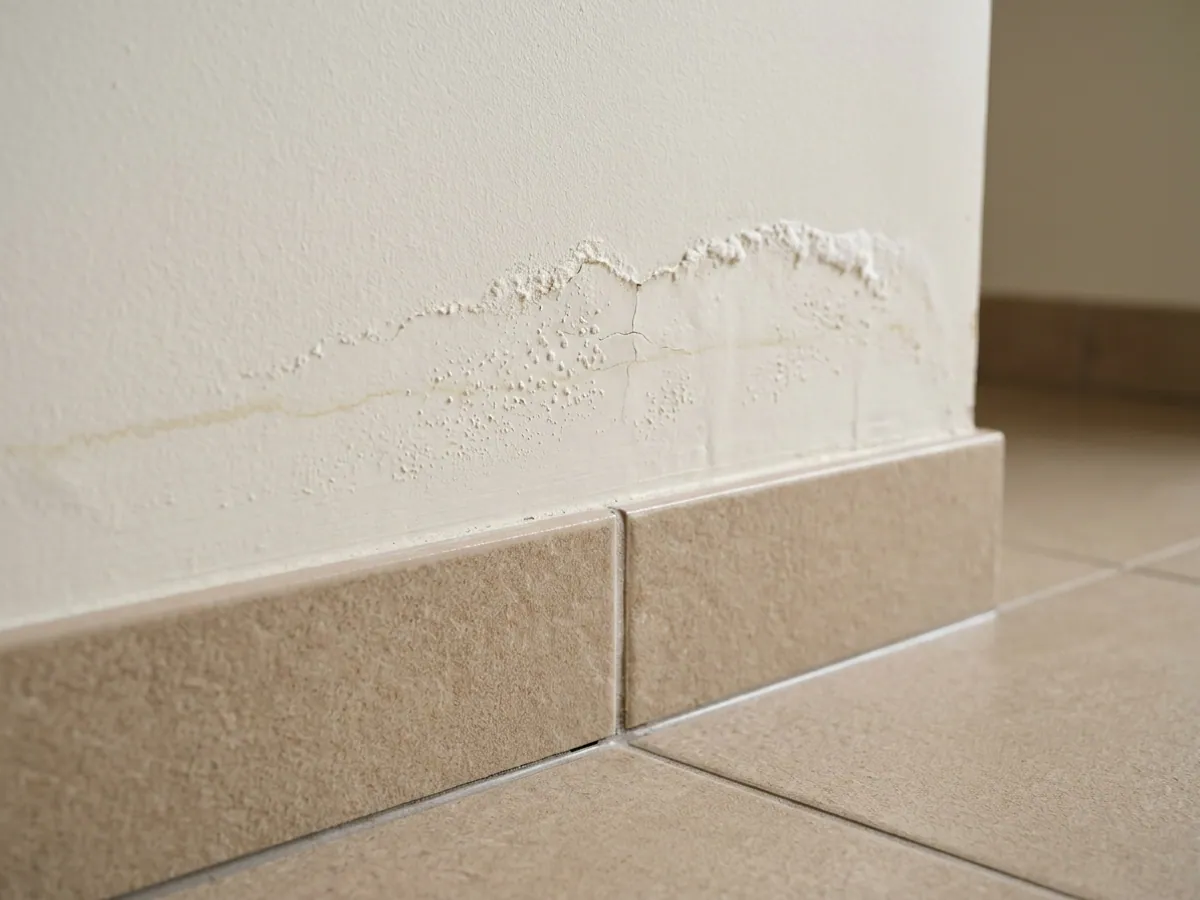
Bubbling Paint, Crumbling Plaster & White Salts
Common Mistake
Installing Wall Cladding Over Active Dampness
Direct Contact
0590941982
Close-up of subtle wall dampness and paint blistering above floor skirting tiles
Masonry Moisture Behavior

Why Repainting Fails When an In-Wall Leak Remains Active

Interior partitions in Saudi buildings are typically built from hollow concrete blocks finished with cement plaster, putty, and acrylic emulsion paint. When a concealed pipe fitting weeps inside a chiseled wall chase, porous blockwork absorbs the water and draws dissolved minerals toward the evaporating plaster surface.

Because modern latex paint films are far less vapor-permeable than cement plaster, vapor pressure and crystallizing salts build up right behind the paint skin—pushing it outward into blisters that crack and peel. Covering that damp wall with "moisture-resistant putty" or decorative WPC/PVC panels without stopping the water feed simply drives moisture higher up the wall and breeds hidden mold.

Effective resolution always begins by diagnosing what lies inside or behind the partition—whether a pressurized supply line, a recessed bathroom mixer on the reverse side, a split-AC condensate drain, or exterior envelope moisture.

  • Stops wasted spending on repeated plastering, repainting, and ruined decorative panels.
  • Pinpoints concealed pipe chases accurately to avoid wide wall demolition.
  • Protects buried electrical conduits, wall sockets, and steel lintels from moisture damage.
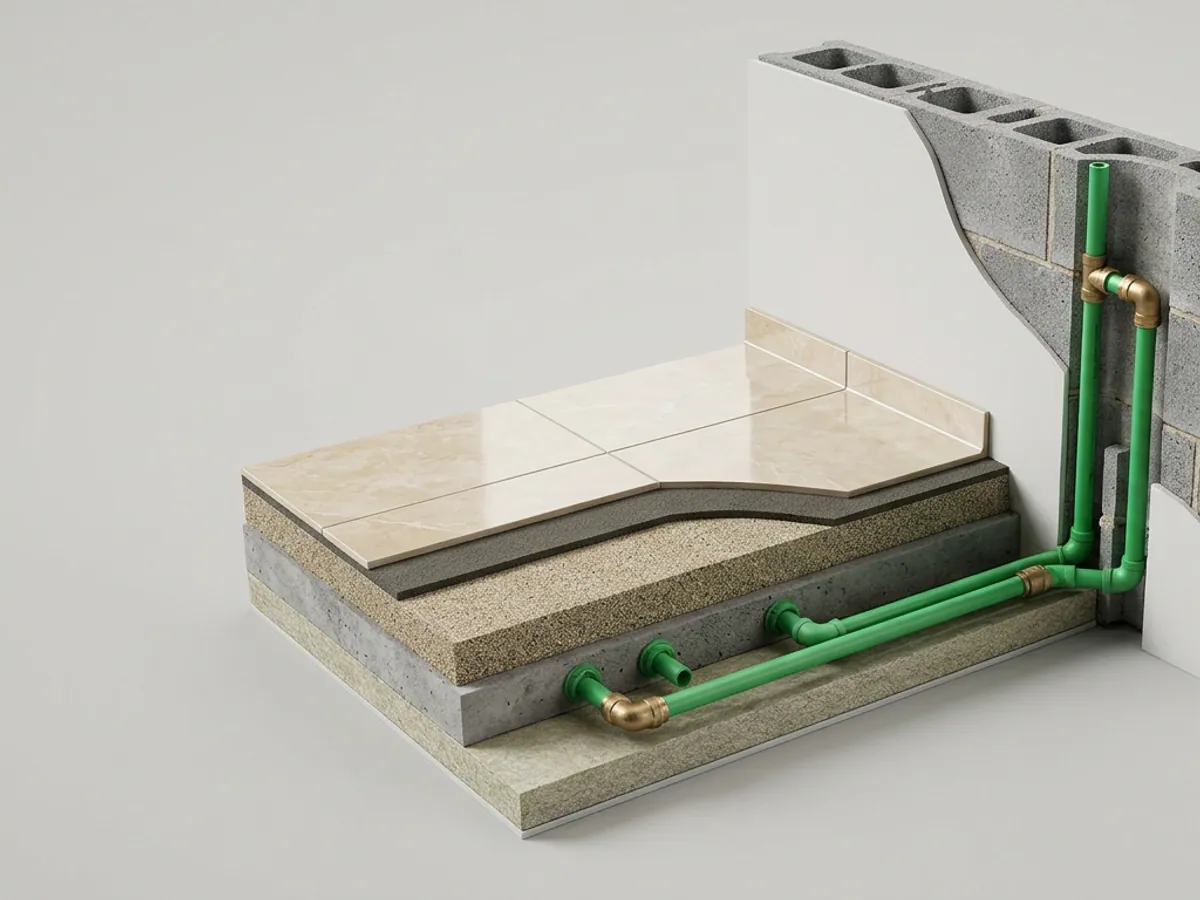
Architectural cross-section showing concealed supply piping inside a blockwork wall between tiled and painted rooms
Tracing vertical moisture propagation along a concealed supply-pipe chase behind cement plaster.
Reading Wall Stain Patterns

Key Indicators of Active Water Seepage Inside Walls

Damp Patches Appearing Mid-Wall (1 Meter+ Above Floor Level)

High Diagnostic Priority

Paint bubbling or dark wet halos well above the skirting line along a vertical or horizontal path.

What it may indicate: Rules out ground-level rising damp and points directly to an in-wall pipe chase, recessed mixer, or AC drain.

Cool, Friable Cement Plaster Behind Flaking Paint

Moderate Indicator

Exposed plaster beneath peeled paint feels cool to the touch and crumbles into damp sand grains.

What it may indicate: Indicates ongoing moisture feed leaching binder salts through the render.

Faint Hissing or Trickling Sound Inside the Partition at Night

High Diagnostic Priority

Hearing subtle water movement when placing an ear near the wall while all fixtures are shut.

What it may indicate: Direct sign of pressurized water escaping a cracked fitting or nail puncture inside the blockwork.

Hidden Mold Behind Wardrobes Backing Onto a Bathroom

Moderate Indicator

Musty odor and dark mildew spots discovered behind closets or headboards mounted against a shared wet wall.

What it may indicate: Restricted airflow combined with seepage from the adjacent bathroom—see bathroom leak detection.
Five Concealed Wall Mechanisms

Concealed Risers, Recessed Mixers, Shared Wet Walls & External Ingress

01

Cracked PPR Wall Elbows or Drill/Nail Punctures

Failed thermal-fusion joints inside wall chases, or masonry drill bits nicking a pipe while mounting TVs, shelves, or curtain rods.

Physical Mechanism: A screw lodged in a PPR wall pipe may seep slowly at first and worsen as metal corrodes and line pressure fluctuates.

02

Weeping Brass Mixer Nipples on Back-to-Back Bathroom Walls

Insufficient thread seal or hairline cracks in brass extension fittings behind shower mixers and shattaf outlets.

Physical Mechanism: Water drips backward into hollow concrete blocks, leaving bathroom tiles spotless while ruining bedroom paint.

03

Concealed Vertical Soil & Waste Stacks

4-inch PVC drainage risers boxed inside wall shafts with cracked tees or loose cleanout joints.

Physical Mechanism: Produces intermittent dampness correlated with upper-floor fixture discharge.

04

In-Wall Split-AC Condensate Drain Lines

Blocked condensate trays or cracked PVC drain sleeves buried diagonally inside interior walls.

Physical Mechanism: Typically flares up during humid Eastern Province summer months and subsides when AC units are off.

05

Exterior Facade Cracks or Ground-Floor Rising Damp

Rainwater entering window sill joints or capillary ground moisture rising into ground-floor masonry.

Physical Mechanism: Evaluated through moisture & dampness diagnostics when plumbing runs are absent.

Tracing Protocol

How Technicians Trace Moisture Gradients Inside Masonry Walls

  1. 1

    Two-Sided Wall & Fixture Inventory

    Inspecting both faces of the affected partition to map mixers, heaters, AC units, drainage shafts, and recent wall fasteners.

    Step Purpose: Identifies every mechanical water source capable of feeding the damp zone.

  2. 2

    Vertical & Horizontal Moisture Gradient Profiling

    Taking comparative non-destructive surface readings from ceiling to skirting to locate the peak saturation point.

    Step Purpose: Distinguishes downward pipe/AC seepage from upward capillary dampness.

  3. 3

    Branch Isolation, Acoustic Listening & Thermal Check

    Testing line pressure stability and pinpointing concealed pipe vibrations or hot-water signatures per non-destructive leak detection.

    Step Purpose: Confines any subsequent plaster or tile opening to the exact faulty fitting.

Seeing Blistering Paint or Dampness Spreading Across a Wall?

Call or WhatsApp Manar Al Sharqiya at 0590941982 to pinpoint what is leaking behind the plaster before you repaint.

Electrical Precaution

Electrical Safety Precautions Around Damp Wall Outlets

Concealed electrical conduits and wall sockets frequently run at the same height as horizontal plumbing chases. Always observe strict safety when wall dampness approaches electrical boxes:

Scope Clarity & Transparency

Why Diagnose In-Wall Dampness Before Calling a Painter?

Root-Cause Verification

Stop active water entry behind the blockwork so future paintwork actually lasts.

Smart Access Planning

Where possible, repairs on shared walls can be planned from the plaster side to spare rare bathroom tiles.

Holistic Moisture Scope

We check pipes, AC condensate drains, facade cracks, and ground dampness objectively.

Eastern Province Service Coverage

In-Wall Leak Diagnostics Across the Eastern Province

Call or WhatsApp Manar Al Sharqiya at 0590941982 to confirm inspection availability in your Eastern Province city or district.

Technical FAQ

Frequently Asked Questions About In-Wall Leak Detection

Dampness appeared right below where we drilled to mount a TV bracket—what happened?

A masonry drill bit very likely nicked a concealed PPR water pipe or split-AC condensate drain inside the wall chase. Close the local water shutoff valve first, do not pull the screw out while water pressure is live, and arrange localized inspection and repair.

Can installing WPC/PVC wall panels hide wall dampness permanently?

Cladding hides the stain visually while trapping moisture inside the concrete block—forcing dampness higher toward the ceiling, promoting hidden mold growth, and eventually loosening wall adhesives.

If a pipe inside a shared bathroom/bedroom wall leaks, which side gets opened for repair?

Depending on pipe depth inside the block, plumbers can often access a straight pipe defect from the painted bedroom plaster side—preserving matching ceramic tiles inside the bathroom.

Why does a wet patch below my split AC appear every summer and dry up in winter?

During humid summer operation, indoor evaporator coils generate substantial condensate water. A cracked or partially clogged condensate drain buried inside the wall will weep only while the AC runs.

How long after fixing an in-wall leak should we wait before repainting?

Allow 2 to 4 weeks of natural drying and AC dehumidification until masonry moisture drops, then scrape loose salt-contaminated plaster before priming and repainting.

What if an exterior ground-floor wall peels along the bottom even though no pipes run there?

Lower-wall peeling on pipe-free ground-floor walls in coastal Eastern Province areas usually stems from capillary rising damp or exterior courtyard wash water—covered in moisture & dampness diagnostics.

Have another specific question about your property? Reach us directly by phone or WhatsApp.

Stop Repeated Paint Failure at the Source

Need to Trace a Leak Inside a Plastered Wall?

Call or WhatsApp Manar Al Sharqiya at 0590941982 with photos or details of your wall dampness to arrange an inspection.

Helpful Details to Mention When Contacting Us:

  • Your city/district in the Eastern Province and property type (villa, apartment, commercial).
  • Visible symptoms (wall dampness, ceiling drip, tank drop, or sudden water bill spike).
  • Whether the symptom is continuous or appears only after fixture use or rainfall.

Or Prepare Your Inspection Details Below

Direct server submission is pending activation; you can send these exact details immediately via WhatsApp or call us directly.

Call Now 0590941982

We respect your privacy and never share personal details with third-party marketers. Read our Privacy Policy.