Coastal Humidity & Wall Dampness in the Eastern Province: Sabkha Soils, Condensation & Accurate Diagnosis
Across Arabian Gulf coastal cities, villa and building owners frequently repaint flaking ground-floor walls only to watch white salt crystals and blistering return within months. This regional engineering guide explains how saline coastal sabkha soils and high Gulf dew points interact with concrete and masonry—and how to tell environmental moisture apart from concealed plumbing leaks before spending money on the wrong repair.
Key Engineering Takeaways
- Coastal cities (Dammam, Al Khobar, Qatif, Jubail) face two non-plumbing moisture drivers: upward capillary wicking of saline groundwater from below, and humid air condensing on cold surfaces above.
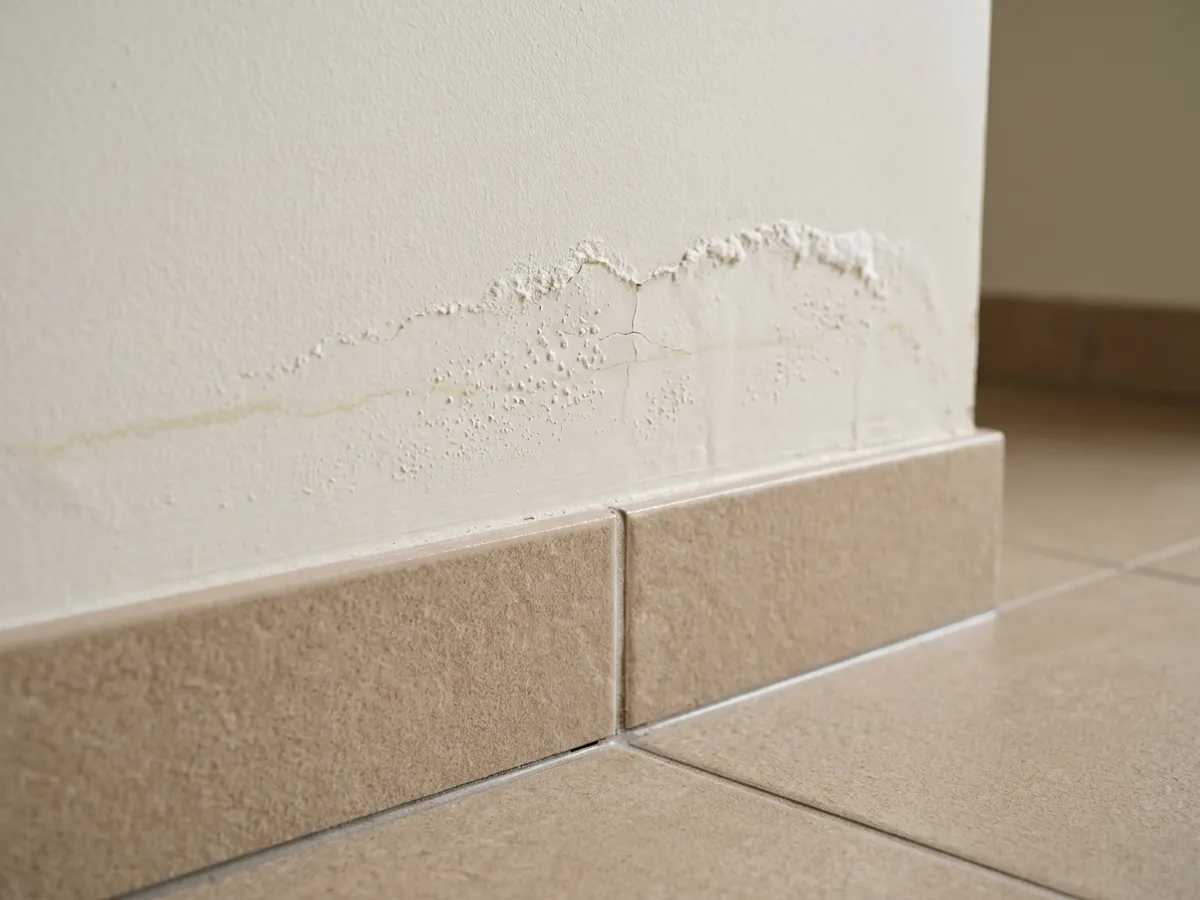
- Salt crystallization (efflorescence and sub-florescence) expands inside plaster pores with enough mechanical force to pop premium paints off the wall.
- Skim-coating or hiding damp plaster behind PVC/faux-marble cladding without identifying the moisture source traps decay and pushes dampness higher.
- Inland oases like Al Ahsa experience a different envelope profile dominated by intense dry solar heat and wide diurnal concrete expansion.
Why Coastal Gulf Buildings Age Differently From Inland Properties
Saudi Arabia’s Eastern Province spans two sharply contrasting building-envelope environments. Along the Arabian Gulf littoral—covering Dammam, Al Khobar, Qatif, and Jubail—prolonged seasonal relative humidity combines with low-lying coastal sabkha geology characterized by shallow water tables rich in chloride and sulfate salts.
Further inland, Al Ahsa experiences dry extreme summer solar radiation and wide day-to-night temperature swings that stress rooftop concrete slabs and tile expansion joints far more than coastal fog, while elevated Dhahran villas balance thermal envelope efficiency with finish preservation. Understanding which mechanism acts on your property prevents costly misdiagnosis.
- Coastal moisture attacks envelopes both upward from saline soil and inward from humid ambient air.
- Chloride salts migrating into grade beams and underground tank necks accelerate reinforcing-steel corrosion.
- Every damp wall requires differential testing before choosing plumbing repair, waterproofing, or plaster remediation.
Non-Plumbing Moisture Phenomena Commonly Mistaken for Pipe Leaks
Building pathology distinguishes three regional moisture mechanisms along the Eastern Province coast:
1. Capillary Rising Damp & Salt Efflorescence at Ground-Floor Plinths
Where grade-beam damp-proof courses are bridged by render or wet courtyard sand beds, porous blockwork and cement plaster wick saline soil moisture 30–90 cm upward.
Physical Mechanism: As moisture evaporates into air-conditioned rooms, dissolved salts crystallize inside plaster pores, crumbling putty and paint in a uniform horizontal band.
2. Dew-Point Condensation on Thermal Bridges & Chilled AC Ducts
When Gulf relative humidity surges past 70% and unconditioned outdoor air leaks into ceiling voids or meets cold uninsulated concrete roof beams, vapor condenses into liquid droplets.
Physical Mechanism: Peaks during humid late-summer months while plumbing pressure tests remain completely tight; mitigated through air sealing and thermal insulation.
3. Negative-Side Hydrostatic Groundwater Pressure on Underground Tanks
In shallow water-table zones, external saline groundwater pushes inward through concrete tank walls whenever internal potable water levels drop.
Physical Mechanism: Delaminates ordinary interior tank paints unless resisted by negative-pressure cementitious base layers under water tank waterproofing.
Coastal Rising Damp vs. AC Condensation vs. Active Plumbing Leak
| Diagnostic Dimension | Coastal Capillary Rising Damp | Humid-Air / AC Condensation | Pressurized or Drain Pipe Leak |
|---|---|---|---|
| Stain Geometry & Floor Level | Continuous horizontal band 20–90 cm above ground-floor skirting only | Spotted mold in cold ceiling corners or along AC duct runs on any floor | Localized circular/vertical plume near a pipe riser or wet wall on any floor |
| White Crystalline Salt Deposits | Heavy powdery/crusty white salt crystals pushing off render | Minimal salt; predominantly dark surface mildew spots | Low initially unless chronic seepage leaches masonry salts |
| Seasonal & Weather Correlation | Year-round, worsening after winter rainstorms raise groundwater | Sharp spike during humid August–October coastal weather | Steady 12 months a year regardless of outdoor humidity |
| Plumbing Manifold Pressure Test | Supply pressure holds 100% steady; meter stationary | Supply pressure holds 100% steady | Measurable manifold pressure drop or direct fixture-drain correlation |
Because courtyard supply leaks and coastal rising damp can coexist in the same ground-floor wall, objective moisture & dampness diagnostics should always precede plaster stripping.
Why Quick Cosmetic Wall Fixes Fail Along the Coast
Scraping Loose Paint and Re-Puttying Over Salt-Contaminated Plaster
Residual chlorides inside old render are hygroscopic—they pull moisture straight out of indoor air and recrystallize beneath fresh gypsum putty within weeks.
Sound Engineering Practice: Eliminate active moisture sources first and strip salt-saturated render back to sound masonry before applying breathable salt-resistant repair mortars.
Cladding Damp Walls With WPC/PVC Faux-Marble Sheets
Sealing rising damp behind vapor-tight decorative panels drives capillary moisture higher up the wall while breeding hidden mold in the cavity.
Sound Engineering Practice: Verify plumbing integrity via [water leak detection](/en/services/water-leak-detection/) and treat the underlying damp mechanism directly.
Ignoring Courtyard Paving Slopes Pitching Toward Exterior Walls
Washdown water and rain pooling against villa perimeter plinths continuously feed capillary wall wicking.
Sound Engineering Practice: Maintain positive courtyard fall away from building walls and seal perimeter expansion joints.
Frequently Asked Questions: Coastal Dampness & Wall Efflorescence
Clear answers for Eastern Province property owners:
Will "anti-damp paint" stop white salt crystals from pushing through my ground-floor wall?
No thin decorative topcoat can hold back active salt crystallization pressure if moisture is still feeding the wall from behind or if the underlying plaster remains saturated with hygroscopic salts.
Why do top-floor ceiling corners grow dark mold spots in late summer with zero rain?
Uninsulated exterior concrete roof beams chilled by indoor AC drop below the dew point of humid indoor air, causing surface condensation. Upgrading roof thermal insulation and managing indoor humidity resolves the thermal bridge.
How do you confirm whether ground-floor wall peeling is rising damp or a leaking pipe?
By combining manifold pressure testing with vertical moisture-gradient profiling and thermal imaging—a pipe leak peaks around a localized point, whereas rising damp tapers uniformly upward from floor level.
Can we book a differential moisture inspection in Dammam, Al Khobar, Qatif, or Jubail?
Yes. Call or WhatsApp 0590941982 with photos of the wall and your city to schedule an appointment-based field inspection.
Have another specific question about your property? Reach us directly by phone or WhatsApp.