Blistering paint, crumbling plaster, musty odors, and white crystalline salt deposits look nearly identical on the surface—yet in the Eastern Province they can stem from completely different mechanisms: an active concealed pipe leak, rainwater ingress, humid coastal air condensing on AC-chilled surfaces, or capillary rising damp. Manar Al Sharqiya diagnoses the true root cause before you waste money on the wrong repair.
Peeling paint, white salt crystals, mold spots, damp odor
Direct Contact
0590941982
Why Surface Symptoms Deceive
Why Different Moisture Mechanisms Produce Similar Surface Damage
Whether water molecules originate from a pinhole in a buried PPR pipe, winter rain penetrating an exterior window joint, humid Gulf air condensing on an uninsulated AC duct, or saline groundwater wicking upward from coastal soil, gypsum putty and emulsion paint react the same way: loss of adhesion, bubbling, discoloration, and salt crystallization.
Treating the surface symptom without identifying the water mechanism wastes money repeatedly. Repainting over an active supply leak peels again within weeks; breaking into an exterior wall that carries zero plumbing destroys finishes needlessly; and applying waterproof render over an AC thermal bridge does nothing to stop surface condensation.
At Manar Al Sharqiya, we apply structured building-pathology principles—combining comparative electronic moisture mapping (aligned with ASTM F2659 comparative slab/wall survey practices) and source classification (consistent with ANSI/IICRC S500 water-origin concepts)—to verify where the moisture is actually coming from.
Determines whether the moisture source is pressurized plumbing, exterior weather ingress, indoor HVAC/humidity, or sub-grade soil.
Tailored specifically to Eastern Province coastal humidity spikes and shallow saline sabkha water tables.
Gives you an honest, evidence-based sequence before hiring painters, plumbers, or insulation crews.
Profiling vertical and horizontal moisture gradients against dry reference masonry along an interior wall.
Five Distinct Moisture Mechanisms
Five Moisture Sources in Eastern Province Buildings
01
1. Active Concealed Plumbing & Wet-Area Seepage
Pressurized supply pinholes, leaking drain sockets, or saturated sand beds migrating from adjacent bathrooms or kitchens.
Physical Mechanism: Produces a localized high-moisture core that persists year-round regardless of outdoor humidity; see In-Wall Leak Detection.
02
2. Rainwater Envelope & Parapet Ingress
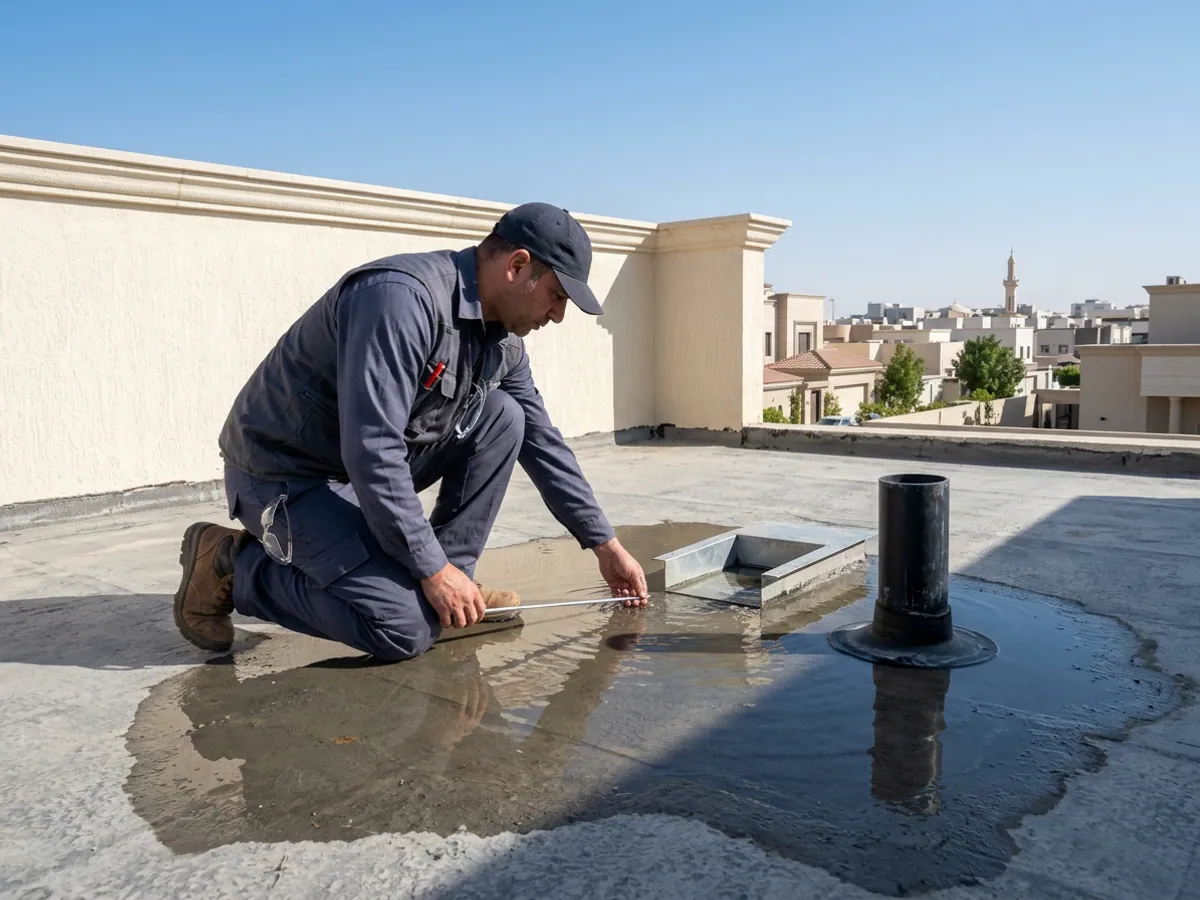
Stormwater entering through exterior render cracks, unsealed window perimeters, or roof parapet joints.
Physical Mechanism: Flares up noticeably after rainfall or facade washing; see Roof Leak Detection.
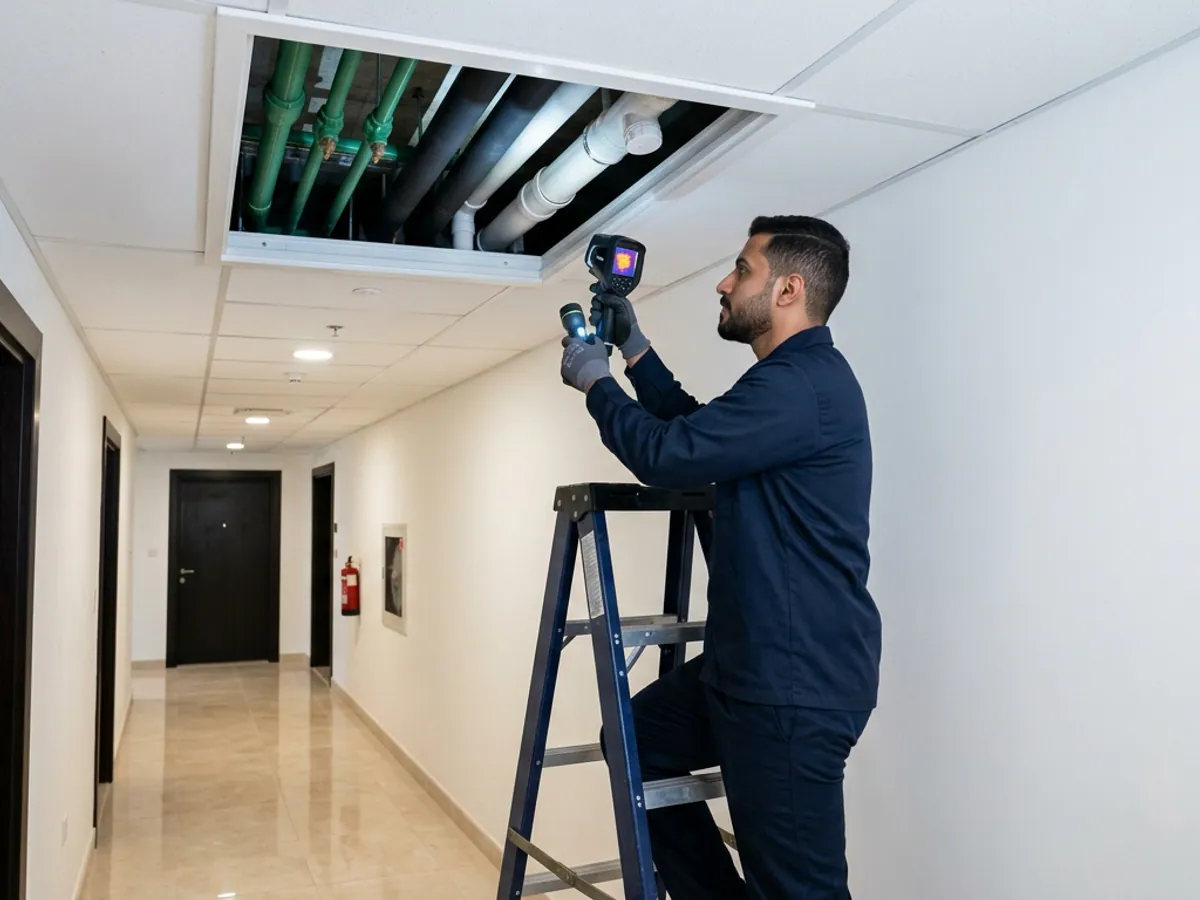
Humid coastal summer air infiltrating ceiling voids or striking cold AC supply diffusers/uninsulated refrigerant lines, plus clogged split-unit condensate drains.
Physical Mechanism: Peaks during humid late-summer months (July–September) around AC grilles, cold lintels, and gypsum soffits.
04
4. Inadequate Wet-Room Exhaust Ventilation
Inoperative bathroom/kitchen exhaust fans trapping hot shower and cooking vapor indoors.
Physical Mechanism: Creates scattered surface mold speckles across upper corners and ceilings without deep masonry saturation.
Saline ground moisture or daily exterior planter irrigation wicking upward through porous grade-beam concrete and blockwork where damp-proof courses are bridged.
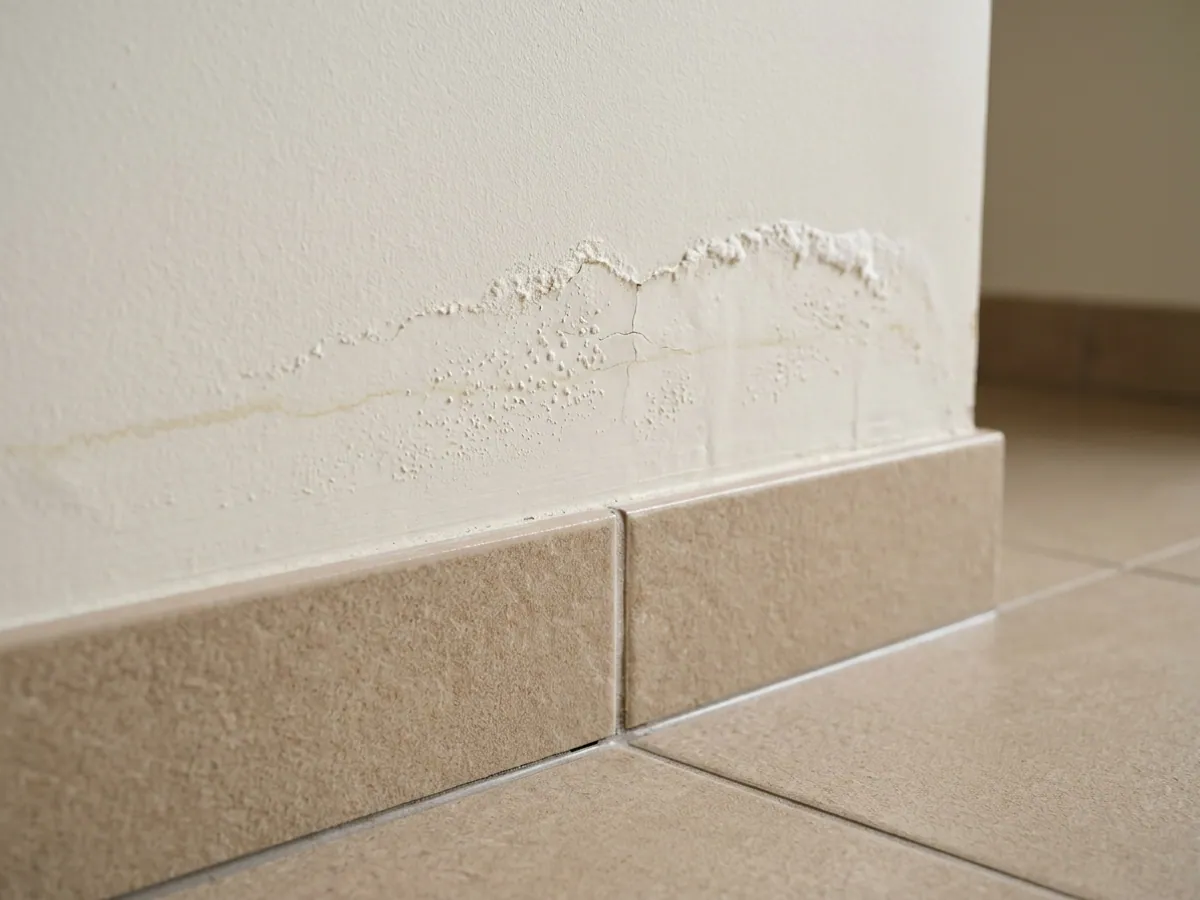
Physical Mechanism: Strictly confined to ground-floor walls as a continuous horizontal band 20–80 cm above floor tile with heavy crystalline salt efflorescence.
Forensic Moisture Profiling
Reading Stain Geometry, Height & Salt Efflorescence Patterns
Diagnostic Matrix: Pipe Leak vs. Dew-Point Condensation vs. Capillary Rising Damp
Comparing the three most frequently confused building moisture mechanisms
Diagnostic Cue
Active Pipe / Wet-Room Leak
HVAC / Dew-Point Condensation
Capillary Rising / Planter Damp
Stain Geometry & Location
Focal plume along pipe route, behind wet wall, or ceiling spot
Surface droplets/speckled mold near AC grilles, ducts, or thermal bridges
Continuous wavy horizontal tide-mark along ground-floor walls (20–80 cm)
Seasonal Pattern
Persists 365 days a year independent of outdoor humidity
Peaks sharply during humid Eastern Province summer months
Chronic on ground floors; worsens with yard washing or high water table
Salt Efflorescence
Moderate along outer evaporation edges over time
Minimal/absent (condensate is distilled vapor; dark surface mold dominates)
Heavy white crystalline powder causing render spalling
Correct Next Step
Fix the verified pipe/joint fault first, then dry masonry
Insulate cold ducts, seal humid air infiltration, or clear AC drain
Stop planter/yard water feed and remediate lower-wall damp barrier
Physical clue: Condensed air vapor contains zero dissolved soil minerals (producing mold rather than heavy salt crusts), whereas sub-slab and ground moisture carries abundant salts to the plaster surface.
Preventing Secondary Structural Damage
Why Cosmetic Putty, Cladding or Anti-Damp Paint Traps Moisture
Covering a damp wall with decorative PVC marble sheets, ceramic wall tiles, wallpaper, or vapor-impermeable epoxy paint without stopping the water source traps moisture inside the concrete blockwork.
Blocked from evaporating at the lower wall, trapped capillary moisture climbs higher until blistering reappears right above the new wainscoting—while hidden mold proliferates behind the cladding and moisture attacks electrical backboxes and steel reinforcement.
Matching the Right Next Step to the Verified Moisture Source
Once our inspection identifies the mechanism, you follow the right sequence once: (1) eliminate active plumbing, AC, or irrigation feed; (2) allow sufficient natural drying/ventilation for trapped interstitial moisture to escape; and (3) apply targeted protective waterproofing or plaster restoration only after the substrate stabilizes.
Frequently Asked Questions About Building Moisture Diagnostics
How can I tell surface condensation mold apart from a concealed wall pipe leak?
+
Surface condensation typically produces scattered dark mold dots along cold upper wall corners, window lintels, or AC diffusers during humid months without deep plaster crumbling. A concealed pipe leak creates a concentrated wet core that softens putty, blisters paint outward, and stays damp regardless of weather.
Why is paint peeling 40 cm above the skirting across my ground floor while upstairs walls are spotless?
+
Dampness restricted strictly to a horizontal band along ground-floor walls points to bottom-up moisture—either a saturated sub-floor sand bed from a buried leak/adjacent bathroom, unwaterproofed outdoor planter beds, or capillary rising damp from saline ground soil.
Will installing PVC wall panels or ceramic tiles over a damp wall solve the problem?
+
No. Covering active dampness blocks evaporation, forcing moisture higher up the wall above the panels while fostering hidden mold and corroding electrical conduits behind the cladding. Always diagnose and stop the water source first.
Water is dripping from my gypsum ceiling next to an AC grille in August—is it a roof leak?
+
In dry, humid summer weather, ceiling drips near AC grilles most often come from a blocked AC condensate drain line or humid attic/shaft air condensing on uninsulated chilled ductwork or refrigerant lines rather than roof rain leaks.
Can exterior garden flowerbeds built against the house wall cause indoor living-room dampness?
+
Yes, very commonly. Masonry planters built directly against exterior plaster without dedicated root-and-waterproof membranes hold wet soil against porous blockwork after every watering cycle, driving moisture and salts straight through to indoor paint.
How long should a wall dry after fixing a leak before repainting?
+
Depending on wall thickness, saturation depth, and indoor air-conditioning/ventilation, cementitious plaster and blockwork typically need two to six weeks of drying after the leak stops before scraping, priming, and repainting.
Have another specific question about your property? Reach us directly by phone or WhatsApp.
Technical water leak detection and moisture diagnostics for villas and buildings in the Eastern Province, Saudi Arabia. Pinpoint leak sources before repair. Call 0590941982.
Identify whether top-floor ceiling leaks come from rain ponding, blocked scuppers, parapet joints, or rooftop water lines in the Eastern Province. Call 0590941982.
Technical waterproofing services across the Eastern Province, Saudi Arabia for roofs, water tanks, and wet areas. Substrate-matched membrane systems. Call 0590941982.
Roof and building thermal insulation services in the Eastern Province, Saudi Arabia. Understand R-value, U-value, thermal bridges, and roof assemblies. Call 0590941982.
Engineering guide to sabkha rising damp, salt efflorescence, and AC dew-point condensation vs. active plumbing leaks across coastal Eastern Province cities.