High Water Bill Home Self-Check Guide: A 30-Minute Audit Before Calling a Specialist
Receiving a residential water bill two or three times higher than normal—with zero visible puddles on your floors—is a common frustration across the Eastern Province. This hands-on homeowner guide walks you through progressive tariff math and a 30-minute DIY self-audit to catch simple fixture faults yourself and know exactly when concealed instrument diagnostics is warranted.
Key Engineering Takeaways
- Progressive residential tariff tiers mean a modest continuous leak pushes monthly volume into higher-priced brackets, multiplying the SAR invoice faster than volume alone.
- Four homeowner-accessible components cause a large share of silent waste: weeping toilet flappers, stuck ground-tank floats, stuck RO filter shutoff valves, and irrigation timers.
- Photographing your meter’s decimal digits 15 minutes apart with all water shut off immediately proves or rules out active flow.
- When fixtures check out clean yet meter flow or tank drop persists, staged hydraulic isolation and acoustic testing become essential.
How Progressive Water Brackets Amplify Small 24-Hour Leaks
Homeowners often assume a tripled invoice means household consumption tripled—yet progressive tariff structures work differently. Initial cubic meters in a billing cycle are billed at low baseline rates, while each higher consumption bracket carries a significantly steeper per-cubic-meter charge.
Because concealed leaks run 24 hours a day, even a whisper-quiet trickle inside a toilet bowl or courtyard tank neck at 1 liter per minute wastes 1.44 m³ every day—roughly 43 m³ over a 30-day cycle. That extra volume pushes total household usage into upper tariff brackets. Public conservation advisories published by the National Water Company (NWC) highlight routine checks of floats, cisterns, and internal fittings for precisely this reason.
- A silent half-cup-per-minute seep wastes over 20,000 liters per month without wetting a single floor tile.
- Always review billed cubic meters (m³) and billing-period length first rather than looking only at the total SAR figure.
- Many surface-level fixture leaks can be spotted in half an hour with zero specialized tools.
The 4-Step, 30-Minute DIY Water Audit for Villas & Apartments
Pick a quiet window when washing machines, dishwashers, and showers are off, then complete these four checks in order:
- 1
1. Food-Coloring Dye Test on Every Toilet Cistern
Add 5–6 drops of dark blue or red food coloring into each toilet tank (or through the concealed flush-plate service opening) and wait 20 minutes without flushing.
Step Purpose: Any color appearing in the bowl proves a worn flapper or flush-seal is draining water silently straight into the sewer.
- 2
2. Under-Sink Reverse-Osmosis (RO) Filter & Cooler Drain Check
Pull the black waste-brine tube of your kitchen RO drinking filter out of the sink standpipe once the storage bladder is full; flow should stop completely.
Step Purpose: A failed 4-way automatic shutoff valve keeps reject water running down the kitchen drain 24 hours a day.
- 3
3. Courtyard Ground Tank Float & Garden Irrigation Timer Inspection
Lift the ground-tank hatch safely to verify water stops cleanly below the float arm without overflowing into the collar, and check solenoid drip-irrigation zones for soggy soil.
Step Purpose: Calcified float valves and stuck outdoor solenoid valves dump huge volumes directly into courtyard sand.
- 4
4. 15-Minute Zero-Use Meter Stillness Check
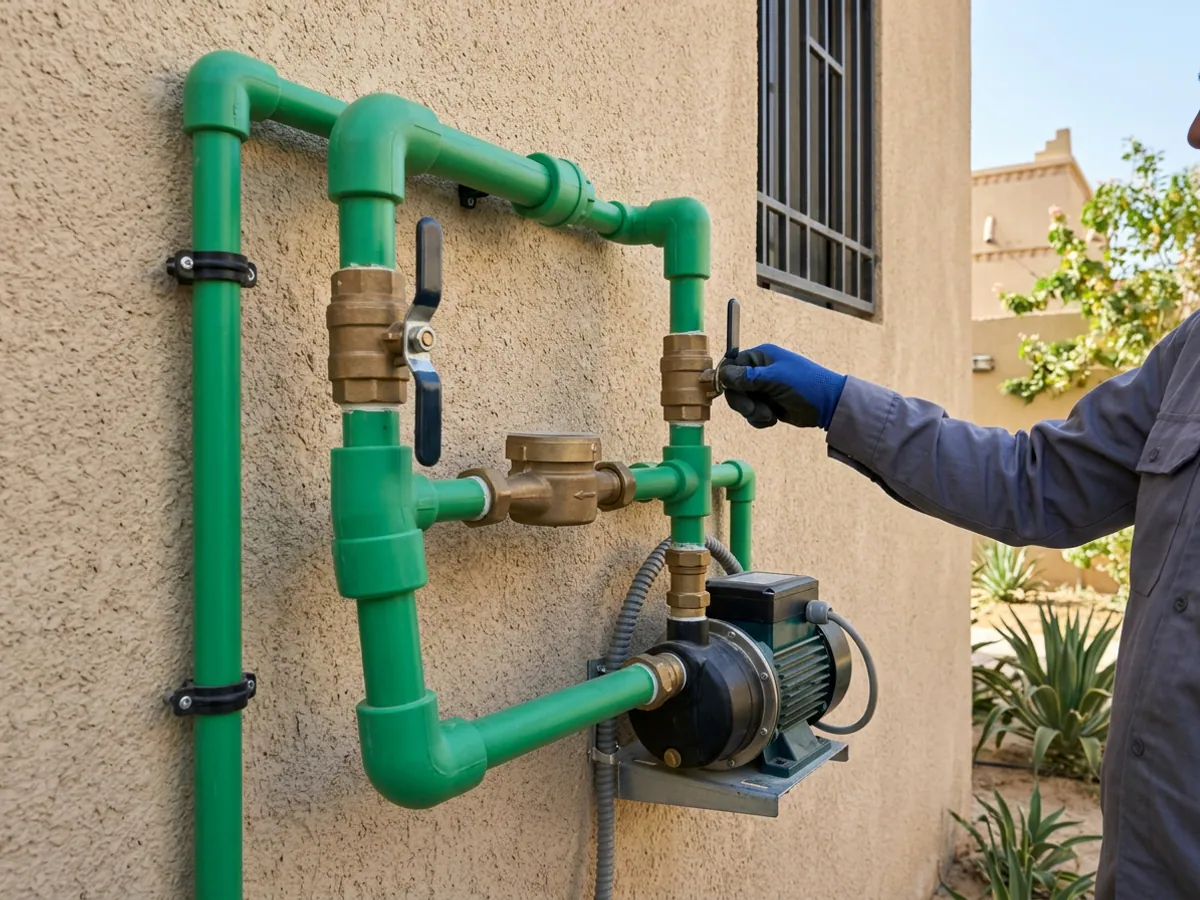
Turn off the booster pump and all indoor taps, photograph the external water meter’s sub-liter decimal digits, and take a second photo 15 minutes later.
Step Purpose: Any movement in decimal liters during total indoor shutoff confirms active loss between the meter and ground tank.
When Simple Maintenance Suffices vs. When to Book Specialist Diagnostics
| What Your DIY Audit Found | Likely Cause | Recommended Next Step |
|---|---|---|
| Dye entered a toilet bowl, and meter stopped once that WC angle valve was shut | Isolated worn cistern flapper or fill valve | Have a routine maintenance plumber replace the internal flush seal and re-check the meter |
| Continuous stream from under-sink RO filter reject tube when tank is full | Faulty RO auto-shutoff diaphragm | Close the filter feed valve and service the RO shutoff component |
| Meter decimals keep advancing even with the ground-tank inlet valve shut | Split buried supply pipe beneath courtyard paving between meter and tank | Book high water bill diagnostics for pressure & acoustic pinpointing prior to digging |
| Meter stays still, but courtyard ground-tank level drops overnight with pump off | Cracked concrete tank floor, wall joint, or neck seepage | Schedule water tank leak detection followed by potable tank waterproofing |
| Booster pump cycles every few minutes with clean cisterns and filters | Concealed pressurized supply leak beneath floor tiles or inside walls | Arrange non-destructive water leak detection across hot and cold manifolds |
Whether your property is in Dammam, Al Khobar, Al Ahsa, or another confirmed Eastern Province city, our field team can isolate hidden hydraulic circuits when DIY checks point underground.
Three Common Homeowner Mistakes After a High Water Bill
Assuming an Air-Release Valve or Meter Swap Will Stop a Real Underground Leak
If water is physically escaping through a cracked courtyard tank or buried elbow, meter readings will remain high regardless of inline gadgets until the physical breach is sealed.
Sound Engineering Practice: Complete the 15-minute zero-use stillness test and tank isolation check first.
Excavating the Entire Courtyard Line Without Pressure-Testing First
Tearing up interlocking pavers on a hunch frequently reveals an intact pipe while the real loss sits inside a tank neck or annex toilet.
Sound Engineering Practice: Isolate and gauge-test the specific pipe run before lifting a single paver.
Relying on Unverified "Guaranteed Bill Cancellation" Claims
Stopping ongoing financial loss starts with locating and repairing the physical leak so daily meter readings return to normal, while consulting official utility channels directly for billing policies.
Sound Engineering Practice: Prioritize transparent, instrument-backed leak localization over exaggerated administrative promises.
Frequently Asked Questions: DIY High Water Bill Checks
Clear answers to help you interpret household meter behavior:
What is the single most reliable sign of a silent leak vs. heavy family usage?
Overnight meter stillness. Even a large household uses zero water when everyone is asleep and irrigation/filters are off; if the meter’s decimal wheels or digits move during a 15-minute shutoff test, water is escaping.
Why does my meter stay still for 10 minutes and then spin briefly on its own?
Intermittent bursts usually happen when a slow indoor leak draws water from the roof/pressure tank until the float or booster switch drops enough to trigger a brief refill.
Can a rooftop central water heater cause a hidden water bill spike?
Yes. A failed temperature-and-pressure (T&P) relief valve on a rooftop central heater can discharge hot water continuously into a roof floor drain completely out of sight.
When should I stop DIY checks and schedule an inspection with Manar Al Sharqiya?
Once toilets, RO filters, and visible float valves are confirmed tight yet meter flow, tank drop, or pump cycling continues, call or WhatsApp 0590941982 to schedule staged field diagnostics.
Have another specific question about your property? Reach us directly by phone or WhatsApp.