Underground & Overhead Tank DiagnosticsEastern Province, Saudi Arabia
Water Tank Leak Detection: Ground & Overhead Tank Diagnostics in the Eastern Province
Concrete underground storage tanks and rooftop tanks anchor water supply across Saudi villas and commercial buildings. A faulty float valve, unsealed manhole neck, leaking pump suction union, or structural shell crack can lose thousands of liters underground without wetting a single interior room. Manar Al Sharqiya provides safe, methodical tank leak diagnostics across the Eastern Province.
Sudden high water bills, rapid level drop, or brackish water
Direct Contact
0590941982
Primary Source of Silent Water Loss
Why Underground Concrete Tanks Cause Silent Water Loss
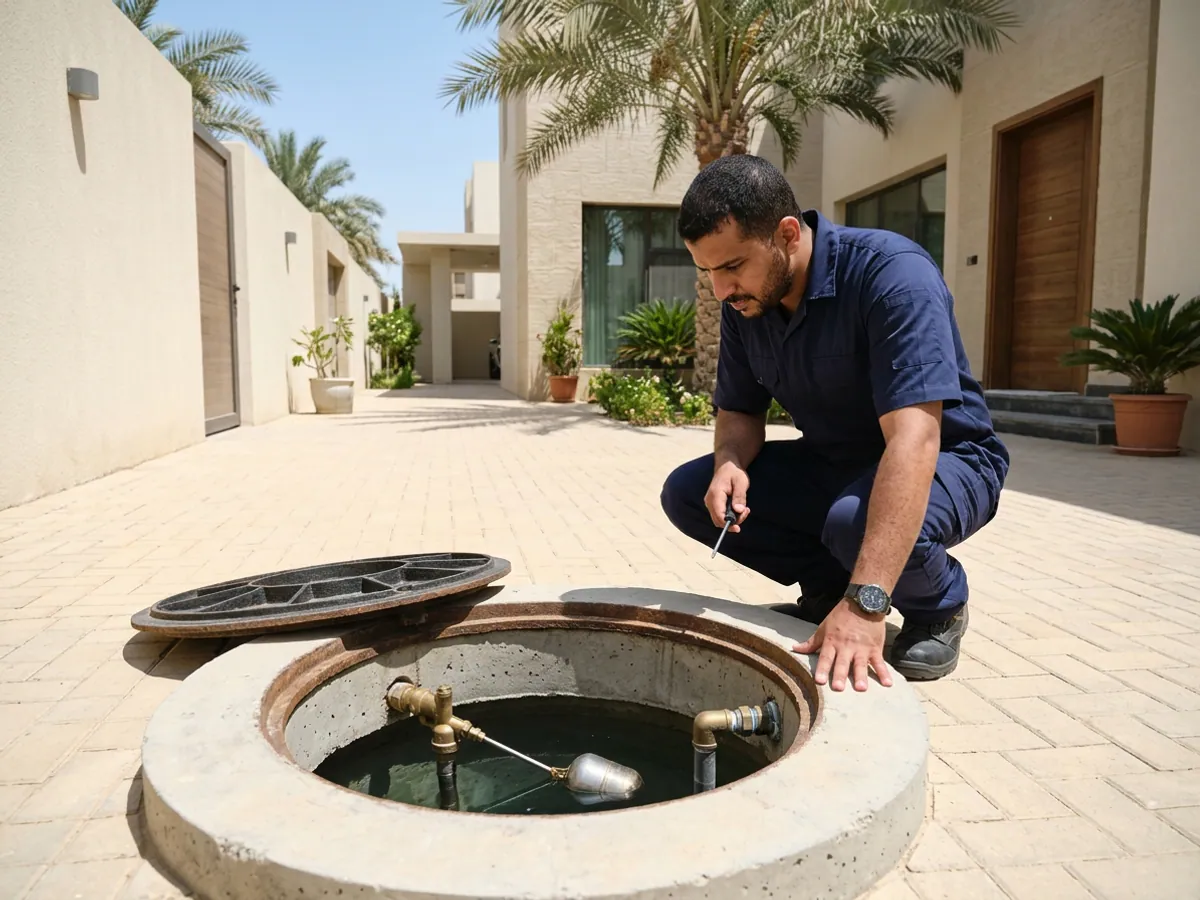
When an indoor bathroom or wall pipe fails, plaster blisters within days. An underground reinforced-concrete water tank beneath a villa courtyard behaves completely differently: surrounded by permeable sand backfill, a tank breach or overfilling neck joint can discharge massive volumes directly into sub-grade soil for months with zero indoor symptoms.
Equally important, losing water at a ground tank does not automatically mean the concrete tank structure has cracked and needs expensive full-scale re-lining. In many field inspections, the lower concrete basin is completely sound—while water is actually escaping through a worn mechanical float valve overtopping an unsealed masonry tank neck, a cracked post-meter inlet union, or reverse gravity backflow from the rooftop tank.
Manar Al Sharqiya treats water tank leak detection as an objective diagnostic step first: verifying valves, inlet/suction piping, neck joints, and static water-level stability so you know the exact cause before committing to any repair or waterproofing scope.
Avoid paying to waterproof an entire tank when a faulty float valve, check valve, or neck joint is the real culprit.
Protect courtyard paving and perimeter foundations from soil washout around leaking ground tanks.
Check for brackish groundwater infiltration in coastal Eastern Province neighborhoods.
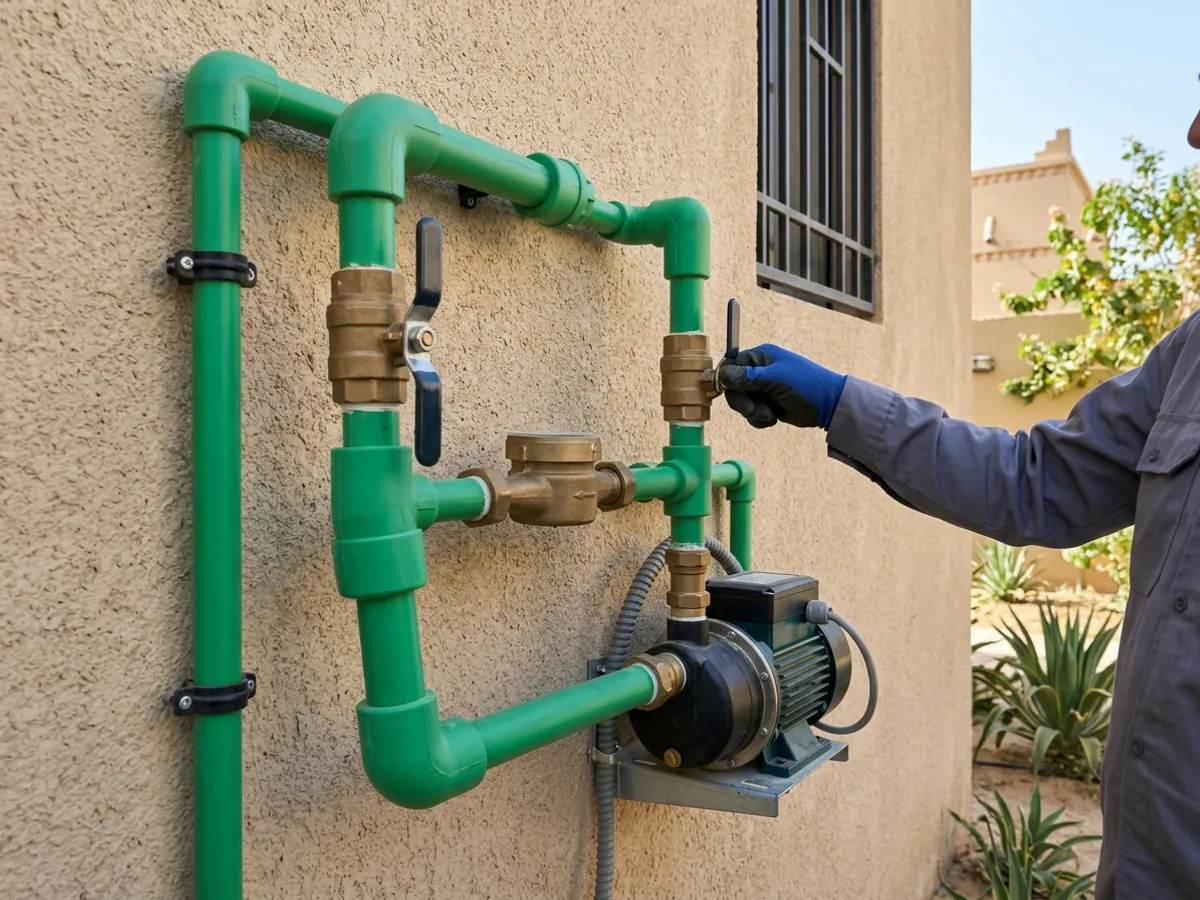
Inspecting outlet unions, isolation valves, and float controls at an overhead rooftop storage tank.
Field Warning Signs
Key Warning Signs Around Courtyard Ground Tanks & Rooftop Tanks
Sharp Unexplained Jump in Monthly Water Bills
High Diagnostic Priority
Significantly higher metered consumption and a spinning meter dial despite all indoor fixtures being shut.
What it may indicate: Frequently linked to ground-tank float overrun, inlet line leakage, or shell seepage; see High Water Bill Diagnostics.
Ground Tank Emptying Unusually Fast After Filling
High Diagnostic Priority
Noticeable drop in stored water level within 24 hours even when household usage is minimal or the transfer pump is off.
What it may indicate: Direct evidence of outward water loss below the standing water line.
Damp Grout, Efflorescence, or Settling Pavers Around the Manhole Cover
Moderate Indicator
Persistent moisture rings around the courtyard access cover or sunken tiles adjacent to the tank perimeter.
What it may indicate: Often indicates overfilling past the float valve and escaping through unsealed masonry neck joints.
Sudden Salty Taste, Odor, or Turbidity in Domestic Tap Water
High Diagnostic Priority
Household water turning noticeably brackish or cloudy when tank levels run low despite clean municipal supply.
What it may indicate: Critical coastal Eastern Province warning sign of shallow saline groundwater infiltrating inward through tank joints.
Continuous Puddling or Algae Beneath Overhead Rooftop Tanks
Moderate Indicator
Standing moisture around rooftop tank bases, bulkhead fittings, or transfer-pump unions.
What it may indicate: Typically caused by UV-degraded outlet gaskets, uneven base support, or overflow discharge; see Roof Leak Detection.
Mechanical & Structural Faults
Float Valves, Tank Necks, Suction Lines & Structural Cracks
01
Worn Mechanical Float Seals or Misaligned Electric Float Switches
Pitted brass float seats, waterlogged float balls, or stuck tether switches fail to shut off incoming municipal supply when the tank reaches capacity.
Physical Mechanism: Water rises silently into the unwaterproofed manhole neck overnight and drains straight into courtyard sand.
02
Unsealed Manhole Neck & Roof-Slab Cold Joints
Access necks are commonly built from concrete block above the tank roof slab without continuous waterproofing.
Physical Mechanism: Any water rise above the roof soffit escapes laterally between block courses.
03
Transfer Pump Suction Unions & Faulty Check Valves
Cracked suction lines, leaking pump unions, or failed check valves on the riser feeding the rooftop tank.
Physical Mechanism: A failed check valve lets rooftop tank water drain backward into an already full ground tank, causing mysterious courtyard overflow; see Pipe Leak Detection.
Inspect float closure under live supply from the access opening and compare meter movement with the tank inlet open versus isolated.
Step Purpose: Separate inlet-pipe and float-overrun losses from structural tank leakage immediately.
2
Illuminated Above-Ground Inspection of Tank Neck & Penetrations
Examine manhole neck masonry, pipe sleeves, and upper render condition from above using high-output inspection lighting.
Step Purpose: Identify high-level overflow pathways and groundwater salt staining.
3
Transfer Pump, Suction Line & Reverse-Backflow Check
Isolate the transfer pump riser and check valve to ensure overhead storage is not siphoning backward into the ground tank.
Step Purpose: Rule out cross-tank hydraulic backflow.
4
Measured Static Water-Level Drop Test
With inlet and suction valves closed, establish a precise reference measurement from the top opening and verify level stability over a controlled interval.
Step Purpose: Confirm objectively whether the concrete shell itself is losing water and at what elevation.
Noticing Similar Leak Indicators at Your Property?
Share your symptoms or leak location by phone or WhatsApp so we can guide the right diagnostic step.
Outward Water Loss vs. Coastal Groundwater Infiltration
In low-lying coastal zones and sabkha soils of the Eastern Province, shallow saline groundwater can sit higher than the floor of an underground concrete tank. Depending on internal water height, hydraulic pressure acts in both directions: a full tank pushes treated water outward into soil, while a partially drawn-down tank experiences negative-side external pressure that forces salty groundwater inward through unsealed construction joints.
Tank Leak Diagnostics vs. Tank Waterproofing & Lining
This Phase 03 service covers technical leak investigation and root-cause verification. When testing proves the fault is a float valve, check valve, suction union, or upper neck joint, targeted plumbing correction resolves it cleanly. Only when static testing or infiltration evidence confirms concrete shell permeability is full tank dewatering, crack injection, and potable-grade water tank waterproofing recommended as a separate scope (see our tank epoxy vs. cementitious comparison).
Protecting Roof Membranes From Overhead Tank Weeping
On rooftops, UV-aged bulkhead fittings and overflow pipes on polyethylene or fiberglass tanks often drip continuously onto roof tiles, saturating screed beds and mimicking rain leaks.
Frequently Asked Questions About Water Tank Leak Detection
Why does my underground tank occasionally overflow onto the courtyard even when the municipal float valve is shut?
+
That classic symptom is usually reverse backflow from the rooftop tank. When the check valve on the transfer pump line fails, water stored on the roof drains backward by gravity down into an already full ground tank, forcing water out the manhole cover.
How can you tell if a ground tank leak is at the upper neck rather than the bottom slab?
+
During a static drop test, a neck joint leak drops rapidly from maximum fill level and then stops completely once the water surface falls below the neck-to-roof joint, whereas a floor or lower-wall crack continues dropping steadily.
Do I need to pump my ground tank empty before you inspect it?
+
No—having water inside the tank is actually helpful for testing float valve shutoff and conducting a real-world static water-level drop measurement.
Can a leaking rooftop tank damage my top-floor ceiling?
+
Yes. Constant dripping from a rooftop tank outlet union, float overflow, or booster pump connection saturates the roof screed day after day and eventually finds weak joints in aging roof waterproofing.
What causes tap water in a coastal villa to suddenly turn salty?
+
If incoming municipal supply is fresh at the meter check point while water drawn from the ground tank tastes brackish, shallow coastal groundwater is likely seeping inward through a construction joint or crack when tank levels drop.
Do you inspect both polyethylene rooftop tanks and concrete ground tanks?
+
Yes. We inspect underground concrete storage tanks, rooftop polyethylene/fiberglass tanks, float controls, interconnection manifolds, and pump suction/delivery unions.
Have another specific question about your property? Reach us directly by phone or WhatsApp.
Technical water leak detection and moisture diagnostics for villas and buildings in the Eastern Province, Saudi Arabia. Pinpoint leak sources before repair. Call 0590941982.
Facing an unexpected water bill spike in the Eastern Province? Inspect post-meter pipes, ground tank float valves, and silent cistern leaks. Call 0590941982.
Zone-by-zone water distribution network inspection across tanks, booster pumps, rooftop manifolds, and risers for villas and buildings. Call 0590941982.
Concrete ground and overhead water tank waterproofing in the Eastern Province. Potable-water lining standards, groundwater resistance, and safe preparation. Call 0590941982.
Technical comparison of potable-grade epoxy coatings and cementitious slurries for concrete ground tanks in Saudi Arabia, including groundwater pressure rules.