Early Signs of Hidden Water Leaks: Reading Subtle Wall, Tile & Ceiling Clues Before Damage Spreads
Concealed residential plumbing failures rarely announce themselves with a dramatic burst pipe. Far more often, slow pinhole seepage beneath floor screed or behind bathroom porcelain saturates sand bedding quietly for weeks—sending subtle thermal, visual, and odor clues long before plaster collapses. Here is how to spot and interpret those early warning signals room by room.
Key Engineering Takeaways
- A localized warm patch on an otherwise cool tiled hallway or bathroom floor is a textbook indicator of a leaking buried hot-water line.
- Grout joints that stay dark and damp in one corner hours after the rest of the floor dries point to upward vapor drive from saturated screed.
- Swollen MDF/wood skirting boards, cupped parquet edges, and musty odors inside kitchen or wardrobe cabinets often appear weeks before visible wall stains.
- Catching concealed seepage early keeps intervention localized instead of requiring full-room retiling or ceiling replacement.
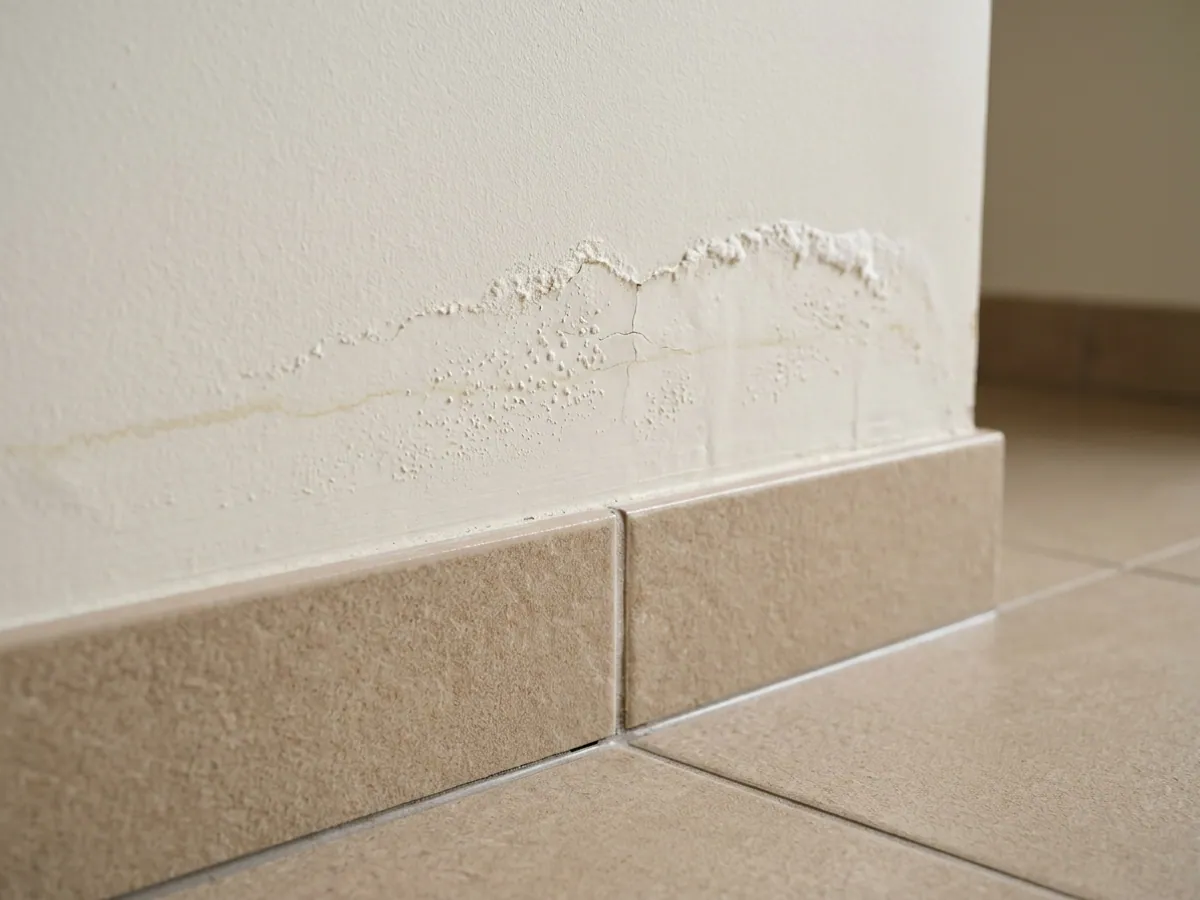
Where Escaping Water Hides Before Appearing on Interior Paint
In typical Saudi concrete villa and apartment construction, ceramic and porcelain floor tiles are set above a 50–120 mm leveling sand/mortar bed resting on the structural slab. That porous sand layer behaves like a concealed reservoir: a weeping PPR elbow or unsealed shower drain collar can drip dozens of liters into the sand bed without a single drop surfacing through dense glazed porcelain.
Once that concealed sand layer reaches saturation, moisture migrates laterally toward the path of least resistance—wicking upward by capillary action into gypsum/cement wall plaster above skirting tiles or creeping beneath unsealed door thresholds into adjacent bedroom flooring. That physical mechanism explains why the very first visible symptom of a bathroom leak frequently shows up on the dry bedroom wall next door.
- Non-porous porcelain tiles trap liquid underneath, pushing moisture out along perimeter walls and doorways.
- Wood-fiber skirting, MDF cabinetry, and gypsum drywall absorb moisture far faster than masonry, acting as early-warning sensors.
- Addressing early clues prevents chlorinated or saline moisture from corroding slab reinforcing steel.
Seven Subtle Indicators of Concealed Plumbing or Waterproofing Seepage
Check for these physical clues whenever a room feels damp or develops unexplained finish defects:
1. Localized Warm Spot on Ceramic or Porcelain Floor Tiles
High Diagnostic PriorityFeeling an unexpectedly warm patch underfoot along a corridor or bathroom floor away from sunlight.
2. Persistently Darkened Grout Lines in One Floor Sector
Moderate IndicatorTile joints remaining dark grey or damp-looking 24 hours after the bathroom was last used.
3. Swollen Wood/MDF Skirting or Cupped Laminate Near Wet Rooms
Moderate IndicatorFlared skirting edges, lifted vinyl planks, or buckled parquet along a partition wall shared with a shower or laundry area.
4. Earthy Musty Odor Inside Under-Sink Cabinets or Built-In Wardrobes
Early SignStale damp smell when opening a kitchen sink base cabinet or bedroom closet backing onto a bathroom, even when shelves look dry.
5. Faint Yellow Halo Rings or Soft Spots on Gypsum Ceilings
High Diagnostic PrioritySubtle brownish-yellow rings, hairline joint tape separation, or slight sagging on false ceilings beneath upper wet rooms or roofs.
6. Hollow-Sounding Floor Tiles & Recurring Drain Flies
Early SignTiles developing a hollow tap sound alongside tiny moisture flies emerging near WC bases or floor drains.
7. Faint Hissing Sound Inside a Partition Wall at Night
High Diagnostic PriorityHearing a steady faint whoosh inside a quiet bathroom wall when every faucet and appliance in the house is off.
Three Smart Steps to Take Right After Spotting Early Leak Clues
Acting calmly when you notice early moisture indicators protects finishes and preserves clean diagnostic data for your technician:
1. Lightly Pencil the Stain Perimeter & Date a Photo
Tracing the outer damp edge lightly in pencil lets you and our technician verify within 24 hours whether moisture is actively advancing.
2. Isolate Ceiling Lighting Circuits Near Wet Drywall
If ceiling dampness approaches recessed downlights or wall switches, switch off that room’s lighting breaker immediately for electrical safety.
3. Never Cover Damp Plaster With PVC Cladding or Faux-Marble Panels
Concealing wet walls behind decorative WPC/PVC panels traps moisture inside a dark cavity, accelerating black mold growth and mortar decay without stopping the leak.
Frequently Asked Questions: Early Hidden Leak Clues
Helpful guidance for homeowners and tenants evaluating subtle moisture signs:
How long can a sub-tile water leak stay hidden before wall paint starts peeling?
Pressurized pipe breaks often surface within days, whereas slow shower-grout or drain-collar seepage can saturate thick sand screed quietly for several weeks before capillary wicking blisters adjacent room paint.
My bedroom closet smells musty on the wall shared with a shower, yet no stain is visible—should we check it?
Yes. Built-in wardrobes block airflow against shared bathroom partitions, so early seepage often triggers musty odor behind the back panel first. Non-invasive moisture readings can verify wall dryness in minutes.
Why does a patch of floor tile feel warm and then cool down after turning off the water heater?
That temperature shift confirms hot water from the heater loop is escaping beneath those exact tiles and warming the sand screed above ambient temperature.
How can we verify early leak signs without breaking tiles?
Call or WhatsApp 0590941982 with photos of the symptom and your Eastern Province city to schedule non-destructive leak detection using pressure, thermal, and moisture instruments.
Have another specific question about your property? Reach us directly by phone or WhatsApp.