Internal Wet-Area Protection · Pre-Tile Waterproofing Systems Eastern Province — Wet-Area Waterproofing & Issue Assessment

Cementitious Bathroom & Wet-Area Waterproofing Systems

Ceramic tiles, porcelain slabs, and cementitious grout lines are decorative wearing surfaces—not waterproof barriers. Daily shower water and floor washing inevitably migrate beneath tile beds and stain lower-floor ceilings unless a continuous, substrate-bonded membrane seals the concrete slab. Here is how two-component (2K) polymer-modified cementitious waterproofing protects bathrooms, walk-in showers, laundry rooms, and wet kitchens.

Diagnostic transparency: If your bathroom is already tiled and leaking onto the ceiling below, topical grout sealers will not replace a failed sub-tile membrane—start with non-destructive leak diagnostics to pinpoint pipe vs. membrane failure first.

Flexible 2K polymer-modified cementitious systems compatible with direct tile-adhesive bonding
Reinforced perimeter cove mesh, recessed floor-drain collars, pipe boots, and threshold dams
Honest separation between pre-tile new-build waterproofing and post-leak tiled bathroom diagnostics
Primary Engineering System
2K Flexible Polymer-Modified Cementitious (ANSI A118.10 / EN 14891)
Covered Interior Wet Zones
Bathrooms · Walk-In Showers · Laundry Rooms · Wet Kitchens
Mandatory Substrate State
Gypsum-free concrete pre-dampened to SSD state
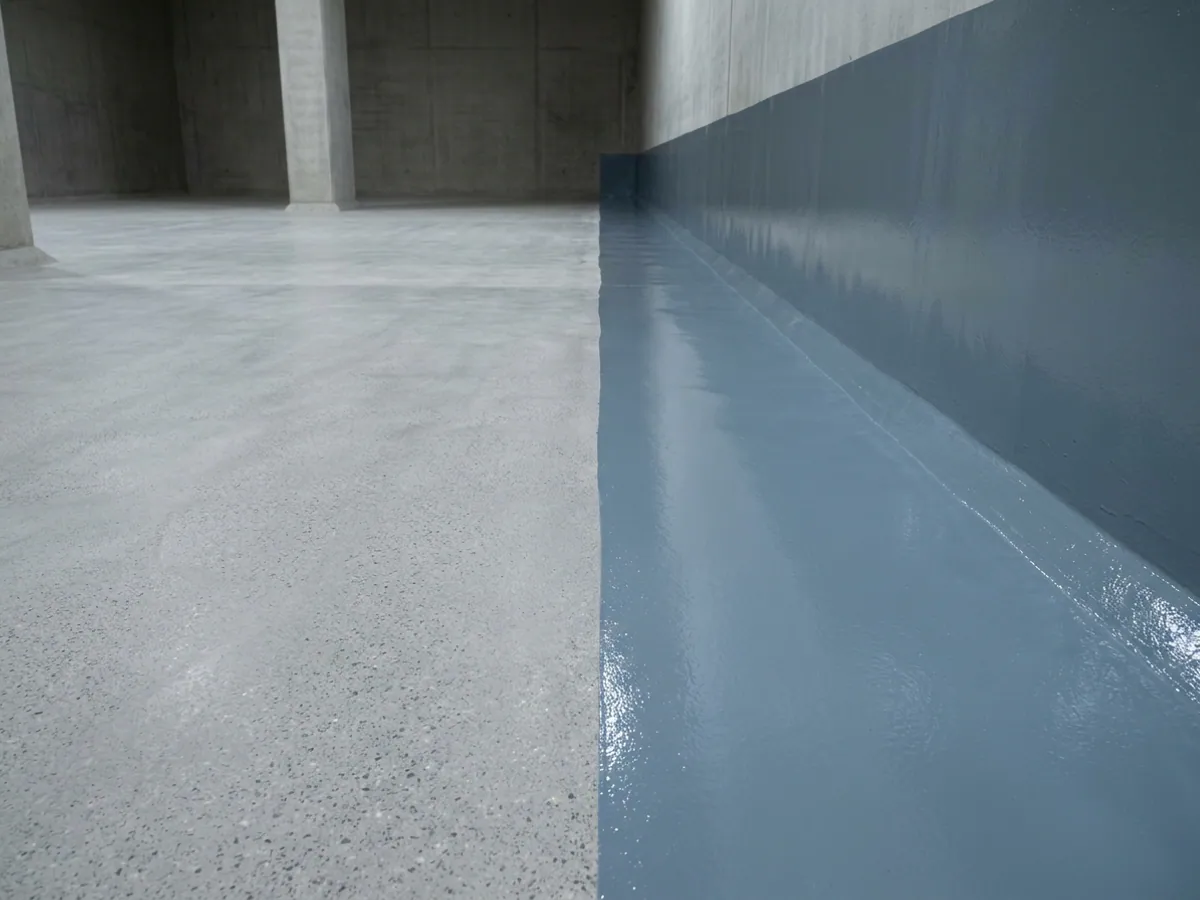
Saudi residential bathroom prepared with seamless under-tile waterproofing and sealed floor drain collar before tiling
Sub-Tile Moisture Mechanics

Why Porcelain Tile and Grout Alone Cannot Stop Bathroom Leaks

A frequent misconception during villa finishing is assuming dense porcelain tiles and water-repellent grout will keep shower water out of the structural slab. Under daily hot-water thermal cycling and cleaning chemicals, hairline micro-fissures open along grout joints and perimeter corners, allowing water to saturate the sand-mortar bed or adhesive layer underneath.

Without a continuous waterproofing membrane bonded directly to the concrete slab and sealed around the floor-drain flange, trapped sub-tile water pools until it finds pipe sleeves or shrinkage cracks—producing peeling paint, gypsum collapse, and rebar corrosion on the ceiling below.

  • Monolithic chemical and mechanical bond to saturated surface-dry (SSD) concrete substrates.
  • Accepts polymer-modified cementitious tile adhesives directly once cured—unlike smooth bitumen coats.
  • Crack-bridging flexibility across hairline shrinkage fissures when formulated as a 2K polymer system.
  • Zero open flame and zero petroleum solvent fumes inside enclosed residential rooms.
Educational Technical Illustration
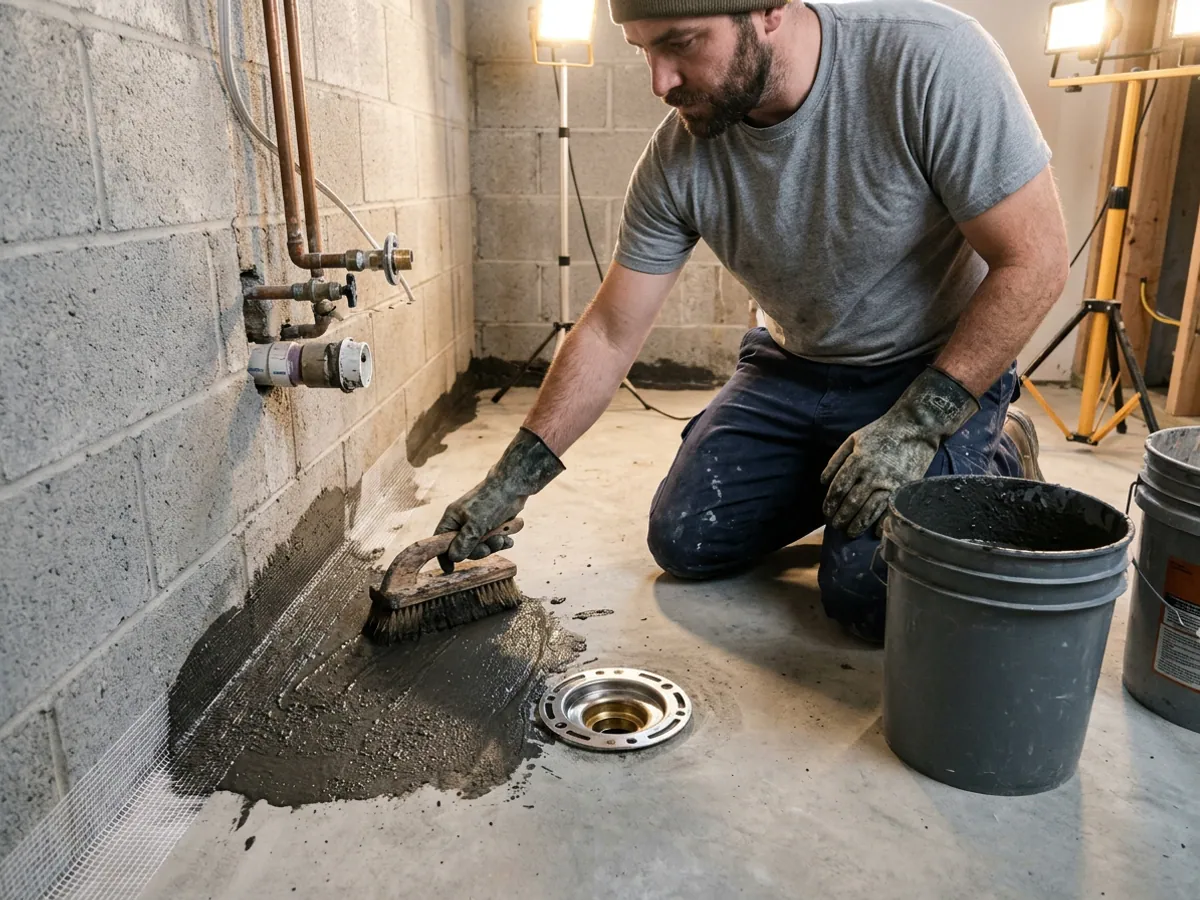
Applying polymer-modified cementitious waterproofing slurry over reinforcing mesh tape at a concrete corner
Two-coat perpendicular polymer-modified cementitious application incorporating perimeter upturns and corner reinforcement mesh.
Cementitious Chemistry Comparison

Flexible Two-Component (2K) vs. Rigid One-Component (1K) Cementitious Slurries

Not every cementitious waterproofing bag performs identically under wet-area movement. Sub-tile waterproofing standards (ANSI A118.10 and EN 14891) separate flexible polymer-rich membranes from rigid slurries:

Potable Water: Certified Potable Grade Only

Flexible Polymer-Modified Cementitious Waterproofing (2K)

Substrate-bonded waterproofing under tile in wet areas and inside rigid concrete water structures

Typical Applications

  • Bathroom floors, walk-in showers, laundry rooms, and wet kitchens directly beneath ceramic/porcelain tile systems
  • Internal lining of concrete ground water tanks (strictly when a potable-water certified product is selected)
  • Concrete sumps, thresholds, and wet-zone upturns requiring direct cementitious adhesive bonding

Technical Properties

  • Bonds monolithically to saturated surface-dry (SSD) concrete and accepts compatible polymer-modified tile mortars
  • Two-component (2K) flexible grades bridge hairline shrinkage cracks far better than rigid 1K cement slurries
  • Integrates with alkali-resistant mesh/elastomeric corner bands and pipe collars (aligned with ANSI A118.10 / EN 14891 principles)

Engineering Limitations

  • Not designed for wide thermal expansion on large exposed sun-baked roofs without protective topping
  • Cannot bridge active structural movement cracks without dedicated expansion-joint treatment
  • Adding unauthorized site water ruins polymer-to-cement ratio and causes chalking or delamination
Substrate Preparation: Sound concrete completely free of gypsum plaster, oil, and laitance, pre-dampened to a saturated surface-dry (SSD) condition without standing puddles.
Layer Compatibility: Never apply directly over raw gypsum or bitumen; observe manufacturer cure windows before flood testing or tiling.
Safety Controls: Cementitious powders are alkaline; installers must wear gloves, eye protection, and dust masks during low-speed mechanical mixing.
Potable-Water Note: Suitable for potable water tanks ONLY when the exact product grade holds verified drinking-water contact certification (e.g., NSF/ANSI 61, BS 6920, or applicable SASO standards) and full curing/flushing is completed.

Relevant Technical References: ANSI A118.10 · EN 14891 · BS 6920 · NSF/ANSI 61
Potable Water: Certified Potable Grade Only

Rigid One-Component Cementitious Slurry (1K)

Rigid or crystalline capillary waterproofing for stable concrete elements without movement cracks

Typical Applications

  • Stable buried concrete structures and negative-side capillary stabilization beneath compatible topcoats
  • Dense rigid concrete sumps or pits not subject to structural deflection or thermal cycling

Technical Properties

  • Pre-bagged modified cementitious powder mixed with clean water and bonded directly to SSD concrete
  • Provides rigid hydrostatic capillary resistance on sound, crack-free concrete substrates

Engineering Limitations

  • Zero crack-bridging elasticity; fractures if hairline shrinkage or floor-to-wall corner movement occurs
  • Unsuitable alone for sun-baked roofs or thermally cycled shower floors where 2K flexible slurries excel
Substrate Preparation: Clean concrete free of gypsum and oils, pre-dampened to saturated surface-dry (SSD) state.
Layer Compatibility: Compatible beneath 2K polymer-modified cementitious coats or sand-cement renders once cured.
Safety Controls: Alkaline cement powder requiring gloves, dust mask, and eye protection during mixing.
Potable-Water Note: Use inside potable tanks ONLY if the specific product grade carries verified drinking-water approval.

Relevant Technical References: EN 14891 · ICRI 310.2R · BS 6920

Site quality rule: Never allow installers to dilute 2K polymer-modified kits with extra tap water to make brushing easier—excess water destroys the polymer-to-cement ratio and causes chalking and pinholes.

Critical Junctions & Wet Kitchen/Laundry Integration

Where Wet-Area Waterproofing Succeeds or Fails: Drains, Showers, Kitchens & Tiled Bathrooms

Over eighty percent of internal wet-area leaks originate at transitions, penetrations, and thresholds rather than flat center-floor spans:

1. Wall-to-Floor Corners & Shower Upturn Heights

All 90-degree floor-to-wall junctions require alkali-resistant fiberglass mesh or elastomeric corner tape embedded into the first wet coat. Dry bathroom perimeter walls receive a 20–30 cm waterproof upturn above finished floor level, whereas curbless/walk-in shower walls must be waterproofed up to full splash height (~180–200 cm) to stop lateral dampness on adjacent bedroom walls.

2. Floor-Drain Flanges, Pipe Collars & Door Threshold Dams

Recessed floor drains (siphons) and concealed mixer outlets are sealed using elastomeric pipe collars/gaskets embedded into the membrane, paired with a waterproofed mortar threshold water-stop dam at the bathroom doorway so sub-tile moisture cannot wick into hallway parquet or marble.

3. Laundry Rooms & Wet Kitchen Floor Zones

Upper-floor laundry rooms and wet domestic kitchens (around floor drains, dishwashers, and sink bases) require the exact same 2K cementitious floor pan and perimeter upturn before tiling. If an already-tiled kitchen develops hidden cabinet or ceiling dampness, begin with kitchen leak detection.

4. Realistic Guidance for Already-Tiled Leaking Bathrooms

When an occupied tiled bathroom leaks downstairs, we never promise that brushing clear sealer over grout will cure a failed sub-tile membrane permanently, nor do we recommend blind demolition first. Start with bathroom leak detection or under-tile leak detection to verify whether a pressurized supply pipe, drain trap, or failed shower membrane is responsible.

Pre-Tile Execution Discipline

Concrete Preparation, Two-Coat Application & Flood-Test Protocol

Reliable sub-tile cementitious waterproofing depends on four sequential preparation and verification stages:

1

Complete Removal of Gypsum Droppings, Laitance & Loose Mortar

Mechanically scrape off all gypsum plaster droppings from ceiling/wall works, remove oil/dust, and repair honeycombed concrete.

Consequence if Skipped: Gypsum reacts with wet cement aluminates (ettringite expansion), causing wholesale delamination of the waterproof coat.
2

Saturated Surface-Dry (SSD) Pre-Dampening

Pre-wet bare concrete thoroughly with clean water until pores are saturated, then sponge away any standing puddles before brushing.

Consequence if Skipped: Bone-dry concrete rapidly sucks hydration water out of the slurry, causing pinholes, shrinkage crazing, and weak adhesion.
3

Two Perpendicular Coats with Embedded Reinforcing Bands

Apply Coat 1 by stiff brush while embedding corner tapes and drain collars; apply Coat 2 at 90° perpendicular direction once Coat 1 is firm.

Consequence if Skipped: Single-pass brushing leaves Holidays/pinholes and thin corner ridges that rupture under hydrostatic head.
4

Cure Window, 24–48h Flood Test & Tile-Trade Protection

Allow full datasheet cure, plug the floor drain, flood the pan for 24–48 hours to verify zero seepage below, and protect the cured membrane during tiling.

Consequence if Skipped: Tiling immediately over uncured or untested membranes hides tool punctures until the villa is occupied.
Educational Technical Illustration
Professional concrete surface grinding, dust removal, and corner fillet preparation before waterproofing application
Clean SSD concrete substrate preparation and corner band reinforcement prior to two-coat perpendicular slurry application.
Transparent Scope Variables

Factors That Determine Bathroom & Wet-Area Waterproofing Cost

Project scope depends on construction stage, wet-zone count, and detailing complexity:

Construction Stage (Bare Concrete New-Build vs. Tiled Renovation)

Pre-tile new-build waterproofing on clean concrete is straightforward; renovating a failed tiled bathroom involves tile removal, substrate re-profiling, and slope restoration.

Number of Wet Rooms & Full-Height Walk-In Shower Wall Area

Total material and labor scale with bathroom/laundry count and full-height shower splash-zone square meterage.

Drain Geometry & Concealed Plumbing Penetrations

Linear trench drains, sunken slabs, and multi-outlet concealed shower valves require extra collar and corner detailing.

2K Flexible Polymer System & Reinforcing Accessories

Specifying certified 2K flexible kits with full woven cove tapes and elastomeric pipe boots ensures durable performance.

We do not quote flat per-bathroom rates without knowing whether the rooms are bare pre-tile concrete or tiled renovations, room count, and location in the Eastern Province.

Scope Clarity & Transparency

Why Property Owners Choose Our Wet-Area Waterproofing Approach

Sub-tile waterproofing is buried beneath expensive porcelain and marble finishes—doing it right before tiling prevents costly future tear-outs:

Honest Diagnostic Triage First on Tiled Rooms

We never push full bathroom tear-out before confirming whether an isolated pressurized pipe or fixture connection is the real culprit.

Strict Kit Mixing & Perpendicular Film Build

Pre-proportioned 2K kits are mechanically mixed at low speed without unauthorized water dilution.

Meticulous Drain, Threshold & Shower-Corner Detailing

Every corner junction, drain flange, and doorway dam is treated as an engineered seal rather than brushed casually.

Eastern Province Service Coverage

Wet-Area Waterproofing Coverage Across the Eastern Province

We handle pre-tile bathroom, laundry room, and wet-area waterproofing inquiries as well as waterproofing-failure evaluations across Dammam, Khobar, Dhahran, Qatif, Jubail, and neighboring Eastern Province districts.

Technical FAQ

Frequently Asked Questions About Bathroom & Cementitious Waterproofing

Clear technical answers for new builds and existing villas:

Why use 2K polymer-modified cementitious waterproofing instead of black liquid bitumen in bathrooms?

Modern porcelain tiles are installed with polymer-modified cementitious tile adhesives that bond monolithically to cured 2K cementitious membranes—including vertical shower walls. Smooth bituminous coatings block cementitious adhesive bonding.

Can a leaking tiled bathroom be waterproofed permanently without removing tiles?

True structural waterproofing belongs beneath the tile bed on the concrete slab. For tiled bathrooms, start with bathroom leak detection: supply-pipe or trap leaks can often be fixed locally, whereas a completely saturated bed with a failed sub-tile membrane requires targeted strip-and-re-waterproof remediation.

How high up the walls should bathroom waterproofing extend?

General dry perimeter walls typically receive a 20–30 cm upturn above finished floor level, while walk-in shower splash walls should be coated up to ~180–200 cm.

Why must all gypsum plaster residue be scraped off concrete before cementitious waterproofing?

Gypsum reacts expansively with wet cement compounds and prevents mechanical bonding, leading to blistering and debonding beneath tile.

Do upper-floor laundry rooms and kitchens also need sub-tile waterproofing?

Yes. Upper-floor laundry rooms and wet kitchen zones around floor drains and dishwashers benefit from the exact same 2K cementitious pan, corner tape, and threshold dam prior to tiling.

Have another specific question about your property? Reach us directly by phone or WhatsApp.

Wet-Area Waterproofing Inquiry · Manar Al Sharqiya

Planning Pre-Tile Bathroom Waterproofing or Facing a Wet-Area Moisture Issue?

Message us on WhatsApp or call 0590941982 with your room count, construction stage (pre-tile or tiled), and Eastern Province district.

Helpful Details to Mention When Contacting Us:

  • Your city/district in the Eastern Province and property type (villa, apartment, commercial).
  • Visible symptoms (wall dampness, ceiling drip, tank drop, or sudden water bill spike).
  • Whether the symptom is continuous or appears only after fixture use or rainfall.

Or Prepare Your Inspection Details Below

Direct server submission is pending activation; you can send these exact details immediately via WhatsApp or call us directly.

Call Now 0590941982

We respect your privacy and never share personal details with third-party marketers. Read our Privacy Policy.