Modern residential kitchens concentrate pressurized hot and cold valves, reverse-osmosis (RO) water purifiers, dishwashers, refrigerator ice lines, and grease-prone drains behind fixed base cabinets and sealed kickplates. Manar Al Sharqiya provides careful kitchen leak diagnostics in the Eastern Province to pinpoint hidden moisture without tearing out cabinetry unnecessarily.
Musty sink cabinet or peeling paint on backing wall
Direct Contact
0590941982
Why Kitchen Seepage Goes Unnoticed
Why Kitchen Leaks Stay Hidden Behind Base Cabinets & Plinths
Unlike open tiled bathrooms where water flows visibly toward a floor drain, fitted kitchens conceal lower walls and floor perimeters behind continuous aluminum or engineered-wood base cabinets finished with bottom kickplates (plinths).
When a tiny drip develops on a 1/4-inch RO filter push-fitting, a pull-out faucet hose weight, an angle-valve thread, or a grease-restricted wall drain socket, water pools silently on the hidden tile beneath the cabinets for weeks. Rather than flowing onto the visible kitchen walkway, that trapped water saturates the sub-floor sand bed or wicks through concrete blockwork—often showing up first as blistering paint on the living-room or corridor wall behind the kitchen.
Our diagnostic workflow inspects accessible cabinet interiors, removable plinth cavities, and pull-out appliance bays first, combining pressure isolation with moisture and thermal checks so cabinetry and stone countertops stay undisturbed unless a buried wall fault is definitively proven.
A high share of kitchen dampness originates at hidden appliance tubing or drain sockets rather than broken buried pipes.
Solidified cooking grease frequently throttles 2-inch waste lines, causing concealed floor gullies beneath cabinets to back up silently.
Pinpointing the exact leak mechanism protects cabinet carcasses, hinges, and marble/granite worktops.
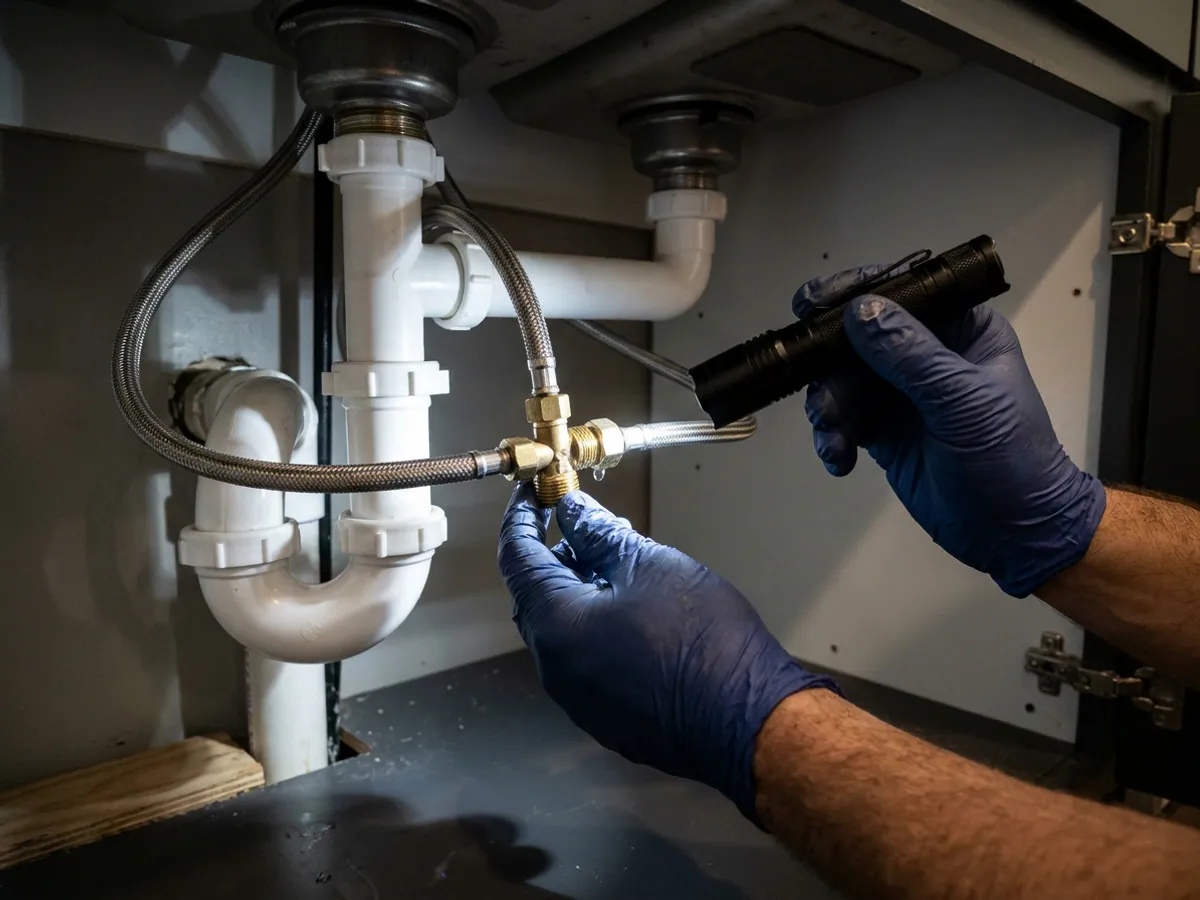
Inspecting angle valves, RO water purifier tubing, and dishwasher drain connections inside a sink base cabinet.
Early Kitchen Warning Signs
Early Signs of Moisture Behind Cabinetry and Adjacent Walls
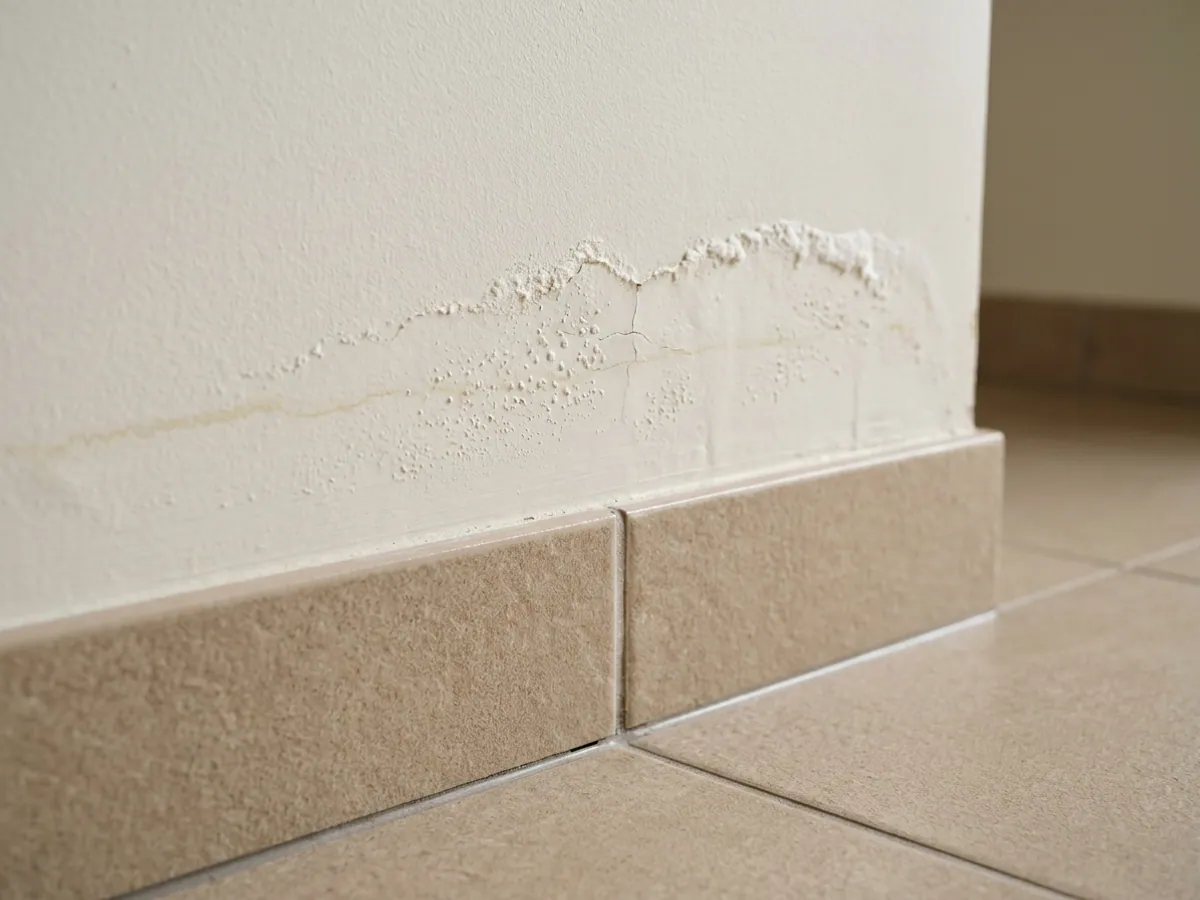
Peeling Paint & Efflorescence on the Hallway or Living-Room Wall Behind the Kitchen
High Diagnostic Priority
Blistering plaster along the opposite side of the kitchen sink wall while the visible kitchen floor stays dry.
What it may indicate: Points to either an in-wall valve/pipe leak or water pooling behind cabinet plinths; see In-Wall Leak Detection.
Persistent Musty Odor, Swollen Shelf Boards, or Rusted Hinges Under the Sink
Moderate Indicator
Humid air or warped cabinet bases inside the sink unit even without obvious standing puddles.
What it may indicate: Frequently caused by slow weeping on pull-out sprayer hoses, basket-strainer gaskets, or RO filter housings.
Thin Trickle of Water Emerging From Under the Cabinet Kickplate After Dishwashing
High Diagnostic Priority
Water appearing along the toe-kick edge specifically after draining a full sink or running a dishwasher cycle.
What it may indicate: Classic sign of grease-throttled waste piping causing backflow at a wall cleanout or concealed floor gully.
Intermittent Clicking or Cycling of the Under-Sink RO Water Filter Pump
Moderate Indicator
Hearing the water purifier booster pump run briefly every few minutes when the drinking-water tap is shut.
What it may indicate: Indicates pressure loss downstream of the filter pump through micro-cracked polyethylene tubing or push-in elbows.
Darkened Grout Lines or Warm Floor Tiles in Front of the Sink Counter
High Diagnostic Priority
Discolored floor joints or a warm spot underfoot near the sink or under-counter water heater.
What it may indicate: Suggests sub-floor sand-bed saturation or a buried hot-water supply leak; see Under-Tile Leak Detection.
Multi-Stage RO Water Purifier Tubing, Housings & Saddle Valves
Under-sink filtration units introduce over a dozen plastic quick-connect fittings, O-ring canisters, and storage-tank valves under constant line pressure.
Physical Mechanism: Pressure surges crack brittle plastic elbows behind the filter bracket where drips run down the back wall unnoticed.
Degraded silicone between granite countertops and stainless sinks lets splash water seep downward, while braided pull-out faucet hoses chafe against sink weights.
Physical Mechanism: Water travels down the concealed hose exterior and drips only when the faucet is running—drying partially before casual checks.
Brass extension nipples behind wall tiles, instant water-heater relief valves, or supply risers punctured by upper-cabinet anchors.
Physical Mechanism: Pressurized water seeps behind wall ceramic before emerging in adjacent rooms; see Pipe Leak Detection.
Clean Cabinet-First Protocol
Careful Kitchen Inspection Protocol Without Unnecessary Cabinet Removal
1
Pressurized Inspection of All Accessible Under-Sink & Filter Connections
Examine angle valves, pull-out faucet hoses, basket strainers, and every RO filter fitting under live operating pressure with targeted lighting and dry-wipe checks.
Step Purpose: Catch accessible fitting micro-leaks that require zero wall or cabinet work.
2
Sub-Cabinet Plinth & Appliance-Bay Cavity Check
Inspect beneath removable toe-kick panels and behind pull-out dishwashers/refrigerators using moisture and thermal sensors.
Step Purpose: Verify whether standing water or a hidden floor gully is saturating the sub-cabinet floor.
3
High-Volume Sink & Appliance Drainage Surge Test
Release a full sink basin while monitoring wall drain sockets and cleanouts for sluggish flow or backflow.
Step Purpose: Separate grease-related drainage overflow from pressurized supply leaks.
Flexible Appliance Line Micro-Leaks vs. In-Wall Supply Faults
Comparing accessible kitchen connection leaks against buried pipe failures
Leak Origin
Typical Visible Sign
Flow Pattern
Expected Follow-Up Scope
RO Filter / Pull-Out Hose / Angle Valve
Damp sink-cabinet base or moisture pooling under kickplate
Slow continuous drip (or drip during tap draw)
Direct part/gasket replacement inside the cabinet—zero tile breaking
Grease-Restricted Drain / Hidden Gully
Water emerging under plinth after dishwashing; drain odor
Intermittent during high-volume discharge only
Drain line degreasing/cleaning and resealing wall waste boot
Concealed In-Wall Supply Pipe / Nipple
Paint blistering on backing room wall; branch pressure drop
Continuous even with all under-sink valves shut
Targeted access at the single affected point after detaching one unit if needed
Accurate pre-diagnosis keeps custom kitchen cabinetry and stone countertops intact whenever the fault lies in an accessible valve, filter, or drain boot.
Scope Considerations
Factors Influencing Kitchen Leak Diagnostics
Main + Dirty/Prep Kitchen Layout & Connected Appliances
Saudi villas with both a show kitchen and heavy cooking kitchen plus central filtration involve more circuits and drain runs to isolate.
Cabinet Construction & Plinth Accessibility
Clip-on aluminum plinths allow rapid sub-cabinet verification, whereas masonry-built cabinet bases rely more heavily on external sensor profiling.
Upper-Floor Kitchen Ceiling Seepage
When a first-floor apartment or villa kitchen leaks onto a ceiling below (similar to Bathroom Leak Detection), both levels are evaluated together.
Call or WhatsApp 0590941982 with your kitchen layout and visible symptoms for clear upfront inspection details.
Scope Clarity & Transparency
Why Homeowners Trust Manar Al Sharqiya Inside Finished Kitchens
Clean, Cabinet-Safe Methodology
We work neatly around cabinetry, countertops, and appliances without hasty dismantling.
Thorough RO Filter & Appliance Checks
We inspect every micro-fitting, ice-maker line, and drain loop commonly overlooked during quick plumbing visits.
Honest Findings Before Any Repair Cost
You see clearly whether the issue is a simple under-sink fitting or a concealed wall line.
Eastern Province Service Coverage
Kitchen Leak Detection Across the Eastern Province
Reach Manar Al Sharqiya by phone or WhatsApp at 0590941982 to schedule a kitchen leak inspection in the Eastern Province.
Frequently Asked Questions About Kitchen Leak Detection
Should I hire a carpenter to dismantle my kitchen cabinets before your inspection?
+
No—please keep all cabinets and countertops in place prior to diagnosis. Most kitchen leaks can be traced through under-sink access, removable plinths, appliance bays, and non-destructive wall/floor checks. Removing a specific cabinet module is only needed later if a buried pipe break is confirmed directly behind it.
Why is paint peeling on the living-room wall behind my kitchen when inside the sink cabinet feels bone dry?
+
A dry cabinet interior alongside a damp backing wall usually points to seepage behind the cabinet back panel—such as a cracked brass extension nipple inside the wall tile, a leaking buried supply pipe, or greywater escaping an unsealed waste stub-out inside the masonry.
Can a refrigerator water dispenser line cause hidden floor damage?
+
Yes. Ice-maker and water-dispenser tubing remains under continuous pressure and often runs behind warm compressor coils and ovens. A pinhole in that thin line drips silently beneath base cabinets for weeks.
How do you distinguish granite countertop seam seepage from a sink drain leak?
+
Countertop perimeter or faucet-base seepage occurs only when water splashes on the stone surface around the rim, whereas drain-strainer or P-trap leaks appear immediately when clean water is poured directly down the center of the bowl.
Could a hidden floor drain under my kitchen cabinets be overflowing?
+
Yes. Many residential kitchens in Saudi Arabia have a floor gully concealed beneath the base cabinets. When downstream waste lines narrow with solidified cooking grease, sink or dishwasher discharge backs up out of that hidden gully underneath the plinth.
What immediate step should I take if I spot water pooling under the kitchen sink at night?
+
Shut both hot and cold angle valves plus the small RO filter feed valve beneath the sink, unplug any electrical filter transformer or dishwasher socket near the wet area, towel-dry the base, and contact us for pinpoint diagnosis.
Have another specific question about your property? Reach us directly by phone or WhatsApp.
Technical water leak detection and moisture diagnostics for villas and buildings in the Eastern Province, Saudi Arabia. Pinpoint leak sources before repair. Call 0590941982.
Differential diagnosis for bathroom water leaks in the Eastern Province: separate pressurized pipe faults, drain traps, cistern seepage, and tile joint failure. Call 0590941982.