Membrane Failure Triage & Rehabilitation · Eastern Province Eastern Province — Failed Insulation Triage & Rehabilitation

Waterproofing Failure Diagnosis, Maintenance & System Remediation

Few building problems are more frustrating than seeing ceiling leaks return—or finding swollen blisters, open seams, and chalking foam—on a roof or tank that was already waterproofed. We examine the root physical causes of premature waterproofing failure in the Eastern Province and draw an honest engineering line between localized patch maintenance and full system tear-off.

Root-cause diagnosis (vapor drive, seam failure, UV chalking, or MEP punctures) before recommending coatings
Side-by-side decision matrix comparing localized patch repair against full tear-off and replacement
Strict refusal to trap moisture by painting liquid coats over water-logged tiled sand beds
Costliest Repair Mistake
Recoating directly over trapped sub-membrane or sand-bed water
Core Triage Criterion
Sub-layer moisture saturation & existing bond integrity
Diagnostic Integration
Paired with non-destructive pipe & moisture diagnostics where needed
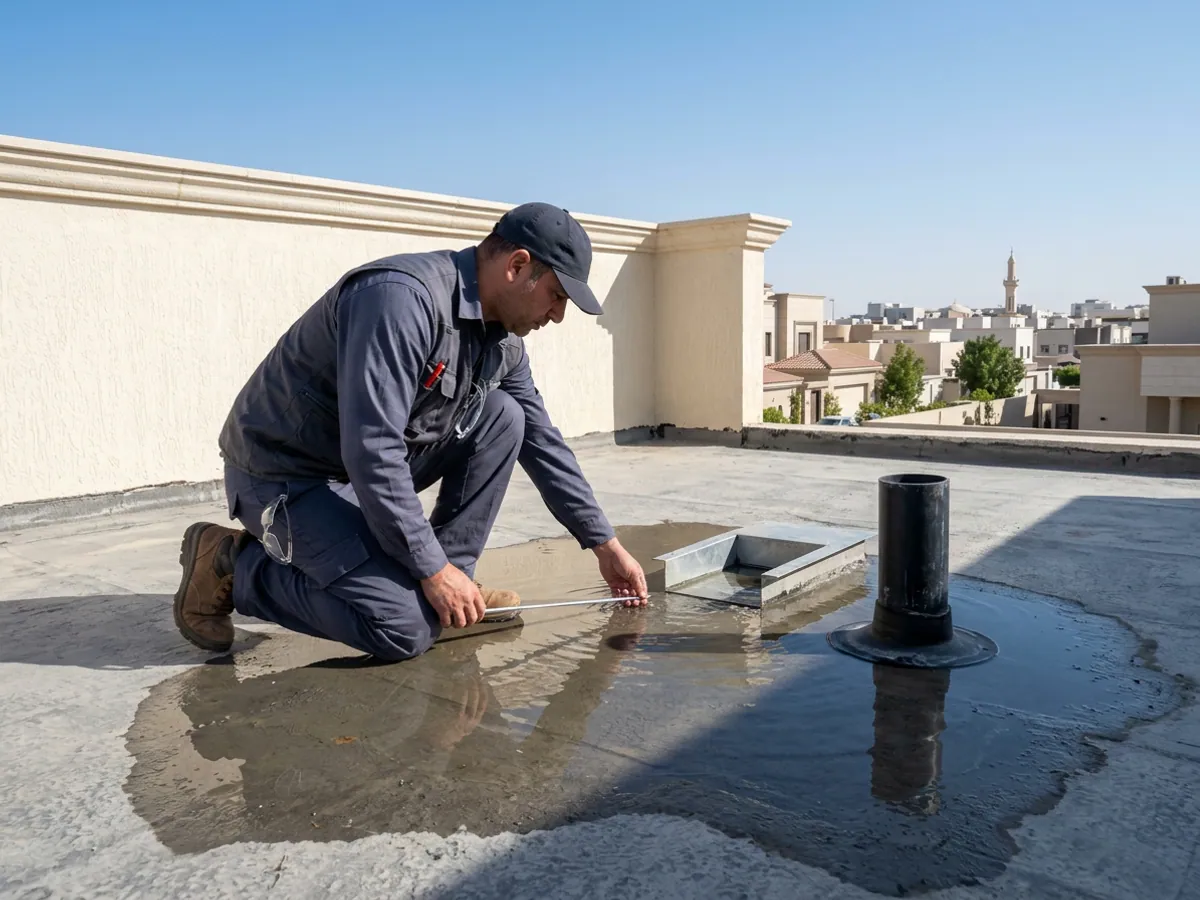
Illustrative example of localized roof waterproofing seam separation and UV surface cracking
Forensic Failure Modes

Six Engineering Reasons Waterproofing & Insulation Systems Fail Early

Premature membrane failure rarely stems from raw material chemistry alone; field inspections typically uncover installation shortcuts or post-handover damage:

01

Trapped Slab/Screed Moisture & Vapor Blistering

Applying impermeable bitumen rolls, polyurethane coatings, or tank epoxy over damp screed or wet concrete.

Physical Mechanism: Intense Saudi solar heating vaporizes trapped moisture, creating upward vapor pressure that lifts the membrane into hollow blisters that eventually split.
02

Skipped Primer or Dusty Laitance Surfaces

Installing membranes over unground concrete laitance or dusty slabs without penetrating primer.

Physical Mechanism: The coating bonds to loose surface dust rather than structural concrete, peeling away in sheets under thermal cycling.

03

90-Degree Parapet Bends & Unsealed Terminations

Bending sheet membranes sharply at 90° wall-to-slab corners without 45° mortar cant strips or top termination reglets.

Physical Mechanism: Thermal contraction shears the stressed corner while wind-driven rain runs down parapet plaster straight behind the unsealed top edge.

04

Solar UV Photo-Oxidation of Unprotected Layers

Leaving spray polyurethane foam or non-granulated smooth bitumen exposed without a maintained UV elastomeric topcoat.

Physical Mechanism: Ultraviolet radiation breaks polymer chains, turning exposed SPF orange, brittle, and absorbent within months.

05

Post-Installation MEP & Rooftop Equipment Punctures

Drilling AC stand anchors, satellite dish bolts, or solar-heater brackets straight through cured membranes without flashing.

Physical Mechanism: Even two unsealed anchor bolts sitting in a low roof puddle feed water continuously beneath the entire waterproofing assembly.

06

Ponding Water & Proud/Clogged Roof Drain Flanges

Drain sleeves set higher than the surrounding screed slope, creating standing puddles >48 hours after rain.

Physical Mechanism: Prolonged ponding softens standard water-based acrylics and accelerates seam creep.

Detailed view of a recessed rooftop rainwater drain with integrated waterproofing collar and strainer
Roof drain sumps and parapet upturns represent the highest-risk failure zones when positive drainage slopes and cant strips are omitted.
Engineering Triage Matrix (Comparison E)

Localized Patch Repair vs. Full Waterproofing Tear-Off & Replacement

Choosing correctly between targeted maintenance and full removal protects owners from both unnecessary demolition and wasted cosmetic over-coating:

Engineering comparison between localized waterproofing repair and complete system tear-off/replacement
Field Evaluation CriterionLocalized Patch Repair / Maintenance RecoatFull System Tear-Off & Replacement
Underlying Substrate / Sand-Bed Moisture Underlying concrete/foam core is dry; defect is isolated to known surface points Widespread trapped water beneath loose rolls, wet foam, or saturated sub-tile sand fill
Existing Adhesion Integrity 85–90%+ of existing membrane remains tightly bonded to sound substrate General delamination, widespread blistering, alligator crazing, or brittle decay
Typical Candidate Scenarios Isolated AC-bracket puncture, minor lap-seam lift, or weathered UV topcoat over dry intact SPF Aged failing roof assembly, water-logged spray foam, or leaking tiled roof with soaked mortar bed
Correct Technical Scope Excise localized defect, rout/seal crack, prime, and apply chemically compatible reinforced patch or UV recoat Strip failed layers down to structural concrete, dry & repair slopes, and install a complete new system
Risk of Choosing the Wrong Path Tearing off a healthy roof when only two drain collars or equipment penetrations leaked Sealing trapped liters of water inside the structural slab—guaranteeing new blisters and rebar rust

When ceiling dampness could stem from either pressurized rooftop piping or rainwater membrane failure, verify first via roof leak detection or moisture & dampness diagnostics.

Why Cosmetic Over-Coating Fails

Why Painting Liquid Coatings Over Wet Tiled Roofs Traps Destructive Moisture

A widespread shortcut in the market is rolling elastomeric paint directly over old roof tiles or blistered membranes after a winter leak. When the sand bed beneath tiles already holds rainwater, sealing the top tile surface locks that moisture inside the structural slab—forcing water downward into bedroom ceilings and electrical conduits while summer vapor pressure blows the new paint off tile joints.

Successful remediation also demands strict chemical compatibility: acrylics will peel off aged silicone coatings, and solvent-borne primers will dissolve polystyrene boards or incompatibly aged membranes.

Proper Crack Routing & Joint Rehabilitation

Structural hairline cracks cannot simply be painted over; they must be V-routed mechanically, vacuumed clean, primed, and filled with non-shrink repair mortar or elastomeric polyurethane sealant over a bond-breaker backer rod before reinforcing fabric is embedded.

Preventive UV Topcoat Maintenance for Spray Foam Roofs

Exposed polyurethane spray foam roofs rely on their sacrificial UV elastomeric coating. Clearing drain strainers seasonally and recoating worn topcoat zones before bare yellow foam is exposed extends roof service life dramatically.

Rehabilitation Protocol

Step-by-Step Preparation Before Waterproofing Repair or Replacement

Every remediation scope follows a disciplined strip, dry, repair, and compatibility protocol:

1

Moisture & Adhesion Mapping

Inspect blisters, lap seams, drain sumps, and sub-layer dryness to establish whether localized patching or full strip-out is justified.

Consequence if Skipped: Leaving wet pockets trapped beneath new repair layers causes immediate summer blistering.
2

Mechanical Removal of Debonded & Oxidized Material

Cut away hollow blisters, delaminated rolls, or UV-chalked foam down to clean, sound structural substrate.

Consequence if Skipped: New repair materials peel away alongside the weak oxidized layer underneath.
3

Crack Repair, Cant-Strip Restoration & Slope Correction

Rout and seal cracks, rebuild missing 45° perimeter cant strips, and eliminate low ponding depressions around drains.

Consequence if Skipped: Standing water and 90° shear stress rupture the replacement membrane in the exact same spot.
4

Chemically Compatible Priming & Reinforced Tie-Ins

Apply datasheet-verified compatible primer and embed reinforcing fleece across tie-in transitions or install the full replacement system.

Consequence if Skipped: Inter-coat adhesion failure or solvent bleeding at the boundary between old and new materials.
Educational Technical Illustration
Professional concrete surface grinding, dust removal, and corner fillet preparation before waterproofing application
Stripping failed layers and mechanically profiling concrete before installing compatible replacement waterproofing.
Transparent Scope Variables

Factors That Determine Waterproofing Repair vs. Replacement Cost

Rehabilitation budgets depend on sub-surface saturation and tear-off complexity:

Intervention Tier (Targeted Patch / UV Recoat vs. Full Tear-Off)

Cleaning and recoating a sound SPF topcoat costs far less than demolishing roof tiles, hauling out saturated sand fill, and re-screeding.

Rooftop MEP Congestion (AC Units, Piping, Solar Heaters)

Working around or temporarily lifting dense AC plinths and pipe runs adds detailing labor.

Concrete Crack Repair & Drainage Slope Re-Profiling

Correcting reverse slopes and lowered drain sumps is essential so the new system does not pond.

Selected Replacement System Architecture

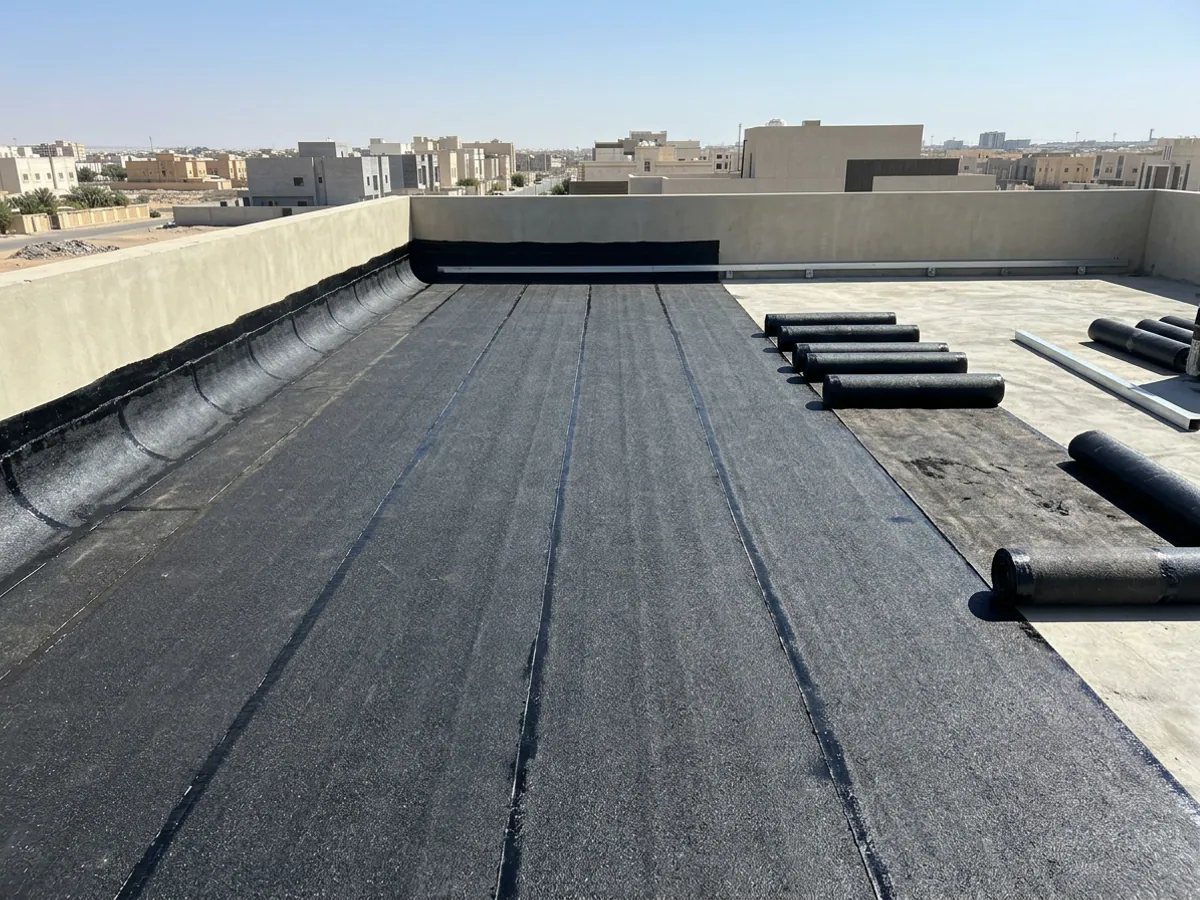
Final scope depends on whether the rehabilitated deck receives APP/SBS rolls, closed-cell SPF + UV coat, or 2K cementitious tank/wet-area lining.

Failed waterproofing cannot be priced accurately with a blind per-square-meter phone quote before inspecting sub-layer moisture and tear-off requirements.

Scope Clarity & Transparency

Our Engineering Discipline in Waterproofing Remediation

We stop repeat repair cycles by diagnosing why the previous membrane failed before proposing new materials:

Root-Cause Triage Before Any Recoating

We distinguish fixable mechanical punctures from moisture-saturated assemblies that truly require removal.

Strict Inter-Coat Chemical Compatibility

Tie-in repairs and maintenance topcoats are matched carefully to existing membrane chemistry.

Combined Leak-Detection & Envelope Expertise

Because we handle both non-destructive plumbing diagnostics and waterproofing, pipe leaks are never misdiagnosed as roof membrane failure.

Eastern Province Service Coverage

Waterproofing Repair & Remediation Across the Eastern Province

We evaluate and remediate failed roof, water tank, and wet-area waterproofing systems across Dammam, Khobar, Dhahran, Qatif, Jubail, and surrounding Eastern Province communities.

Technical FAQ

Frequently Asked Questions About Waterproofing Failure & Repair

Direct answers for owners dealing with recurring leaks or damaged coatings:

Why did large hollow blisters form under my roof waterproofing after summer?

Blisters typically occur when waterproofing was installed over damp concrete/screed or unprimed dust; summer heat turns trapped moisture into pressurized water vapor that pushes the membrane upward.

Can elastomeric paint brushed over existing roof tiles stop rainwater leaks permanently?

If the sand bed beneath the tiles is already saturated with trapped water, painting over tile joints locks moisture against the structural slab and cracks rapidly under tile thermal movement. The sub-tile condition must be assessed first.

The white coating over my spray foam roof has worn thin exposing yellow foam—must all foam be removed?

Not necessarily. If core inspection shows the closed-cell foam underneath remains dry, rigid, and tightly bonded, surface oxidation can be mechanically abraded, cleaned, and recoated with a new UV elastomeric topcoat. Water-logged spongy foam, however, must be stripped.

Ceiling leaks started right after technicians installed new split AC stands on the roof—what happened?

Anchor bolts or refrigerant pipe penetrations likely punctured an otherwise sound membrane. Localized reinforced flashing repairs around those penetrations can often restore integrity without replacing the whole roof.

How do we tell whether ceiling dampness is failed roof waterproofing or a leaking water pipe?

Leaks tied strictly to rainstorms point toward membrane or roof-drain failure, whereas steady dry-weather dampness suggests pressurized supply or AC condensate lines—verified via roof leak detection.

Have another specific question about your property? Reach us directly by phone or WhatsApp.

Failed Insulation Triage · Manar Al Sharqiya

Dealing With Blistered, Cracked, or Leaking Waterproofing?

Send clear photos of the affected roof, tank, or wet area via WhatsApp or call 0590941982 to discuss technical assessment in the Eastern Province.

Helpful Details to Mention When Contacting Us:

  • Your city/district in the Eastern Province and property type (villa, apartment, commercial).
  • Visible symptoms (wall dampness, ceiling drip, tank drop, or sudden water bill spike).
  • Whether the symptom is continuous or appears only after fixture use or rainfall.

Or Prepare Your Inspection Details Below

Direct server submission is pending activation; you can send these exact details immediately via WhatsApp or call us directly.

Call Now 0590941982

We respect your privacy and never share personal details with third-party marketers. Read our Privacy Policy.