Seamless Dual Thermal + Waterproof System · Suitability ReviewEastern Province — Project-Specific Suitability Assessment
Spray Polyurethane Foam Roof Insulation: Seamless Thermal & Waterproof System
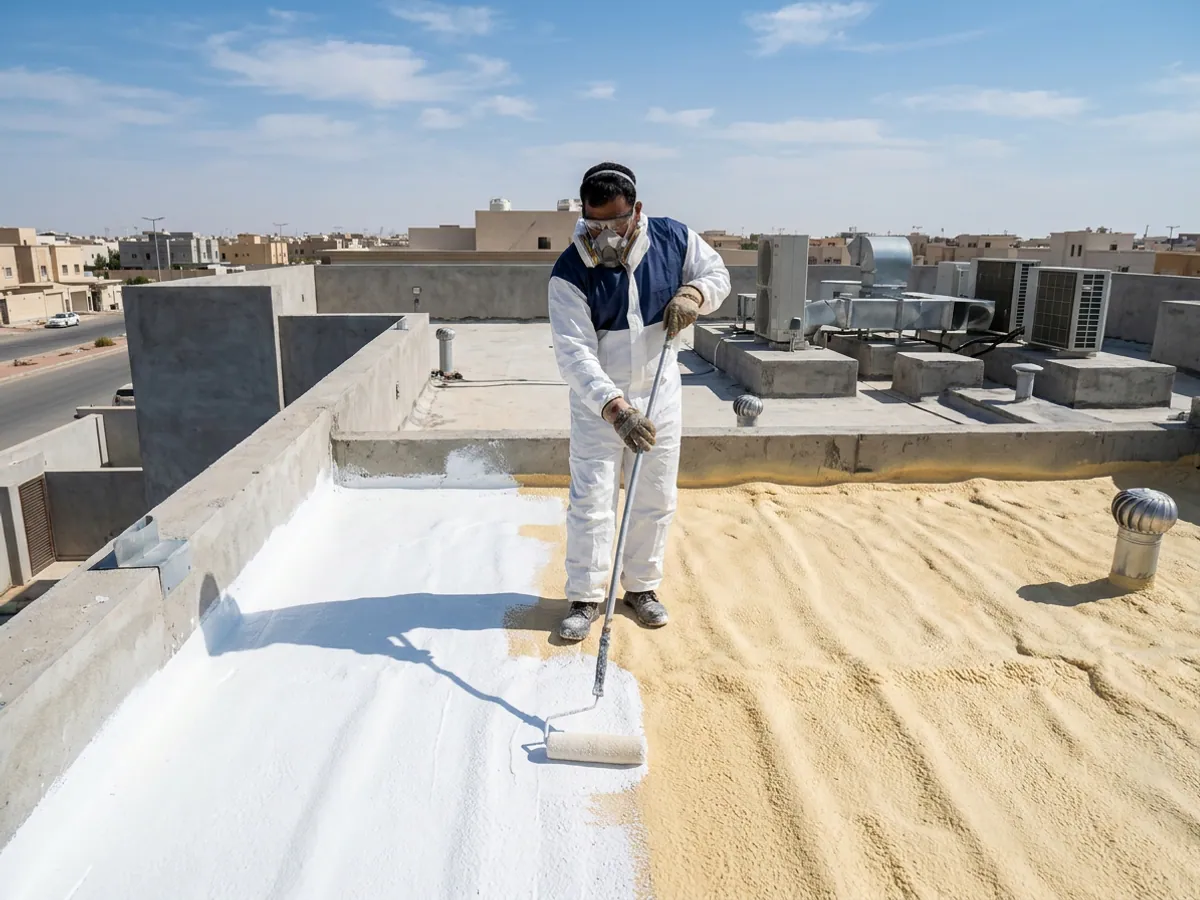
Closed-cell spray polyurethane foam (SPF) expands on contact to form a continuous, joint-free blanket across roof slabs, parapet upturns, and equipment curbs—combining high thermal resistance with water-shedding protection once sealed beneath a mandatory UV-resistant elastomeric topcoat. Review where SPF excels and where alternative systems are safer.
Suitability note: SPF requires a completely dry, sound substrate and controlled wind conditions. Contact us to verify availability and suitability for your roof.
Strict distinction between rigid closed-cell roofing SPF and interior open-cell acoustic foam
Mandatory UV-protective elastomeric topcoat specified for intense Saudi solar exposure
Honest suitability evaluation covering substrate dryness, wind controls, and fire barriers
Corrugated metal (Shinko) roofs & MEP-crowded concrete decks
Monolithic Cellular Physics
How Closed-Cell Spray Polyurethane Foam Combines Waterproofing & Thermal Resistance
Spray polyurethane foam is formed in situ when two heated liquid components react on the substrate, expanding into a rigid cellular layer that conforms seamlessly around AC pedestals, pipe penetrations, and parapet corners without lap joints. Roofing-grade closed-cell SPF (aligned with ASTM C1029 categories) features over 90% sealed gas-filled cells, delivering low thermal conductivity for thermal insulation while blocking liquid water migration.
By contrast, low-density open-cell foam has interconnected pores that absorb water like a sponge; open-cell foam is strictly an interior acoustic material and must never be used on exterior roofs or wet zones.
Joint-free monolithic coverage eliminates vulnerable roll overlaps around complex rooftop curbs.
Ultra-lightweight profile adds minimal dead load to long-span metal or concrete roofs.
Self-flashing adhesion onto clean concrete and primed corrugated steel decks.
Always functions as a two-part system: closed-cell foam core + UV elastomeric protective coating.
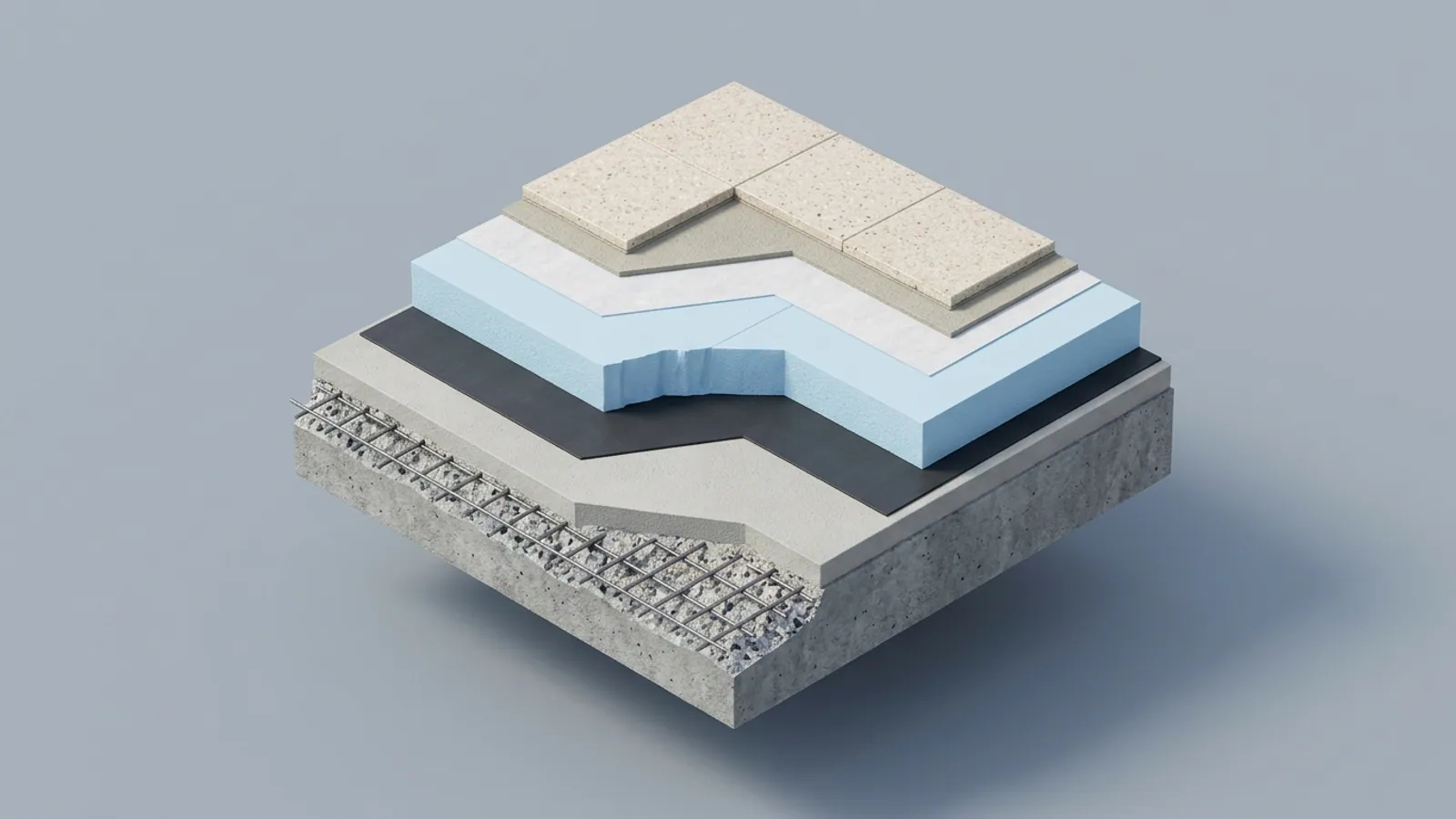
Educational Technical Illustration
Combined thermal and waterproof performance can be achieved via multi-layer inverted assemblies or UV-coated monolithic closed-cell SPF.
Matching SPF to the Right Deck
Suitable Roof Substrates & When SPF Should Not Be Used
Closed-cell SPF solves difficult geometry challenges, yet responsible engineering rules it out whenever substrate moisture or mechanical traffic dictates another assembly:
1. Where Closed-Cell SPF Excels
Corrugated steel warehouse and annex roofs (Shinko), where SPF encapsulates fasteners, seals sheet laps, and cuts solar heat gain simultaneously; plus exposed concrete roofs congested with HVAC bases and conduits.
2. Where SPF Must Be Excluded
Never inside potable water tanks (use certified water tank waterproofing), never under interior bathroom tiles (use 2K polymer-modified cementitious waterproofing), and never directly over damp concrete or water-logged tiled roofs where moisture ruins foam cell structure and bond.
3. Heavy Foot-Traffic Decks vs. Inverted Membranes
If a rooftop serves as a tiled terrace carrying furniture or heavy mechanical traffic, an assembly using bituminous roll membranes, XPS boards, and concrete pavers resists point loads better—see our roof materials comparison guide.
UV Protection & Fire-Code Compliance
Why a UV-Protective Elastomeric Topcoat & Fire Safety Rules Are Mandatory
Polyurethane polymer chains oxidize rapidly under ultraviolet sunlight. Left uncoated under Eastern Province sun, bare SPF turns dark amber, chalks, and erodes into friable dust within weeks—destroying its water resistance and surface profile.
Every exterior SPF roof must therefore receive a continuous UV-resistant elastomeric coating (acrylic, aliphatic polyurethane, or silicone) at specified dry-film thickness, inspected periodically to maintain seamless UV shielding.
Preparation & Lift Control
Substrate Preparation & Application Protocol
Reliable SPF adhesion and drainage depend on four controlled field stages:
1
Complete Moisture Check, Degreasing & Metal Rust Prep
Ensure concrete or metal is 100% surface-dry; remove dust, oil, and loose scale, tighten loose metal-roof fasteners, and prime corroded steel.
Consequence if Skipped: Surface moisture reacts chemically during foaming, creating blown cells and immediate delamination.
Inquire About Spray Foam Suitability in the Eastern Province
Message us on WhatsApp or call 0590941982 with your roof type (concrete or corrugated metal), current condition, and Eastern Province location to check suitability and availability.
Frequently Asked Questions About Spray Polyurethane Foam
Does closed-cell spray foam provide both waterproofing and thermal insulation?
+
Yes—when rigid closed-cell roofing SPF is applied onto a dry, properly sloped deck and sealed completely beneath a UV-resistant elastomeric topcoat.
What is the difference between closed-cell and open-cell spray foam?
+
Closed-cell foam is dense, rigid, and resists water ingress for exterior roofing. Open-cell foam is soft, vapor-permeable, absorbs water, and is strictly limited to dry interior acoustic/cavity applications.
What happens if rooftop polyurethane foam is left without a protective topcoat?
+
Direct UV sunlight rapidly oxidizes exposed foam into a brittle, dusty orange crust that erodes and loses water resistance within weeks.
Can spray foam be applied directly over an actively leaking tiled roof?
+
Not over wet sand beds. Moisture trapped beneath tiles will vaporize in summer heat, blistering the foam or continuing to leak downward. Diagnose the leak source first via roof leak detection.
Can technicians walk on a spray-foam roof for AC maintenance?
+
High-density closed-cell SPF tolerates light foot traffic in soft-soled shoes, but sharp tools, dragged equipment, or heavy point loads require protective walkway pads.
Can polyurethane spray foam be used inside potable water tanks?
+
Never. Spray polyurethane foam is not designed or certified for submerged potable drinking-water storage.
How can I check whether spray foam is suitable for my property?
+
Send us a WhatsApp message or call 0590941982 describing your roof substrate, approximate area, and city in the Eastern Province.
Have another specific question about your property? Reach us directly by phone or WhatsApp.
Flat concrete, tiled, and metal roof waterproofing systems in the Eastern Province. Positive drainage detailing, parapet flashings, and membrane selection. Call 0590941982.
Roof and building thermal insulation services in the Eastern Province, Saudi Arabia. Understand R-value, U-value, thermal bridges, and roof assemblies. Call 0590941982.
Reinforced APP/SBS bituminous roll membranes and cold-applied bitumen coatings for concrete roofs in the Eastern Province, Saudi Arabia. Call 0590941982.
Diagnose blistered, cracked, or delaminated waterproofing membranes and determine whether localized repair or full replacement is required. Call 0590941982.